Castle on a River — History & Facts
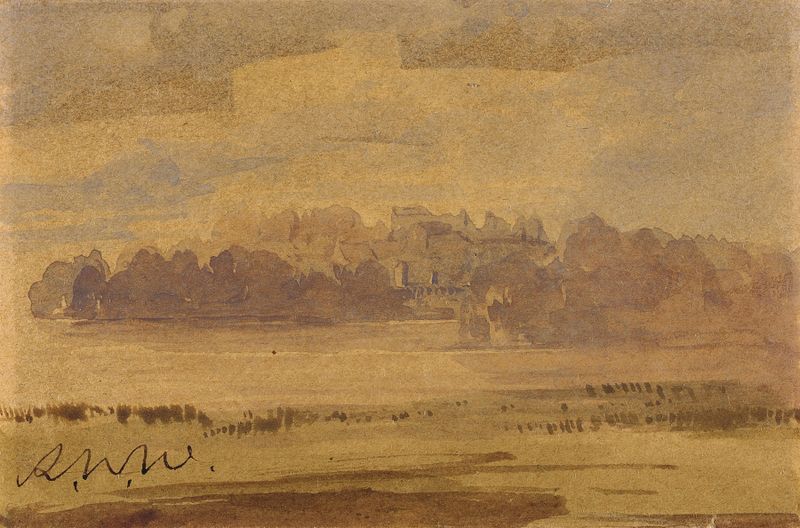
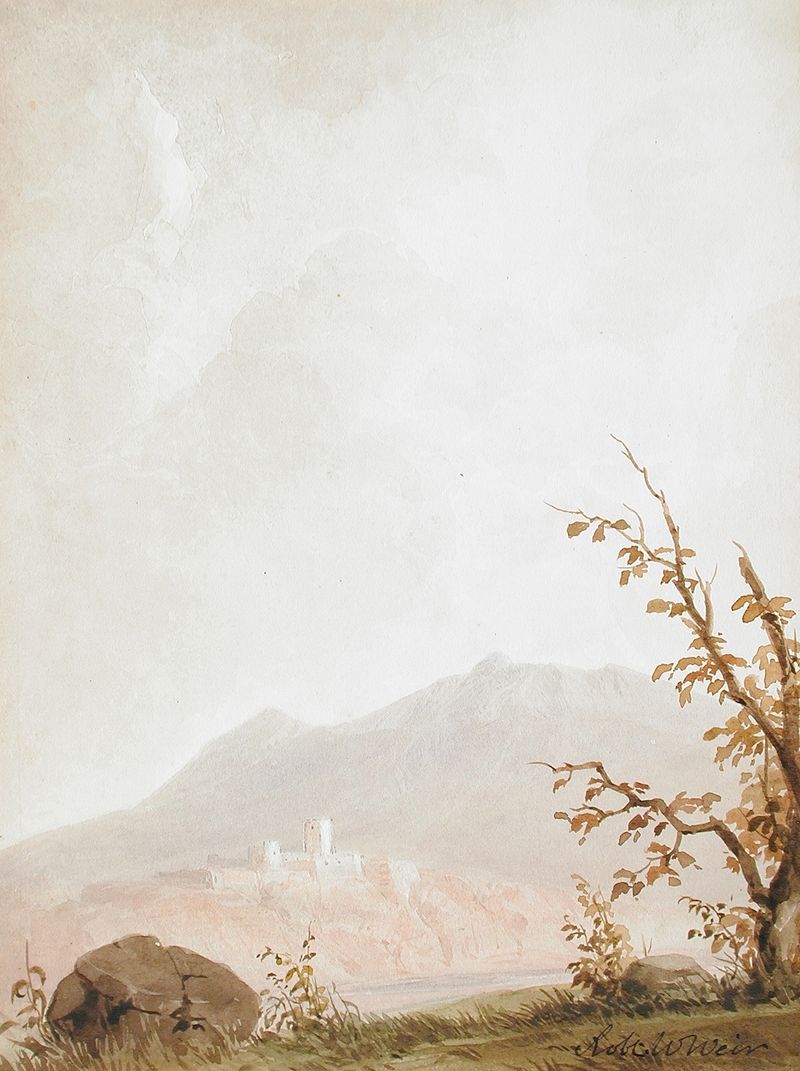
What secret hides in the quiet of the canvas? The tranquil embrace of a river, framed by a distant castle, invites reflection on memory and the passage of time. Look to the center, where the shimmering waters of the river draw your gaze, creating a natural path that leads toward the imposing castle on the far bank. The interplay of light and shadow dances across the water's surface, revealing hints of lush greenery and soft clouds above. Notice how the muted palette—subtle blues, deep greens, and warm earth tones—instills a sense of calm, while the delicate brushwork suggests a moment suspended in time. The painting encapsulates contrasts between stability and transience.
The castle stands as a symbol of permanence, its sturdy walls resonating with history and the stories they hold. Yet the flowing river, ever-changing, creates a dialogue with the landscape, reminding viewers that while some things endure, life is inherently fleeting. Ghostly reflections ripple across the water, echoing the memories that drift through our minds, elusive yet poignant. In the early 19th century, Robert Walter Weir was creating Castle on a River while living in New York, a city on the cusp of transformation.
This period saw a growing interest in romantic landscapes, reflecting a deepening connection to nature and nostalgia. Weir's work emerged amidst a burgeoning American art scene, where artists sought to capture not just the physical world but also the essence of memory and emotion intertwined within it.