Italian Landscape — History & Facts
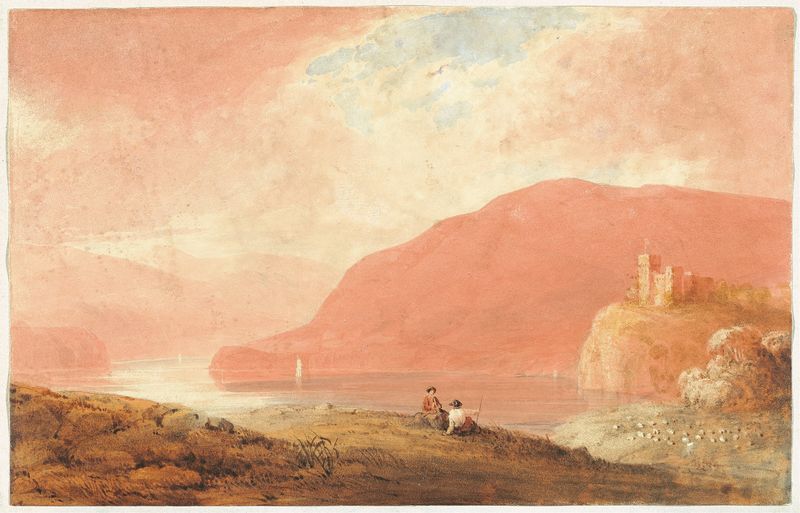
Can paint confess what words never could? In Italian Landscape, the canvas becomes a vessel for an obsession, unraveling the stillness of nature with every brushstroke. Look to the left at the rolling hills bathed in soft golden light; their gentle undulations invite the viewer into a serene embrace. The palette blends lush greens with warm earthy tones, creating a harmonious balance that pulls your gaze deeper into the composition. Notice how the sky, a delicate mix of blues and whites, cradles the scene, while wisps of clouds drift lazily above the horizon, invoking a sense of tranquility. Yet, beneath the surface, there lies a dichotomy — the idyllic setting contrasts sharply with the hint of isolation in the figures wandering through the landscape.
Their small scale against the vastness of nature accentuates a sense of insignificance and longing. The interplay of light and shadow reveals fleeting moments, suggesting the passage of time and an unspoken yearning that lingers in the air, quietly echoing the artist's relentless pursuit of beauty. During the years between 1825 and 1827, Robert Walter Weir painted this landscape while immersed in the early Romantic movement in America, an era marked by a deep appreciation for nature and individual expression. Weir, a prominent figure in the Hudson River School, was influenced by European art traditions and the burgeoning American landscape aesthetics, seeking to capture the essence of his travels and experiences, embodying a moment in time that transcends words.