View of West Point — History & Facts
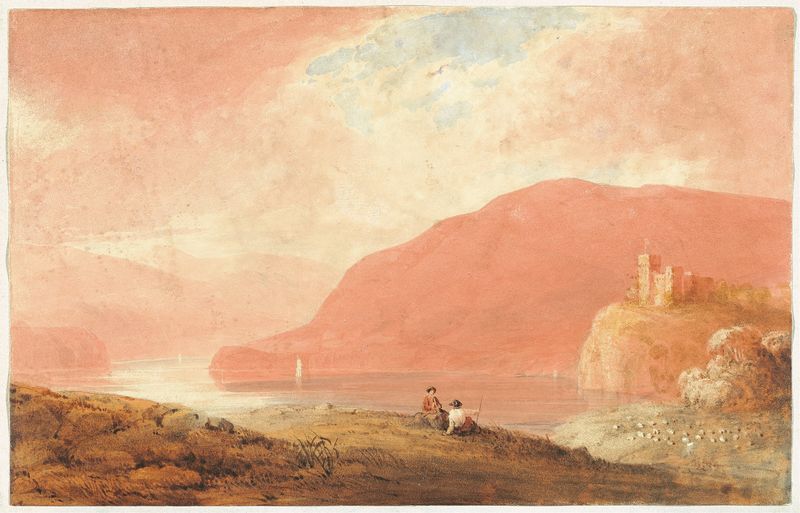
Can paint confess what words never could? In View of West Point, a breathtaking landscape unfolds, revealing the majestic confluence of water and earth, where the Hudson River embraces the verdant fortifications of West Point. Awe permeates this scene, inviting viewers to reflect on the relationship between nature’s grandeur and human endeavor. Look to the left at the gently sloping hills, their rich greens contrasting with the deep blues of the river below. Notice the soft, diffused light that bathes the canvas, creating an atmosphere of serenity and reverence.
The artist employs a delicate palette, punctuated by hints of sunlight that illuminate the foliage, guiding your gaze through the composition. Each brushstroke conveys a sense of depth and tranquility, while the meticulously captured architecture of the military academy subtly anchors the vastness of the landscape. Hidden within this serene vista is a tension between the untamed beauty of nature and the structured presence of human creation. The imposing cliffs serve as guardians of the academy, suggesting both protection and isolation, while the still waters mirror a quiet introspection.
Moreover, the varying textures — from the roughness of the rocky outcrops to the smooth surface of the river — evoke a dialogue between the rugged and the refined, inviting contemplation on the coexistence of these elements. Robert Walter Weir painted this work after 1834, during a period marked by a burgeoning appreciation for the American landscape. As an educator at the United States Military Academy and a prominent figure in the Hudson River School movement, he was deeply influenced by the Romantic ideals of nature and patriotism. This painting reflects his commitment to capturing the beauty of America, while also embodying the spirit of a nation finding its identity in the wake of independence.