
Cattails and Trees — History & Facts
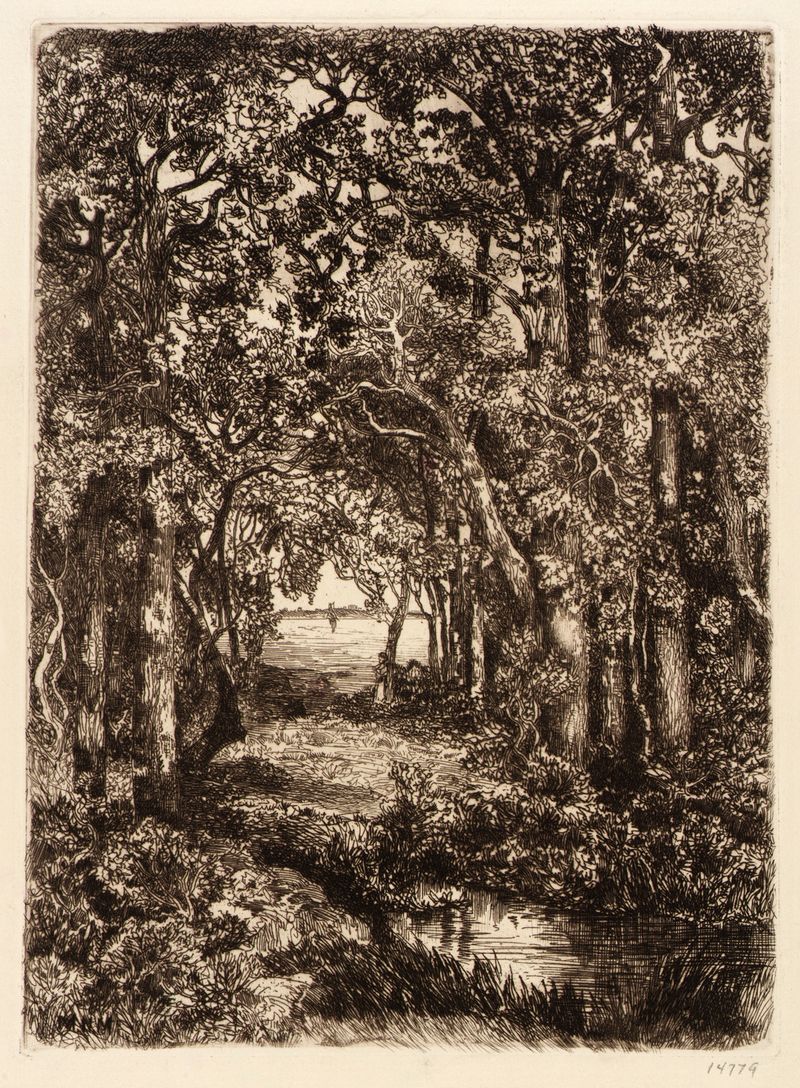
What if silence could speak through light? In the stillness of a quiet landscape, the subtle interplay between nature's chaos and tranquility unfolds before our eyes, compelling us to listen to its unvoiced whispers. Look to the left at the density of the cattails, rising dramatically from the water's edge, their tall, swaying forms creating a natural curtain. Notice how the soft yellow and warm greens blend harmoniously, contrasted by the deep browns of the tree trunks, which stand resolute against the backdrop of a tranquil blue sky. The painter's brushwork captures the delicate nuances of light filtering through the leaves, casting playful shadows that dance upon the ground, inviting a sense of movement amidst the stillness. Beneath this serene exterior lies an emotional tension, a chaotic beauty that reflects the unpredictability of nature.
The intermingling of vibrant greens with the earthier colors invokes a feeling of growth and decay, highlighting the cycles of life. The trees, although steadfast, suggest a tumultuous past, as if they have weathered storms—both literal and metaphorical—yet remain grounded in the landscape. This juxtaposition of calm and chaos resonates deeply, echoing the complexities of the human experience. In the 1880s, the artist painted this work while residing in New Jersey, a period marked by a deepening appreciation for American landscapes.
As an active member of the artistic community and an advocate for the Hudson River School, she sought to capture the essence of the natural world around her, reflecting both its beauty and its turmoil. This piece serves as a testament to her skill in translating her surroundings into art while navigating the evolving landscape of American painting.
More Artworks by Mary Nimmo Moran
Browse all →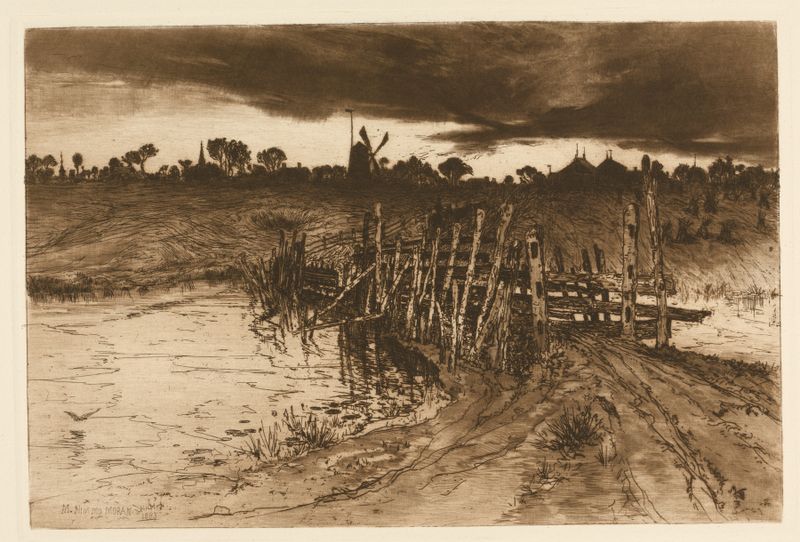
‘Tween the Gloamin’ and the Mirk, When the Kye Come Hame’
Mary Nimmo Moran
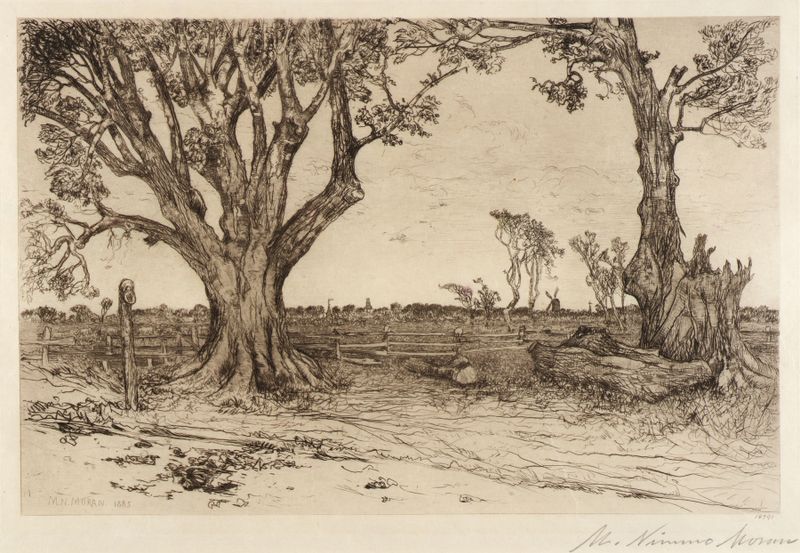
Old Lindens–Near Easthampton
Mary Nimmo Moran
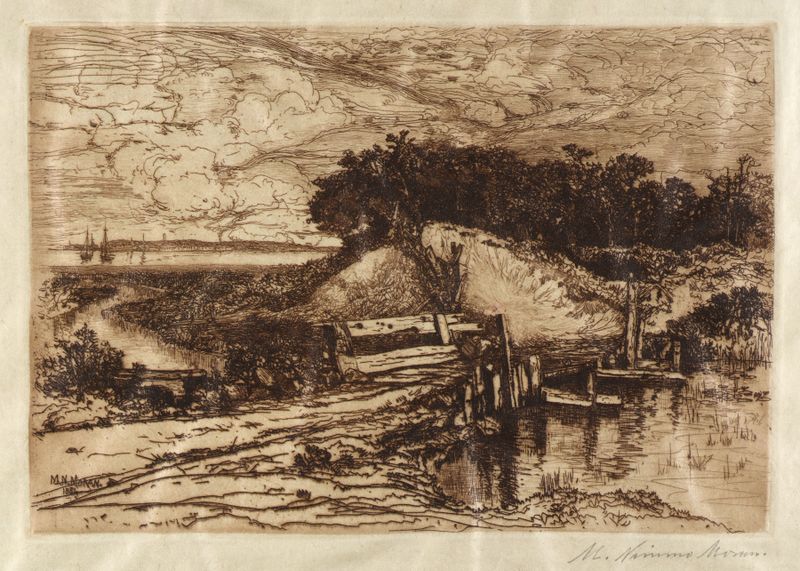
Gardiner’s Bay, L.I., Seen from Fresh Pond
Mary Nimmo Moran

House by a Stream
Mary Nimmo Moran
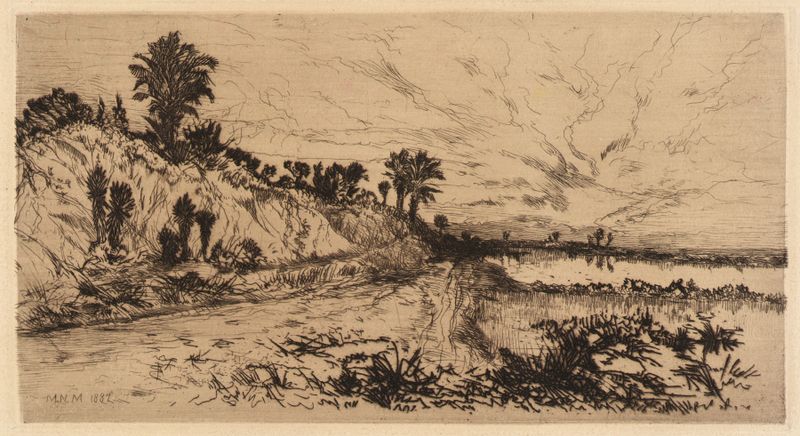
The Coast of Florida
Mary Nimmo Moran
The Sea through the Woods
Mary Nimmo Moran

Looking Seaward
Mary Nimmo Moran

The Old Homestead
Mary Nimmo Moran

Bridge over the Buskill, Easton, Pa.
Mary Nimmo Moran

Home of the Muskrat
Mary Nimmo Moran





