Cattle Watering — History & Facts
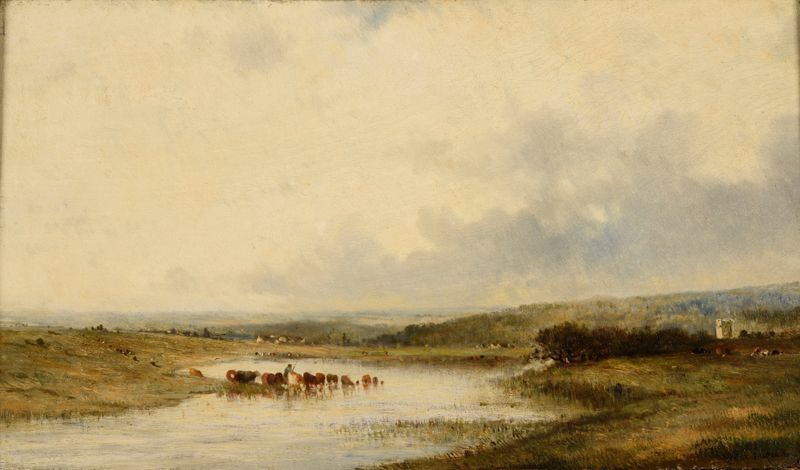
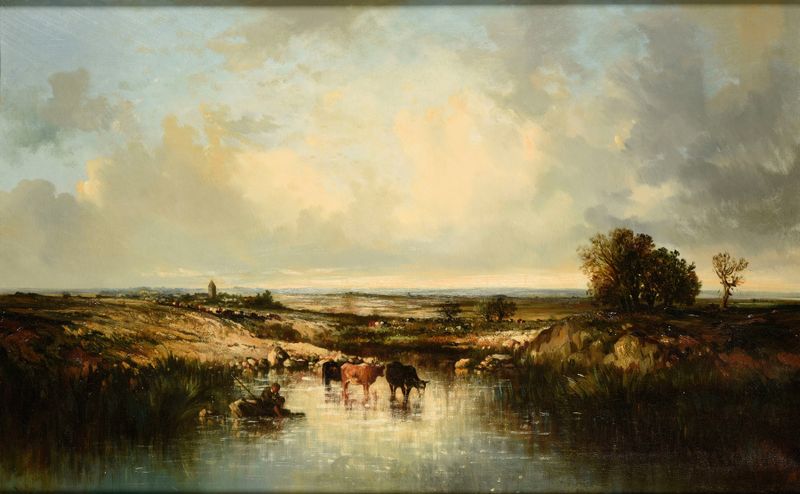
This artwork transcends mere representation, inviting us to witness the delicate illusion of life captured in paint. Look to the left where a group of cattle congregates around a shimmering watering hole, their forms melding into the earth's vibrant palette. The rich greens and browns swirl together, creating a sense of movement as the water reflects the soft blues of the sky. Notice how the sunlight dances upon the surface, illuminating the animals’ glossy coats and casting gentle shadows that hint at their collective weight—each detail meticulously crafted to evoke a sense of tranquility amidst the pastoral scene. As you delve deeper, observe the contrast between the serene landscape and the subtle tension within it.
The cattle, seemingly at ease, embody a moment suspended in time, yet there’s an underlying sense of vulnerability. While they nourish themselves, a fleeting moment of life's fragility is encapsulated—the delicate balance between nature's beauty and its harsh realities. The artist's brushwork conveys a harmony that belies the chaotic forces of life that surround these creatures, suggesting that even in simplicity, complexity thrives. Created in 1874, this piece emerged during Dupré's explorations of rural life in France, reflecting both his personal experiences and the broader artistic trends of the time.
The artist sought to capture the essence of nature through realistic yet expressive landscapes, aligning himself with the Barbizon School's ethos of portraying everyday scenes with emotional depth. In this context, the painting reveals not only the beauty of pastoral life but also Dupré’s commitment to capturing the fleeting moments that define existence.