Environs de l’Isle-Adam — History & Facts
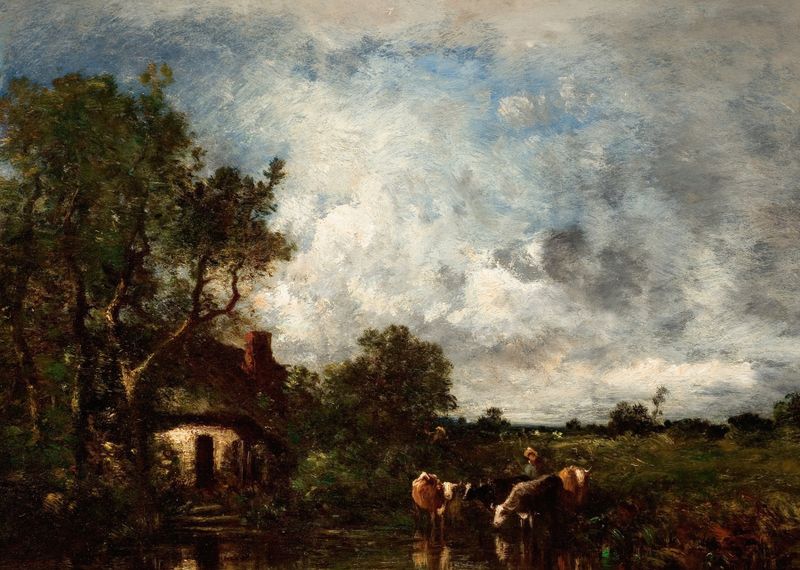
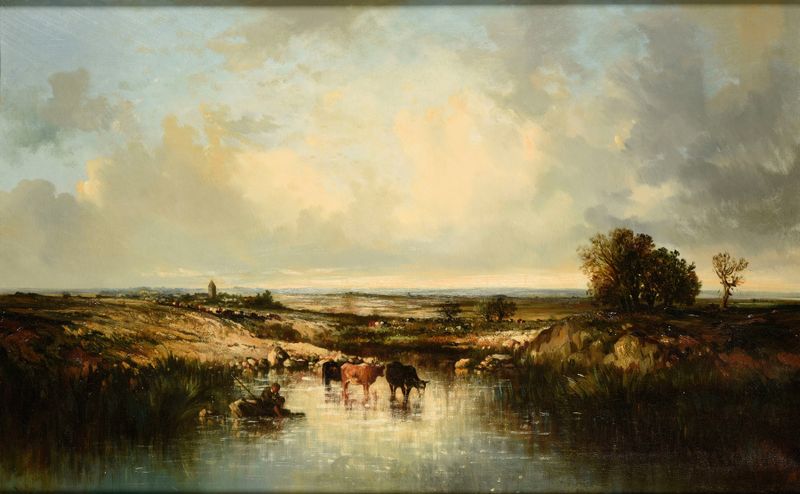
What if silence could speak through light? In the delicate brushstrokes and muted hues of the landscape, the essence of a quiet yet transformative moment unfolds, capturing the whispers of nature at the brink of change. Look to the left at the gentle sweep of trees, their branches reaching out like fingers yearning for connection. The horizon glows softly, a gradient that transitions from deep emerald greens to the warm blush of sunset, inviting the viewer into a world where every detail is meticulously crafted. The stillness is palpable, punctuated by the masterful use of light that dances upon the water, creating a mirror-like surface that reflects both the beauty and the impending revolution of the land. Hidden within this serene setting are contrasting themes of peace and upheaval.
The tranquil water is a metaphor for the calm before a storm, suggesting that beneath the surface lies unrest — be it in the environment or the societal shifts of the time. Each element, from the wispy clouds to the distant hills, can be interpreted as a call to reflect on the inevitable changes that lie ahead, echoing the sentiments of a world on the brink of transformation. In 1850, Léon-Victor Dupré painted this landscape amid a Europe torn by revolutions and shifting political landscapes. Living in France, he was influenced by the Romantic movement, which sought to emphasize emotion and the sublime aspects of nature.
This period marked a transition both in his artistic career and in the broader context of art, as artists began to move away from strict academic traditions to embrace the expressive potential within landscape painting.