Landscape — History & Facts
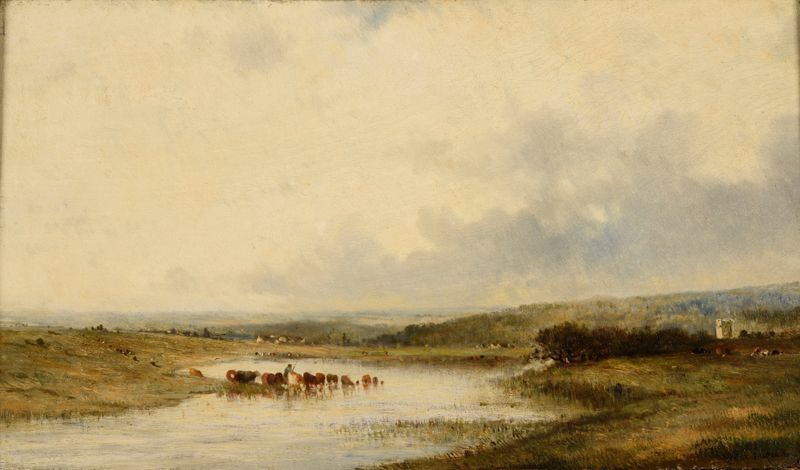
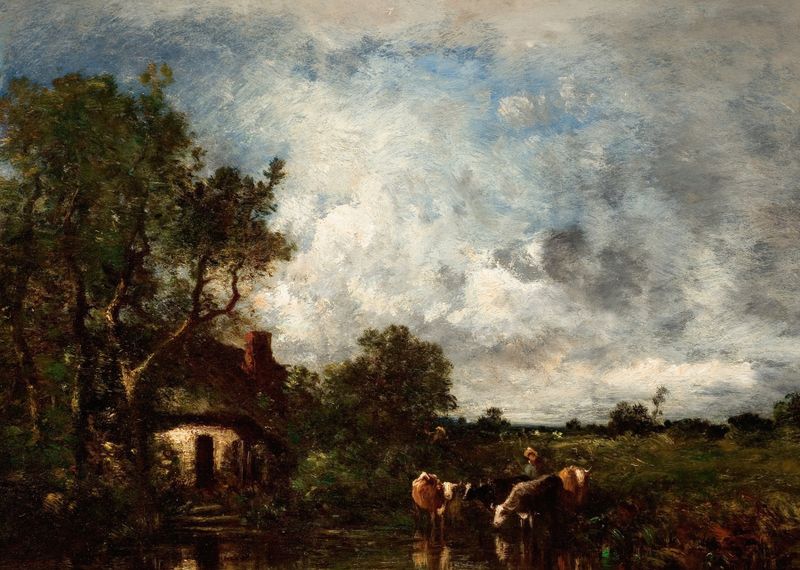
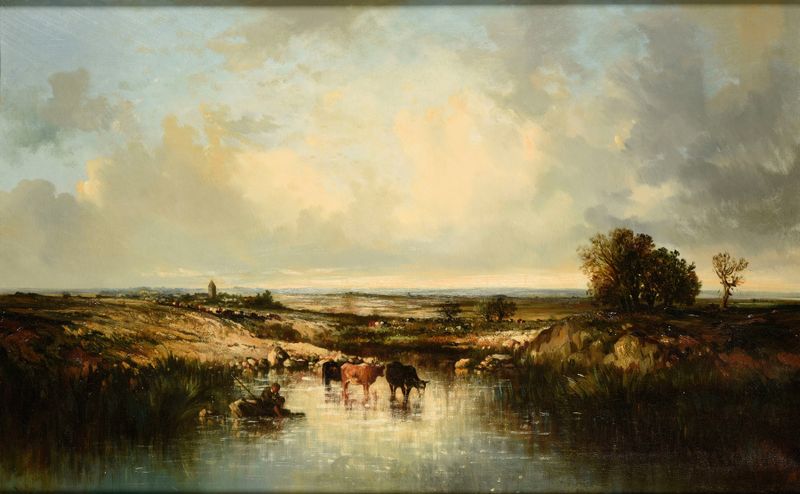
When did color learn to lie? Shadows whisper truths we often overlook, revealing the delicate interplay between light and darkness. Focus on the horizon, where a gentle gradient of greens meets the soft blues of the sky. The brushstrokes evoke a sense of movement — the trees sway slightly, as if touched by a soft breeze. Notice how the light falls upon the landscape, creating a delicate dance of shadows that elongate and contract, offering depth to the serene scene.
The subtle variations in hue suggest a fleeting moment, an impression captured with both precision and spontaneity. Delve deeper into the painting and you'll notice the contrast between the vibrancy of the foreground and the muted tones of the distant hills; this juxtaposition evokes a sense of longing and distance. Each shadow serves not just as a physical element but as a metaphor for the unseen, hinting at stories etched into the landscape. There's a palpable tension between the serene beauty of nature and an underlying sense of melancholy, suggesting both the transience of the moment and the permanence of the earth itself. Painted in 1869, this work emerged during a time when Dupré was establishing his reputation as a landscape artist in France.
The period was marked by a burgeoning appreciation for realism and the natural world, coinciding with broader movements in art that sought to capture the essence of everyday life. Dupré, influenced by the Barbizon School, embraced both the aesthetic and philosophical shifts of his time, pouring his observations of nature into richly textured canvases.