
Christ and the woman of Samaria among ruins — History & Facts
Can paint confess what words never could? In a moment suspended between revelation and silence, Christ and the woman of Samaria among ruins speaks through the interplay of light and shadow, channeling a profound conversation where understanding transcends language. Look to the center of the canvas, where Christ, draped in a flowing robe, engages the Samaritan woman with a gaze that pierces the ambient gloom. Notice how the warm, golden light falls upon their faces, illuminating their features against the crumbling backdrop of ruins. The juxtaposition of the vibrant figures against the muted earth tones creates a striking contrast, drawing the viewer's eye directly to their intimate exchange, while the surrounding decay hints at a world marked by division and neglect. Delving deeper, one can see the emotional undercurrents in the brushwork.
The figures, bathed in divine light, suggest both hope and redemption, contrasting starkly with the desolation of their environment. The ruins symbolize the barriers that societal norms erect, yet the warmth between the two figures challenges those boundaries, inviting empathy and understanding. The choice of light not only highlights their humanity but also symbolizes the knowledge and truth exchanged in this sacred dialogue. Rembrandt created this work in 1634 during his early years in Amsterdam, a period when he was beginning to explore themes of spirituality and human connection.
The art scene was buzzing with innovation, as the Dutch Golden Age flourished, yet personal struggles loomed for the artist, including financial difficulties and evolving artistic aspirations. It was in this crucible of challenge and change that he sought to express profound truths, striving to capture the very essence of divine interaction through the medium of paint.
More Artworks by Rembrandt van Rijn
Browse all →
The Night Watch Militia Company of District II under the Command of Captain Frans Banninck Cocq
Rembrandt van Rijn

The Return of the Prodigal Son
Rembrandt van Rijn

The Hundred Guilder Print: the figures leaning on the wall in the centre left
Rembrandt van Rijn

The Hundred Guilder Print: the central piece with Christ preaching, the plate arched
Rembrandt van Rijn

Isaac and Rebecca, Known as ‘The Jewish Bride’
Rembrandt van Rijn
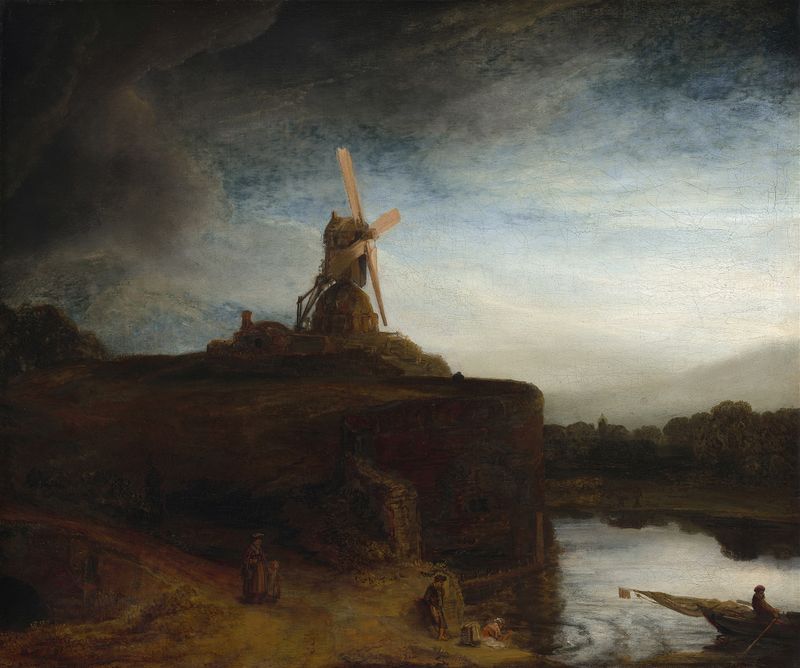
The Mill
Rembrandt van Rijn

The Sampling Officials of the Amsterdam Drapers’ Guild, Known as ‘The Syndics’
Rembrandt van Rijn

The return of the prodigal son
Rembrandt van Rijn
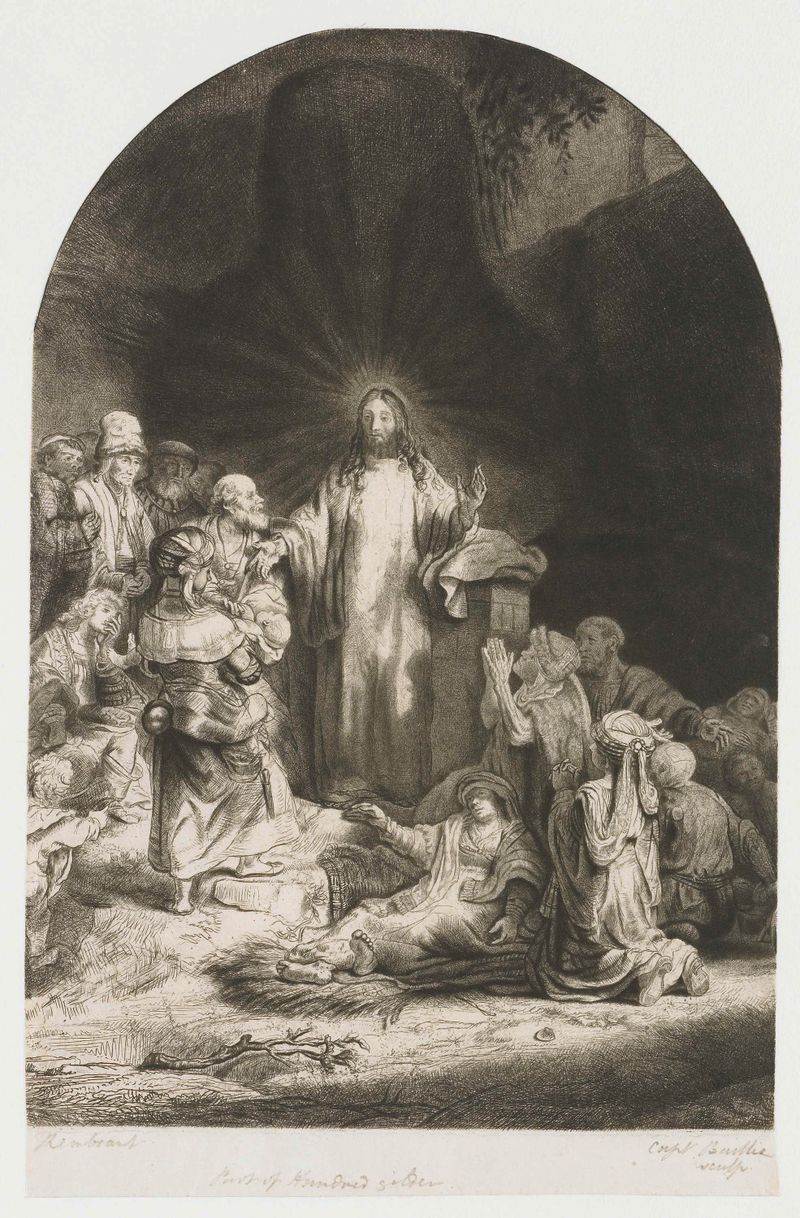
The Hundred Guilder Print: the central piece with Christ preaching, the plate arched
Rembrandt van Rijn

The Hundred Guilder Print: the man seen on the back in the lower left corner
Rembrandt van Rijn
More Religious Art
Browse all →The Return of the Prodigal Son
Rembrandt van Rijn

The Garden of Earthly Delights
El Bosco

Count Orgaz’ funeral
El Greco
The Hundred Guilder Print: the central piece with Christ preaching, the plate arched
Rembrandt van Rijn

The Descent from the Cross
Rogier van der Weyden
The return of the prodigal son
Rembrandt van Rijn