
Christ appearing to the apostles — History & Facts
Where does light end, and longing begin? In the quiet chaos of Christ appearing to the apostles, a haunting interplay of divine presence and human uncertainty unfolds. Look to the left where the figures huddle in disbelief, their postures ranging from awe to confusion. The light seems to seep from the central figure, illuminating his serene countenance while casting the others in shadow, emphasizing their emotional turmoil. Notice how Rembrandt’s brushwork captures the tension in their gestures—the way one apostle raises an arm, as if shielding himself from this miraculous apparition.
The deep, rich colors amplify the drama, each hue a reflection of the inner struggles faced by the witnesses. Within this moment, the painting speaks not only of a religious revelation but of chaos dwelling in faith. The apostles’ varied expressions suggest a crisis of belief, a struggle between the tangible and the transcendent. The contrasts between light and darkness echo the duality of hope and despair, inviting the viewer to contemplate their own moments of doubt and faith.
Each detail, from the hesitant gaze of one apostle to the rapt attention of another, weaves a narrative of longing for certainty in an uncertain world. In 1656, Rembrandt painted this work during a tumultuous period in his life, marked by personal losses and financial struggles. The art world was shifting, moving towards the Baroque style, yet he remained rooted in a deeply personal interpretation of spirituality. This piece reflects both a culmination of his mastery and a poignant reflection of his own battle with faith amidst chaos—a testament to his enduring legacy.
More Artworks by Rembrandt van Rijn
Browse all →
The Night Watch Militia Company of District II under the Command of Captain Frans Banninck Cocq
Rembrandt van Rijn

The Return of the Prodigal Son
Rembrandt van Rijn

The Hundred Guilder Print: the figures leaning on the wall in the centre left
Rembrandt van Rijn

The Hundred Guilder Print: the central piece with Christ preaching, the plate arched
Rembrandt van Rijn

Isaac and Rebecca, Known as ‘The Jewish Bride’
Rembrandt van Rijn
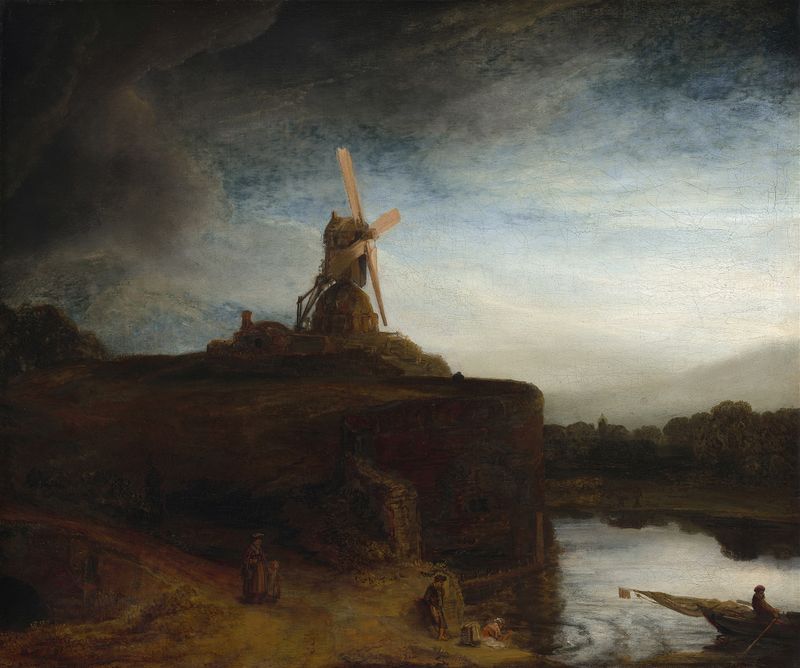
The Mill
Rembrandt van Rijn

The Sampling Officials of the Amsterdam Drapers’ Guild, Known as ‘The Syndics’
Rembrandt van Rijn

The return of the prodigal son
Rembrandt van Rijn
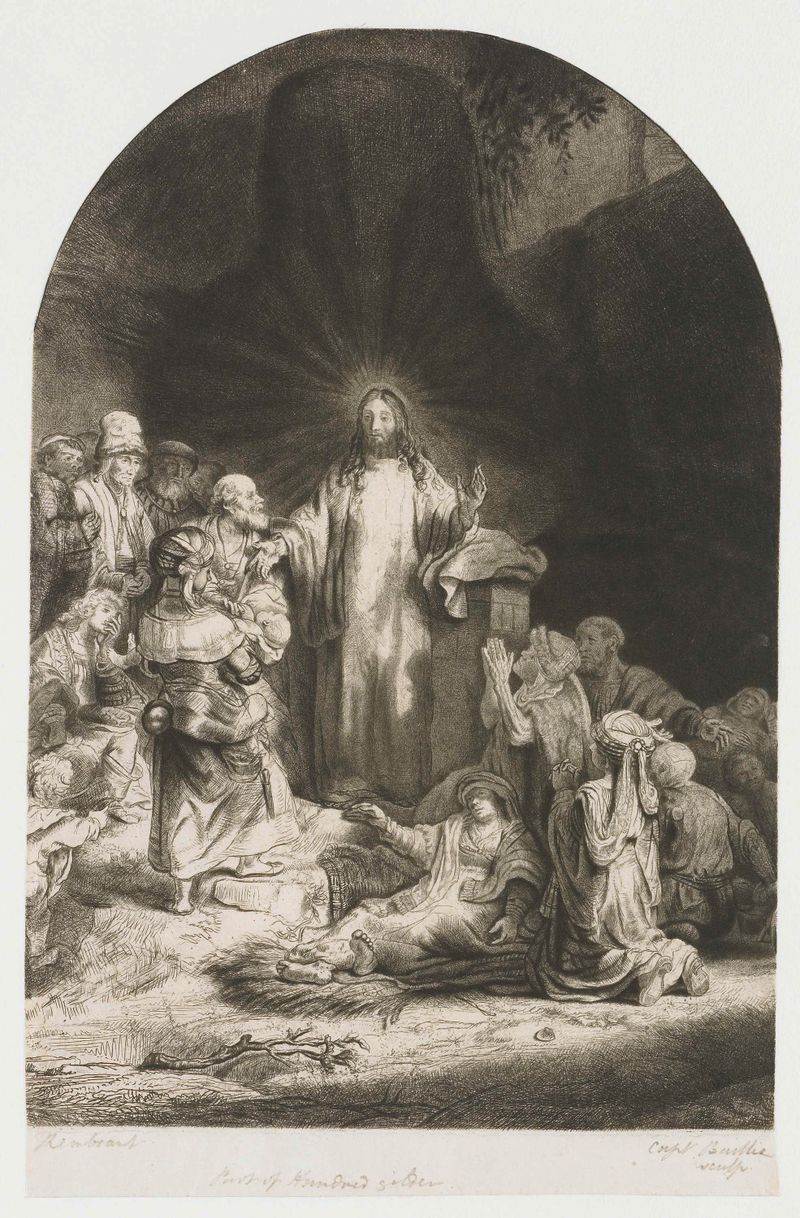
The Hundred Guilder Print: the central piece with Christ preaching, the plate arched
Rembrandt van Rijn

The Hundred Guilder Print: the man seen on the back in the lower left corner
Rembrandt van Rijn
More Religious Art
Browse all →The Return of the Prodigal Son
Rembrandt van Rijn

The Garden of Earthly Delights
El Bosco

Count Orgaz’ funeral
El Greco
The Hundred Guilder Print: the central piece with Christ preaching, the plate arched
Rembrandt van Rijn

The Descent from the Cross
Rogier van der Weyden
The return of the prodigal son
Rembrandt van Rijn