
Christ before Pilate: large plate — History & Facts
Who listens when art speaks of silence? In Christ before Pilate, the weight of absence hangs heavy, inviting contemplation of the void that resonates within the human soul. Look to the center of the composition, where Christ stands poised, serene yet burdened, a figure of profound stillness amid a cacophony of motion. His robes, rendered in rich, muted tones, draw the eye and emphasize His luminescent face, illuminated as if by an inner light. Notice how the surrounding figures loom darkly—expressions twisted in judgment and anxiety, their gestures a chaotic contrast to Christ's calm.
The artist's technique blends chiaroscuro with delicate detail, creating a layered depth that captures both the physicality and the spiritual weight of the scene. Delve deeper into the emotional currents at play: the palpable tension between innocence and accusation, the stark loneliness of the central figure against the throng of hostile faces. Each character's expression speaks volumes, yet Christ's silence screams, invoking empathy and reflection. The contrasts in light and shadow serve not just to enhance drama but to underscore the emptiness of human understanding in the face of divine truth—a moment frozen in time that questions our own complacency in the suffering of others. In 1635, while immersed in the vibrant art community of Amsterdam, Rembrandt created this work during a period of personal and artistic evolution.
Having already gained acclaim, he was exploring deeper themes of faith and humanity, grappling with the complexities of existence and morality. The world around him was rich with religious discourse and burgeoning enlightenment, feeding his desire to challenge viewers to confront the silence that often surrounds profound moments of human experience.
More Artworks by Rembrandt van Rijn
Browse all →
The Night Watch Militia Company of District II under the Command of Captain Frans Banninck Cocq
Rembrandt van Rijn

The Return of the Prodigal Son
Rembrandt van Rijn

The Hundred Guilder Print: the figures leaning on the wall in the centre left
Rembrandt van Rijn

The Hundred Guilder Print: the central piece with Christ preaching, the plate arched
Rembrandt van Rijn

Isaac and Rebecca, Known as ‘The Jewish Bride’
Rembrandt van Rijn
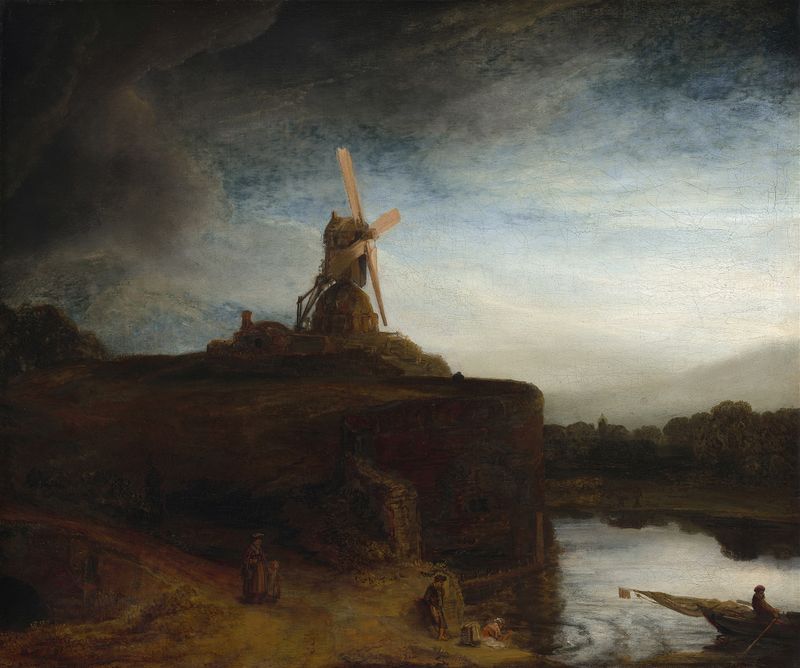
The Mill
Rembrandt van Rijn

The Sampling Officials of the Amsterdam Drapers’ Guild, Known as ‘The Syndics’
Rembrandt van Rijn

The return of the prodigal son
Rembrandt van Rijn
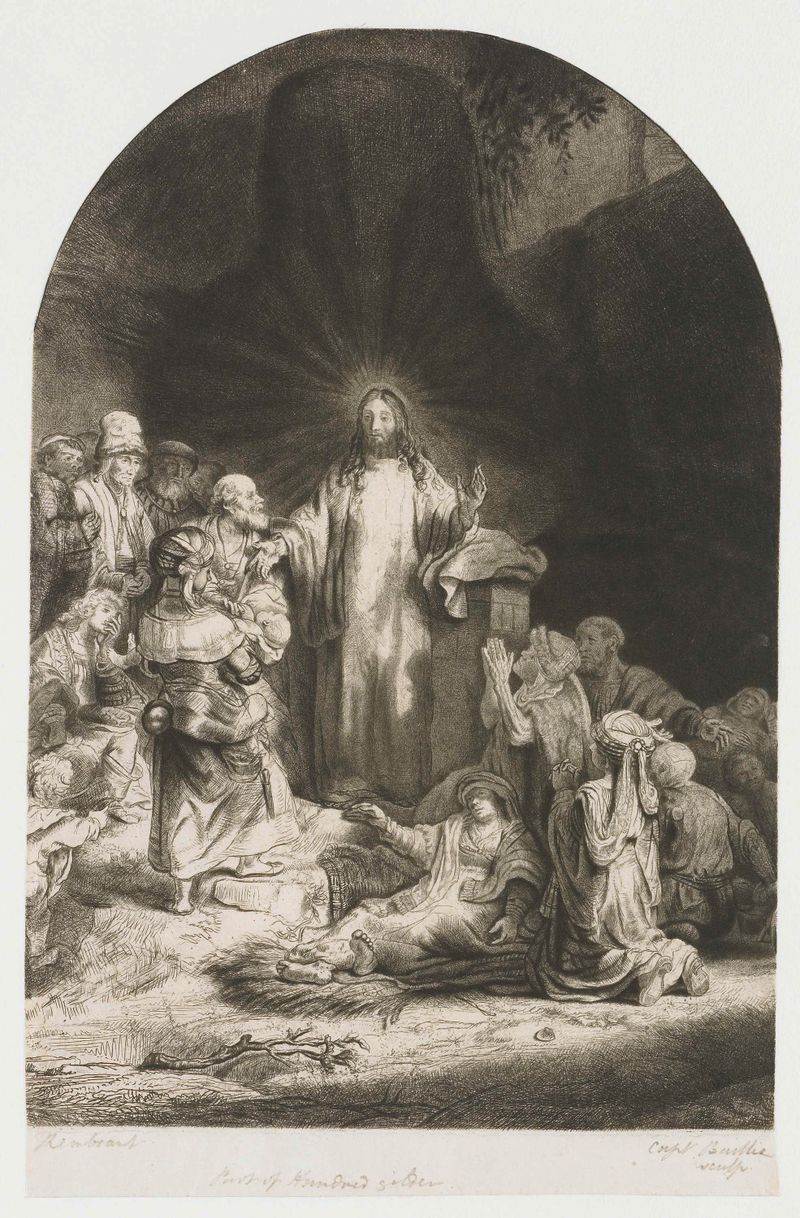
The Hundred Guilder Print: the central piece with Christ preaching, the plate arched
Rembrandt van Rijn

The Hundred Guilder Print: the man seen on the back in the lower left corner
Rembrandt van Rijn
More Religious Art
Browse all →The Return of the Prodigal Son
Rembrandt van Rijn

The Garden of Earthly Delights
El Bosco

Count Orgaz’ funeral
El Greco
The Hundred Guilder Print: the central piece with Christ preaching, the plate arched
Rembrandt van Rijn

The Descent from the Cross
Rogier van der Weyden
The return of the prodigal son
Rembrandt van Rijn