Church by a Road — History & Facts
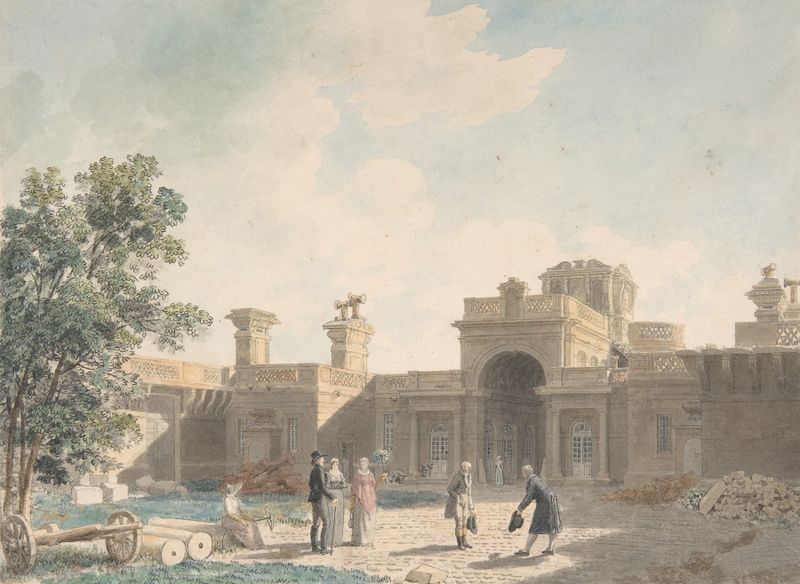
Where does light end, and longing begin? The interplay of illumination and shadow often tells a deeper story, reflecting an emotional landscape that goes unseen. Look to the horizon where the church’s spire reaches skyward, a solemn sentinel against a backdrop of muted greens and browns. The winding road, painted with gentle strokes, beckons the viewer’s eye toward the serene structure, inviting contemplation. Notice how the warm glow from the chapel's windows contrasts with the cool tones of the surrounding landscape, creating a sense of warmth amidst the chill of solitude.
Vauzelle’s use of soft brushwork and a harmonious palette envelops the scene in an almost dreamlike quality, inviting a moment of pause and reflection. Delve deeper and you may uncover the tension between the fleeting nature of the journey and the permanence of the church. The road represents a path laden with choices and revolutions, while the church stands as a testament to tradition and stability. This duality echoes the longing felt by those who traverse it, suggesting a search for solace in an ever-changing world.
Each element in the painting resonates with the theme of movement, encapsulating both the desire for connection and the weight of solitude. Created in an unspecified time, this work emanates from Vauzelle's explorations during a period of artistic transition in France. While specific historical events remain unclear, the artist was known for his ability to capture the essence of rural life, a reflection of the changes society was undergoing. This painting occupies an important space in the narrative of art, where the revolution of thought and expression began to shift from tradition toward individual emotional resonance.