
The Entrance Portico of the Château d’Anet, seen from the interior of the courtyard — History & Facts
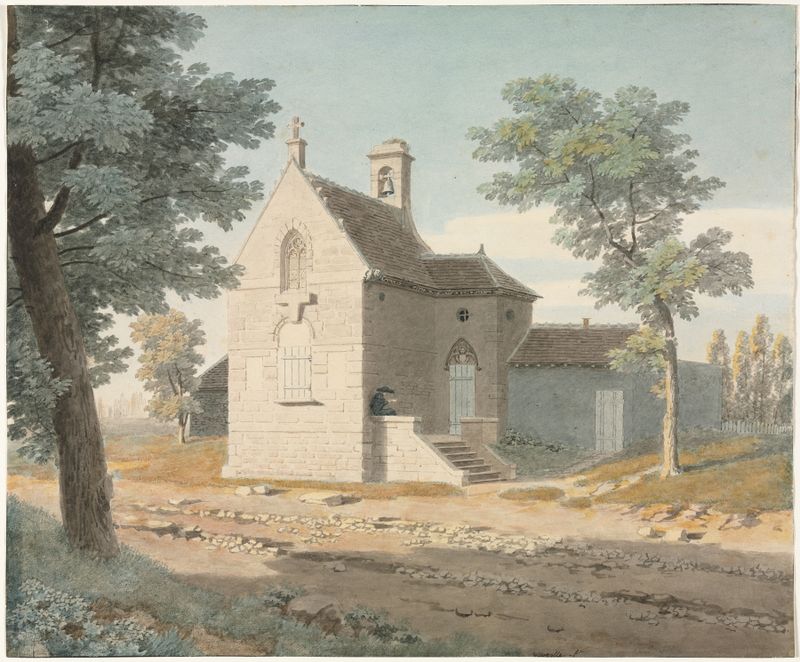
Can paint confess what words never could? In the delicate interplay of light and shadow, we find ourselves drawn into a hidden narrative, an intimate revelation waiting to be uncovered. Look toward the center of the canvas where the grand entrance portico stands, its architectural splendor evoking both admiration and introspection. The soft hues of ochre and warm browns create a serene atmosphere, while the intricate detailing of the columns and archways invite the eye to wander. Notice how light spills into the courtyard, illuminating the weathered stones, suggesting stories of grandeur and decay intertwined within these walls. Yet, beneath the elegance lies a tension; the portico, a symbol of status and refinement, also speaks of isolation.
The absence of figures conveys a haunting sense of emptiness, whispering of those who once thrived within these spaces. The gentle curves of the architecture contrast sharply with the rigid lines of the courtyard, evoking the nostalgic duality of beauty and abandonment that permeates the scene. Jean Lubin Vauzelle painted this work during a time when the art world was shifting, embracing new perspectives and cultural influences. His exploration of architectural subjects reflected both the grandeur of French heritage and the personal stories woven into their histories.
In this unrecorded moment, the artist captured more than a mere structure; he unveiled a world marked by both triumph and solitude.
More Artworks by Jean Lubin Vauzelle
Browse all →
More Architecture Art
Browse all →
The statue of Liberty
Frédéric Auguste Bartholdi

View of Houses in Delft, Known as ‘The Little Street’
Johannes Vermeer

View of Houses in Delft, Known as ‘The Little Street’
Johannes Vermeer

The Cathedral in Rouen. The portal, Grey Weather
Claude Monet

The yellow house
Vincent van Gogh

The Church in Auvers-sur-Oise, View from the Chevet
Vincent van Gogh