
Church in Lithuania — History & Facts
In a world overwhelmed by noise and chaos, one might find solace in the stillness of a church, a sanctuary amidst the tumult of life. How does one capture the fragile beauty of tranquility that exists both within and beyond the walls of faith? Look first at the towering spires reaching skyward, their dark silhouettes contrasting with the soft hues of the sky, which transitions from twilight to dusk. The meticulous brushstrokes breathe life into the surrounding trees, their vibrant greens swirling harmoniously with the earth tones of the structure.
Notice how the light gently spills across the scene, illuminating the delicate details of the church’s façade while casting intricate shadows that hint at the untold stories hidden in the spaces between. Delve deeper into the artwork, and you'll find a tension between solitude and chaos, represented by the looming clouds that threaten to envelop the sacred space. The juxtaposition of the church's steadfastness against the turbulent sky evokes a sense of hope amidst uncertainty. Additionally, the absence of human figures suggests not just an invitation for reflection but also a reminder of the quiet struggles faced within oneself, revealing that silence can be both comforting and isolating. In 1903, Ferdynand Ruszczyc created this piece during a time when Poland was grappling with political unrest and national identity.
Living in Lithuania, he sought to express the intertwining of nature, architecture, and spirituality, reflecting the broader European movement toward romanticism and nationalism in art. This period marked a significant shift in Ruszczyc's focus on local landscapes and cultural themes, as he aimed to instill a sense of pride in his homeland's cultural heritage.
More Artworks by Ferdynand Ruszczyc
Browse all →
Winter Tale
Ferdynand Ruszczyc

Trees against the sky
Ferdynand Ruszczyc
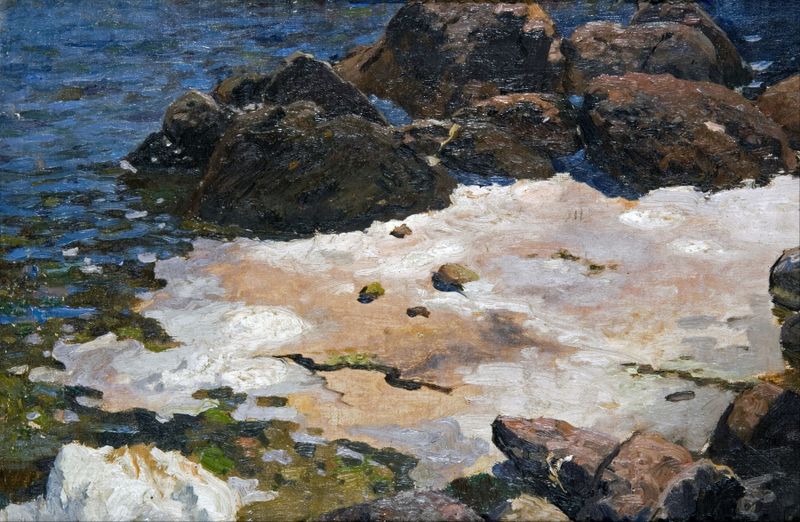
Krym, brzeg morza
Ferdynand Ruszczyc

Forest rivulet
Ferdynand Ruszczyc
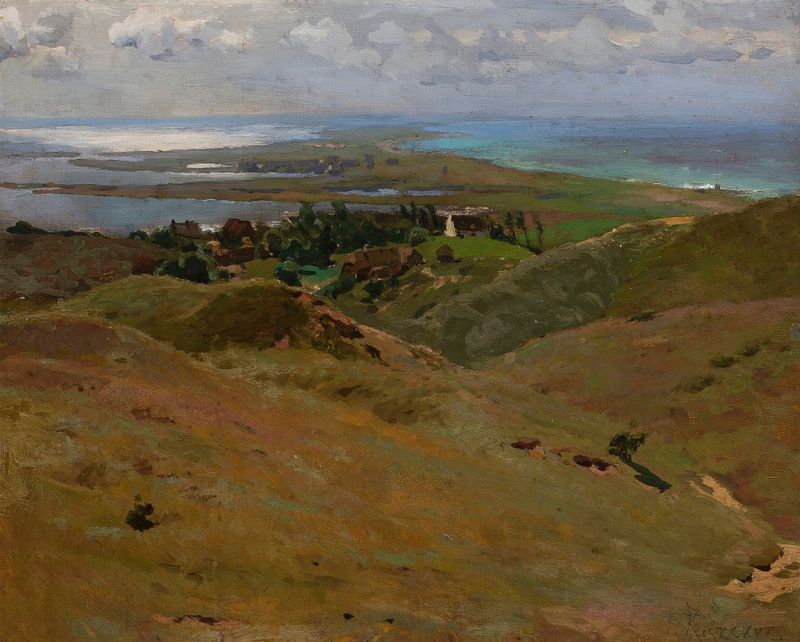
Landscape from Bornholm
Ferdynand Ruszczyc

Mill
Ferdynand Ruszczyc

Landscape – stream
Ferdynand Ruszczyc
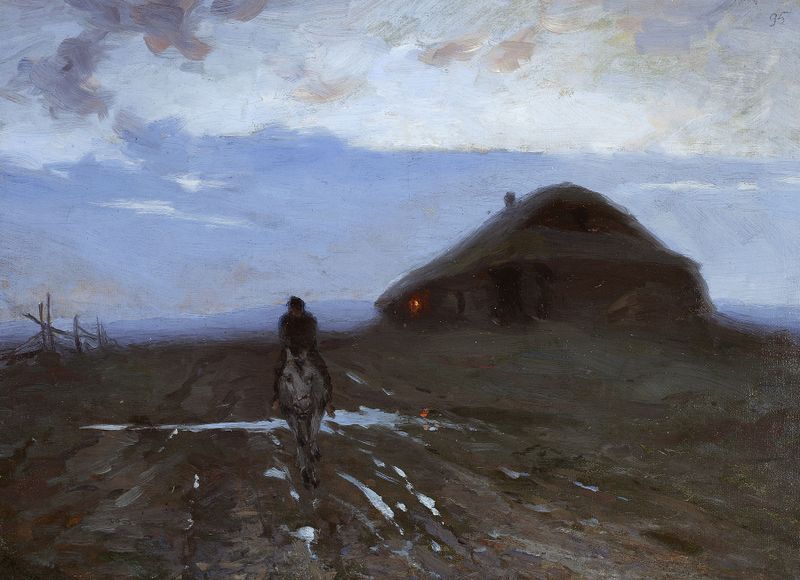
Wayside inn
Ferdynand Ruszczyc

Landscape study in Bohdanów
Ferdynand Ruszczyc

Landscape with Clouds
Ferdynand Ruszczyc
More Architecture Art
Browse all →
The statue of Liberty
Frédéric Auguste Bartholdi

View of Houses in Delft, Known as ‘The Little Street’
Johannes Vermeer

View of Houses in Delft, Known as ‘The Little Street’
Johannes Vermeer

The Cathedral in Rouen. The portal, Grey Weather
Claude Monet

The yellow house
Vincent van Gogh

The Church in Auvers-sur-Oise, View from the Chevet
Vincent van Gogh