
Church on fire — History & Facts
Is this a mirror — or a memory? The haunting portrayal of a church engulfed in flames evokes the fragility of faith and the relentless passage of time. A structure that once stood proud now succumbs to decay, leaving behind echoes of what was and will never be again. Focus on the dramatic contrast between the vibrant hues of the fire and the muted tones of the church. Look closely at the brushwork; swirling flames seem almost alive, capturing a tumultuous energy that pulls the eye toward the center of the chaos.
The surrounding landscape, painted in somber greens and browns, serves as a stark reminder of nature’s indifference, amplifying the scene's sorrowful beauty. Beneath the surface, the painting speaks to the inevitable decline of human creations and the sanctity of memory. The flames, while destructive, also illuminate the church's forgotten details — its once-stalwart architecture now a ghostly silhouette against the sky. This interplay of destruction and illumination reflects the duality of existence, where decay and hope coexist in a fragile balance. In 1658, the artist worked during a time of significant transformation in the Netherlands, where the Reformation’s aftermath continued to shape society.
Van der Poel, known for his contemplative landscapes, captured the essence of loss and remembrance during a period when art began to explore deeper emotional realms. His depiction of the burning church not only reflects personal and collective histories but also serves as a poignant commentary on the ephemeral nature of life itself.
More Artworks by Egbert van der Poel
Browse all →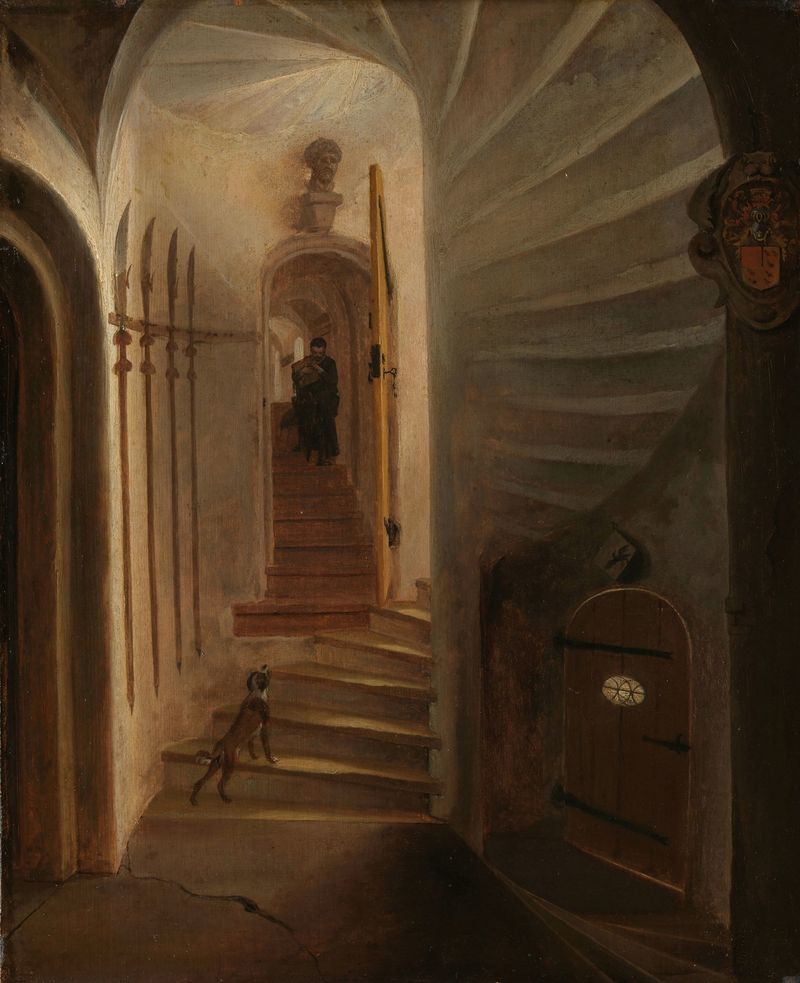
Portal of a stairway tower, with a man descending the stairs; presumably the moment before the assassination of William the Silent in the Ptinsenhof, Delft
Egbert van der Poel
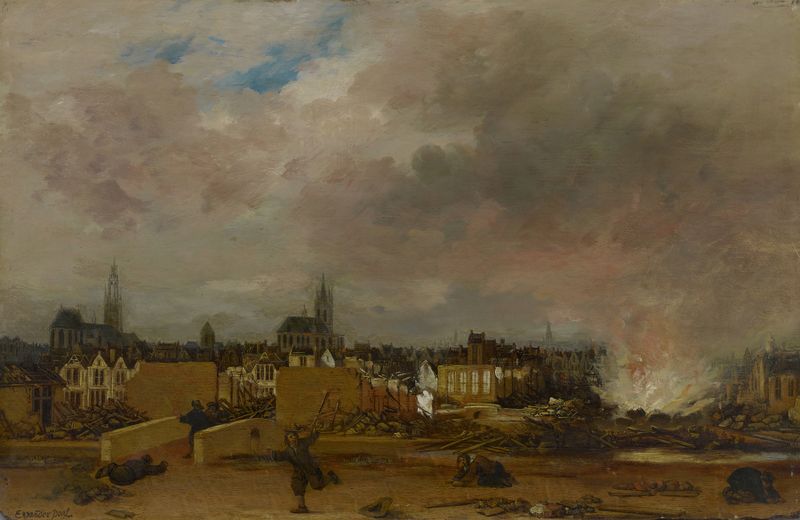
The Explosion of the Powder Magazine in Delft, 1654
Egbert van der Poel
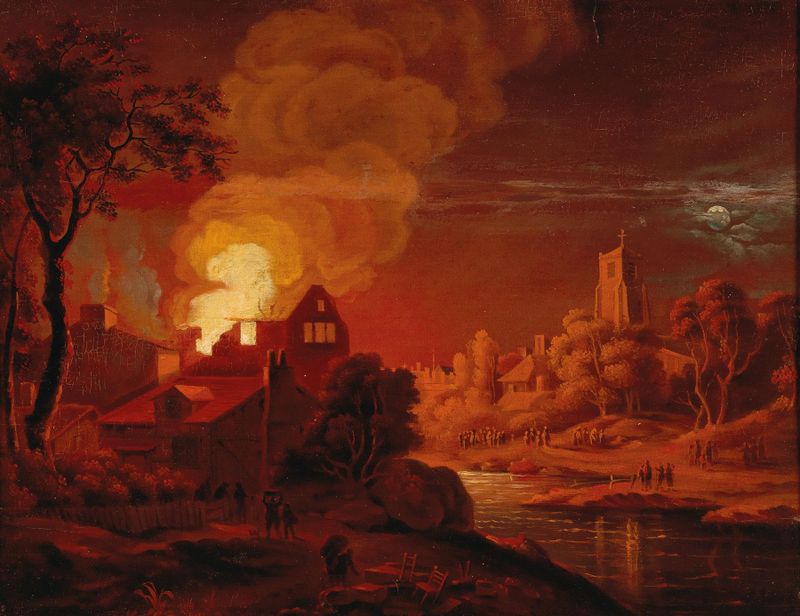
A nocturnal fire
Egbert van der Poel
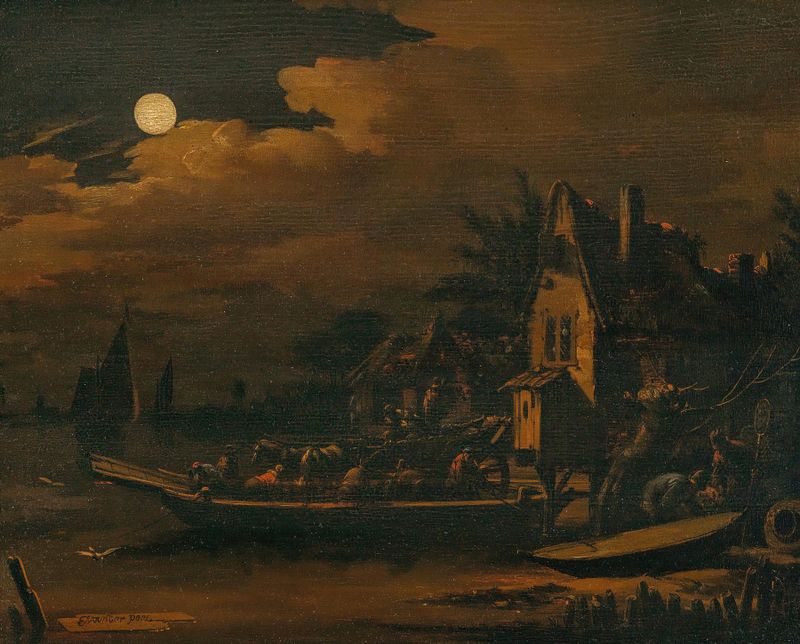
A nocturnal river landscape with a ferry boat
Egbert van der Poel
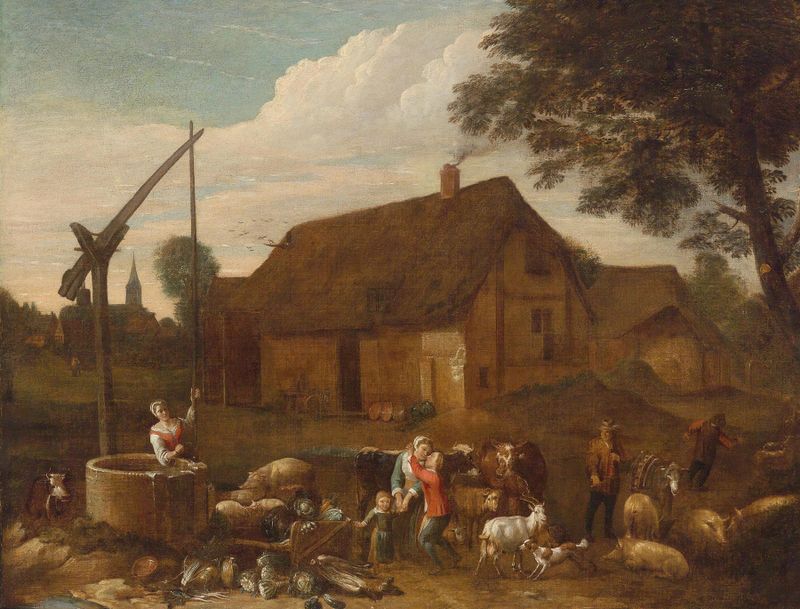
In a Farmyard
Egbert van der Poel
More Architecture Art
Browse all →
The statue of Liberty
Frédéric Auguste Bartholdi

View of Houses in Delft, Known as ‘The Little Street’
Johannes Vermeer

View of Houses in Delft, Known as ‘The Little Street’
Johannes Vermeer

The Cathedral in Rouen. The portal, Grey Weather
Claude Monet

The yellow house
Vincent van Gogh

The Church in Auvers-sur-Oise, View from the Chevet
Vincent van Gogh