
The Explosion of the Powder Magazine in Delft, 1654 — History & Facts
In this vivid tableau of chaos, fear intertwines with the fragility of human existence as a city succumbs to the unexpected. The tumultuous moment captured speaks not just of destruction, but of the visceral anxiety that accompanies loss and uncertainty. Look to the center of the canvas where a brilliant burst of flame erupts from the powder magazine, casting jagged shadows across the terrified faces of onlookers. Their expressions, a mix of horror and disbelief, become the focal point for our gaze.
Notice how the contrasting colors—the fiery oranges and yellows of the explosion against the somber blues and greens of the surrounding architecture—heighten the emotional tension, conveying a world caught in a devastating moment. Within this chaos lies a multitude of layers—each figure tells a story of personal fear, while the background hints at the fragility of safety and order. The looming threat of the explosion is mirrored by the crumbling structures, suggesting that beneath the surface of daily life, tranquility can be shattered in an instant. The artist’s deliberate choice of brushstrokes conveys urgency, as if the canvas itself is pulsing with the energy of panic. In 1654, Egbert van der Poel captured this historical incident in Delft, a city grappling with the uncertainties of its maritime prowess.
The explosion was a catastrophic event that underscored the dangers inherent in the explosive materials stored within urban environments. At this time, the artist was deeply entrenched in the Dutch Golden Age, where the interplay of light and shadow came to symbolize deeper truths about the human condition.
More Artworks by Egbert van der Poel
Browse all →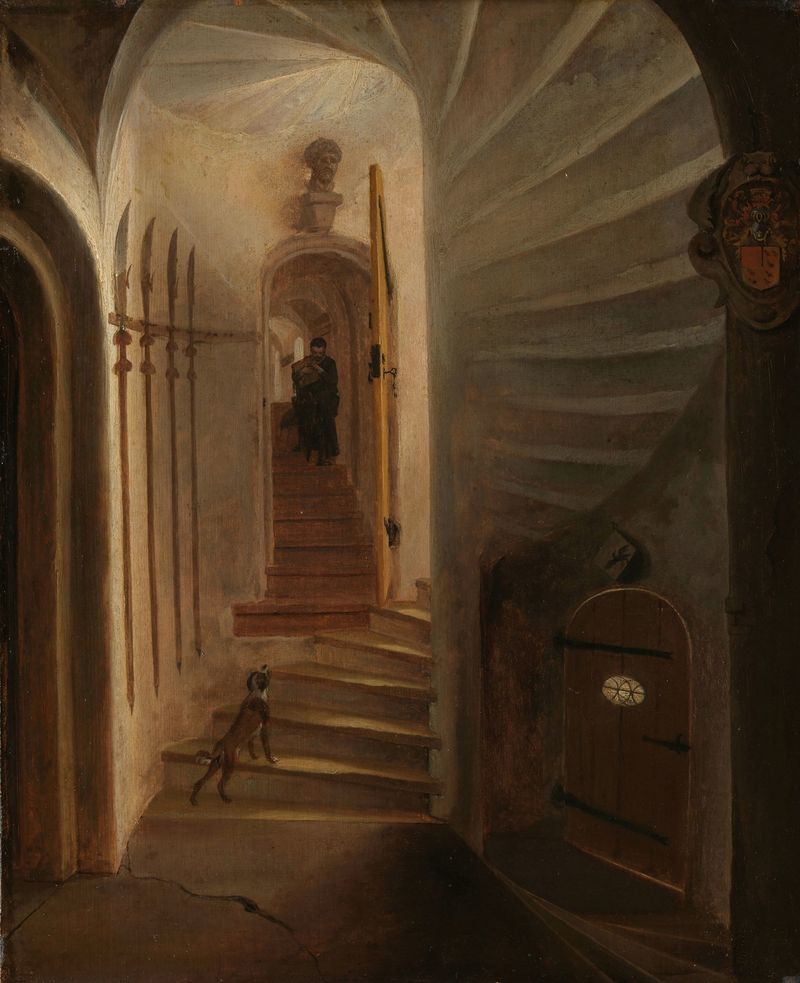
Portal of a stairway tower, with a man descending the stairs; presumably the moment before the assassination of William the Silent in the Ptinsenhof, Delft
Egbert van der Poel
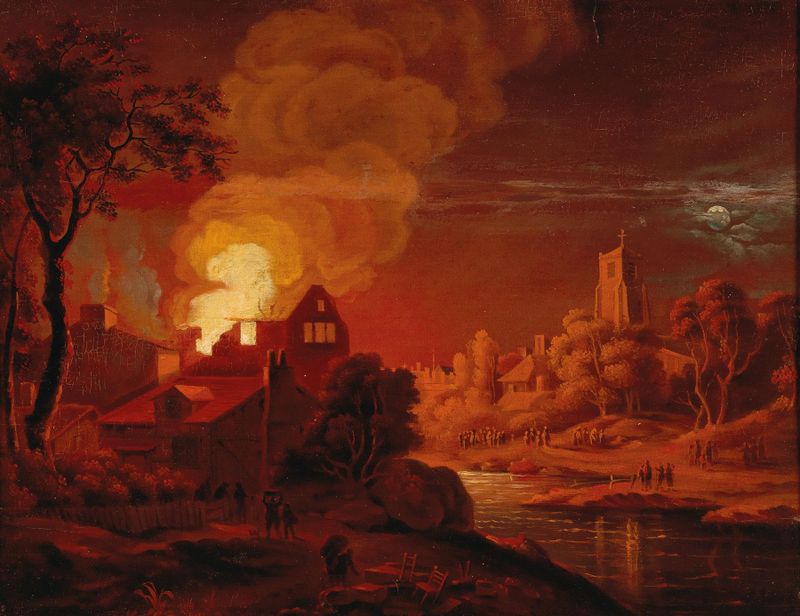
A nocturnal fire
Egbert van der Poel
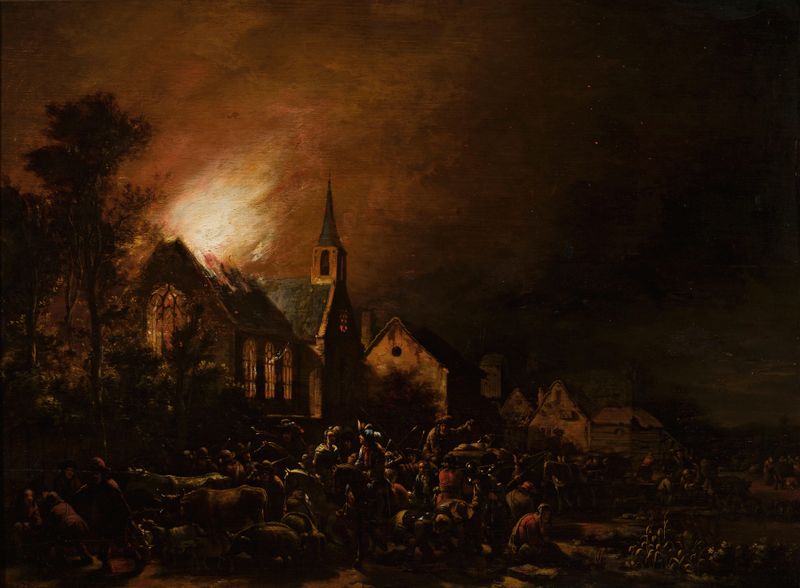
Church on fire
Egbert van der Poel
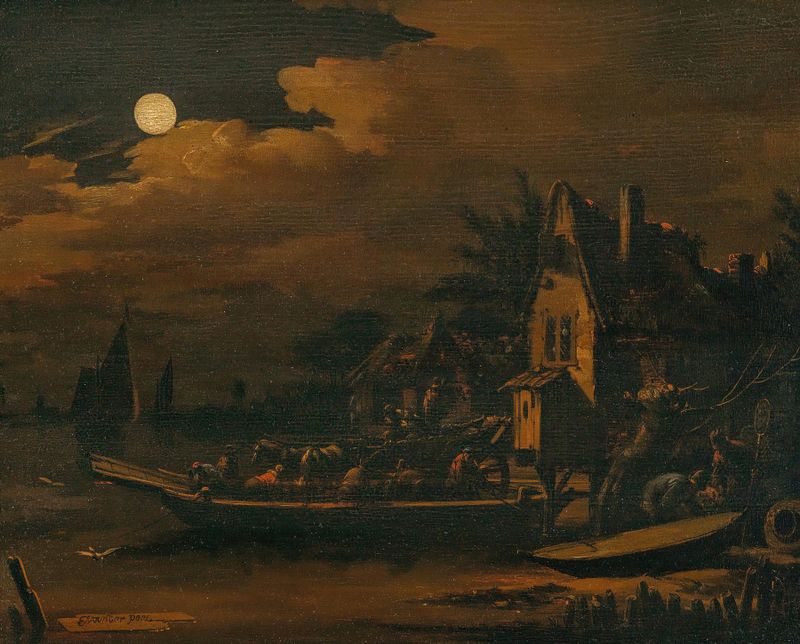
A nocturnal river landscape with a ferry boat
Egbert van der Poel
In a Farmyard
Egbert van der Poel
More Historical Art
Browse all →
The Night Watch Militia Company of District II under the Command of Captain Frans Banninck Cocq
Rembrandt van Rijn

Lincoln Memorial
Henry Bacon

The Third of May 1808
Francisco de Goya

Isaac and Rebecca, Known as ‘The Jewish Bride’
Rembrandt van Rijn

The Charge of the Mamelukes (1814)
Francisco de Goya

De vier ruiters van de apocalyps
Albrecht Dürer