Cincinnati From Behind Newport Barracks — History & Facts
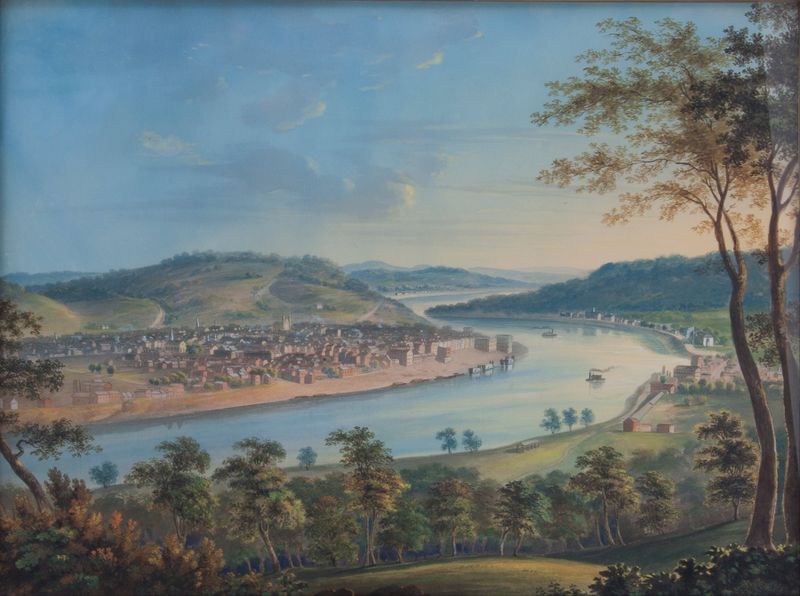
Can paint confess what words never could? In the quiet embrace of color and form, a story unfolds that transcends the mere visual, whispering the truths of mortality and the passage of time. Look to the foreground where the gentle curve of the river beckons, a flowing line that guides the viewer’s eye toward the distant skyline of Cincinnati. Notice how the artist skillfully layers hues of blue and green, reflecting the water's movement as it catches the waning light. The buildings rise solemnly in the background, their shapes softened by the haze, suggesting both familiarity and distance.
The composition balances the vibrant present with the ghostly echoes of the past. Beneath the serene surface lies an undercurrent of tension. The contrast between the lively river and the muted structures invites contemplation on the fleeting nature of life, while the delicate brushwork hints at memories that fade like the colors at dusk. This juxtaposition reflects the artist's exploration of what remains and what is lost, urging the viewer to consider their own impermanence.
The tranquil scene speaks volumes about the passage of time, evoking an emotional resonance that lingers long after one has stepped away. Created during a period of personal introspection, the work emerged from Wild's evolving understanding of landscape and identity. Active in the mid-19th century, he captured the essence of American life while navigating a changing art world that sought to define itself. This piece stands as a testament to that era, reflecting the artist's deep connection to place and memory, intertwining the physical landscape with the ephemeral nature of human experience.