City Scene–Abstract — History & Facts
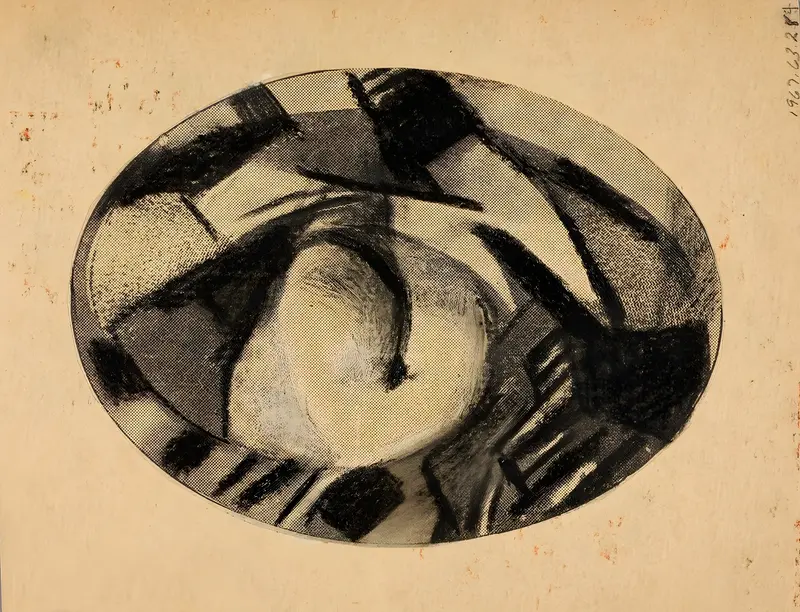
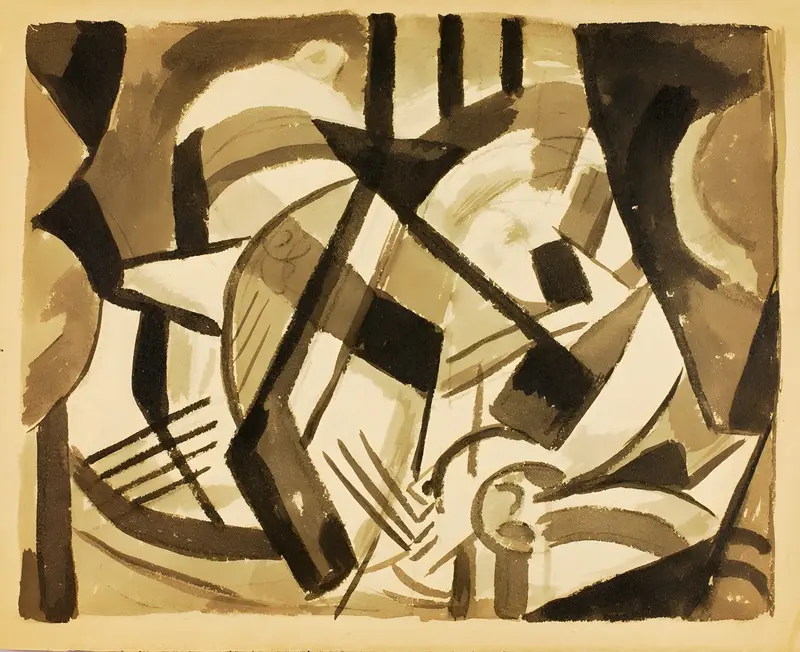
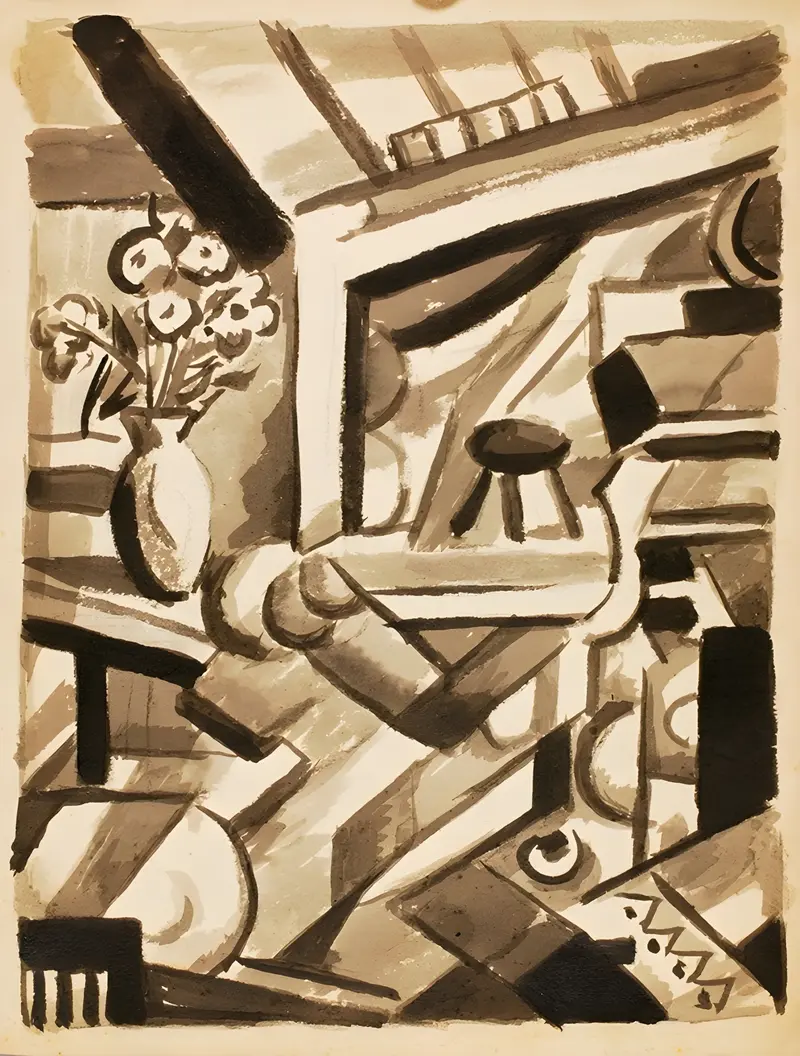
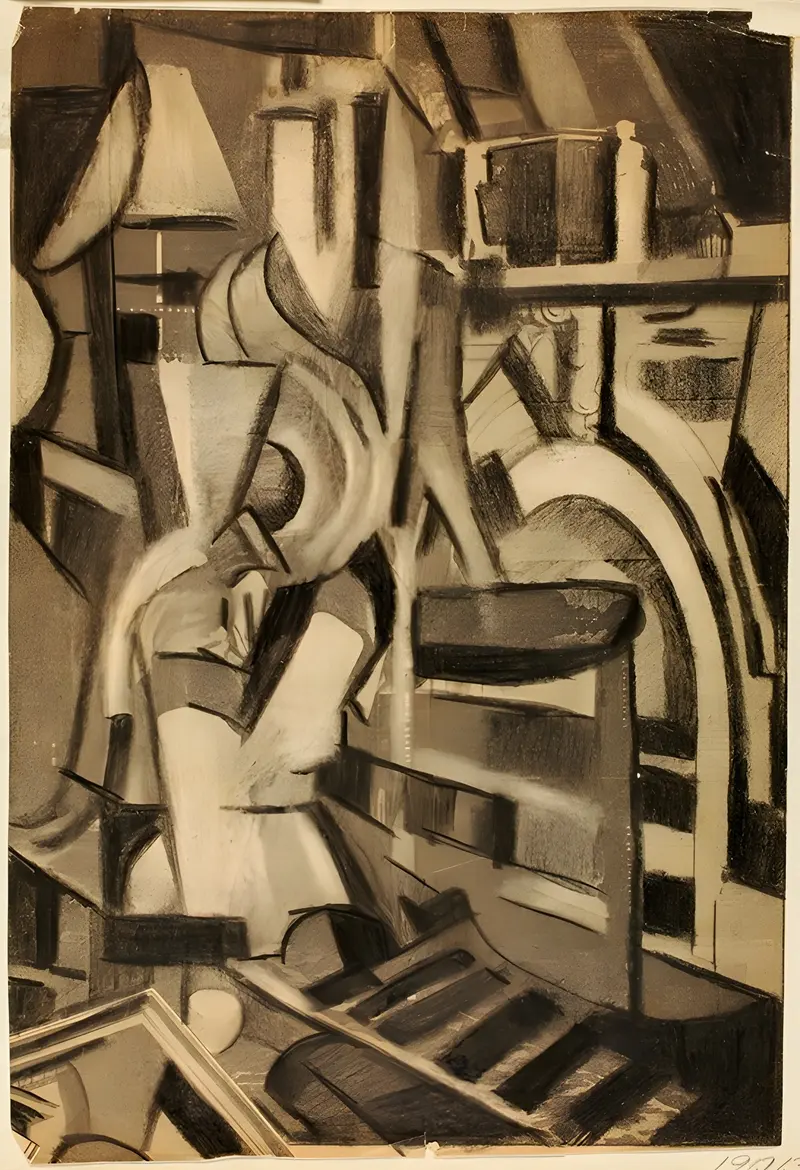
In City Scene–Abstract, Carl Newman employs a vibrant palette dominated by bold reds, blues, and yellows. The composition features geometric shapes that suggest buildings and streets, creating a dynamic urban landscape. The interplay of colors gives a sense of movement and energy, typical of modernist works.
Figures may be hinted at through abstract forms, inviting viewers to interpret their presence in the city. The painting is characterized by its use of oil on canvas, a medium that allows for rich texture and depth. Viewers can observe the layering of paint, which adds complexity to the colors and shapes. The approximate dimensions of the work are 100 x 120 cm, making it a substantial piece that commands attention.
The abstract style reflects the modernist movement, focusing on form and color rather than realism. Carl Newman was an influential figure in the modernist art scene, known for his innovative use of color and form. City Scene–Abstract exemplifies his approach to capturing the essence of urban life through abstraction. An interesting fact about this work is that it was created during a time when many artists were exploring the boundaries of abstraction, making it a significant contribution to the genre.
This painting remains in a private collection, highlighting its value and importance in Newman's oeuvre.