
Clash of cavalry — History & Facts
What first seizes the eye in Clash of cavalry is the wild, tumbling energy that surges from the riverbank to the crowded stone bridge, where horses and men are locked in a chaos of movement. The painter, Adam Frans van der Meulen, orchestrates a scene where the violence of battle is not just in the clashing figures but in the very air—clouds roil above, and the light falls in patches, picking out the frantic gestures of riders and the desperate struggles of those swept into the water. A single figure in a red coat commands attention near the center, arm outstretched, while fallen horses and scattered weapons underscore the cost of this moment.
The bridge itself becomes a stage, arching over the turmoil, as if history itself is crossing from one side to another. Painted in 1657, this work belongs to a world where the depiction of military exploits was both a record and a spectacle, often commissioned to celebrate victories or to decorate the halls of power. The seventeenth century saw the rise of the battle scene as a genre, especially in the Netherlands and France, where artists like van der Meulen became renowned for their ability to animate the smoke and thunder of cavalry charges. While history has kept few traces of this particular painting’s early journey, its presence today in the Prado speaks to the enduring fascination with such scenes—moments where the fate of nations seems to hang in the balance, and the painter’s hand captures not just the clash of arms, but the drama of an age.
Stand before it, and let your eye wander from the tumult at the river’s edge to the distant, ominous sky.
More Artworks by Adam Frans van der Meulen
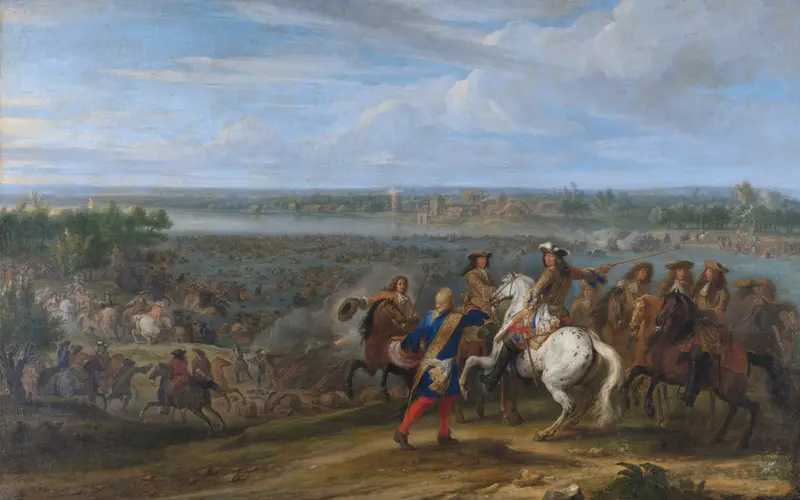
Louis XIV Crossing into the Netherlands at Lobith
Adam Frans van der Meulen
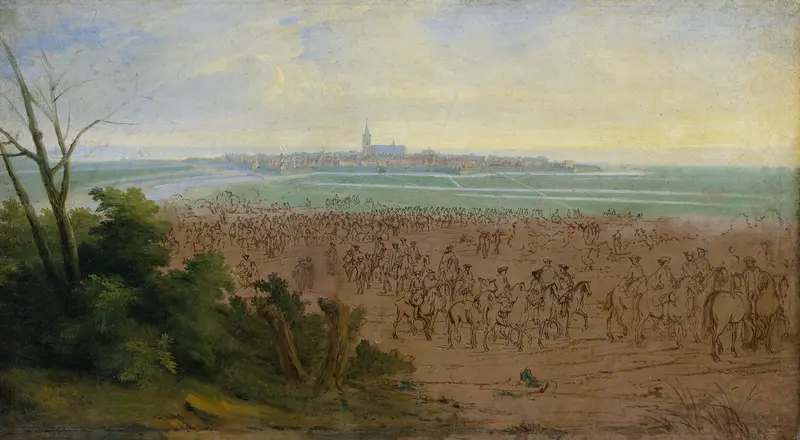
The Troops of Louis XIV before Naarden, 20 July 1672
Adam Frans van der Meulen
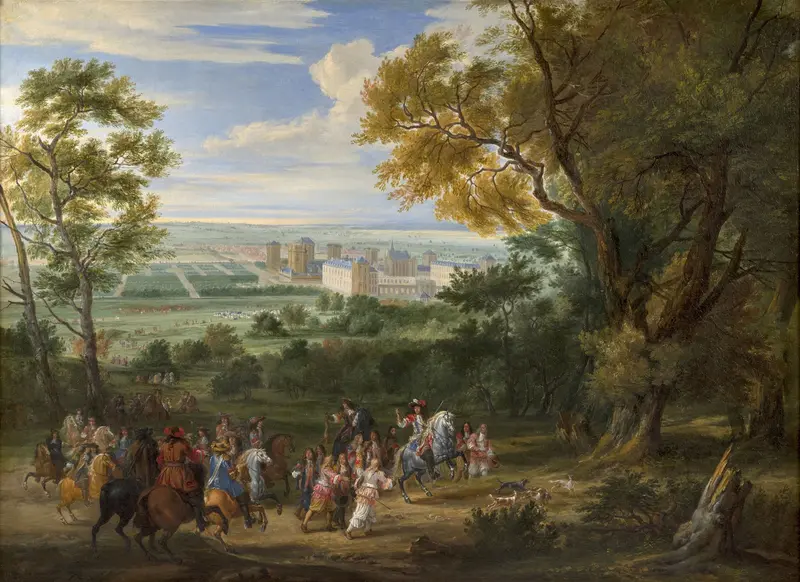
View of the château de Vincennes or The Departure of Louis XIV for the hunt
Adam Frans van der Meulen

A battle scene
Adam Frans van der Meulen
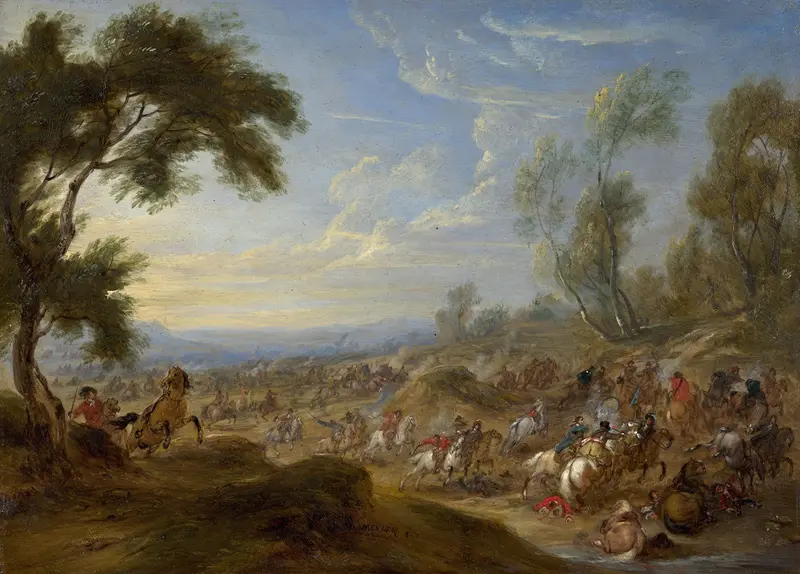
A cavalry charge
Adam Frans van der Meulen
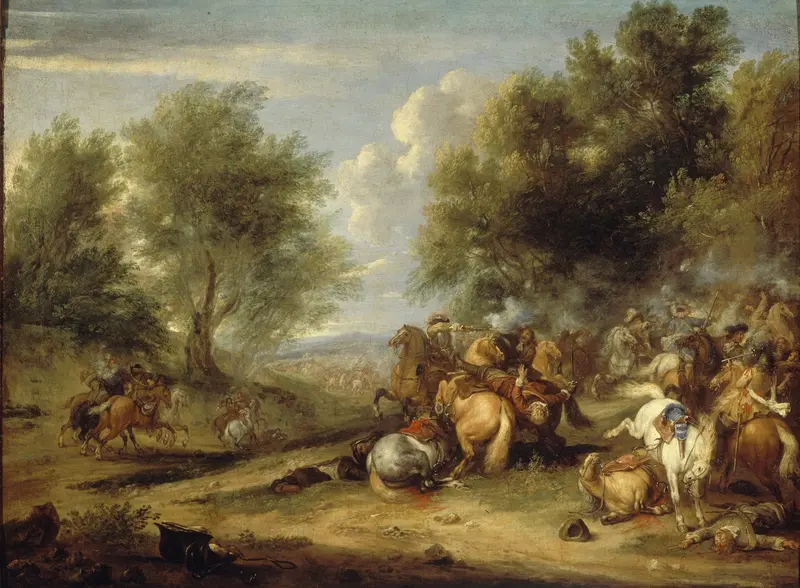
Choc de cavalerie ou Combat de cavalerie
Adam Frans van der Meulen
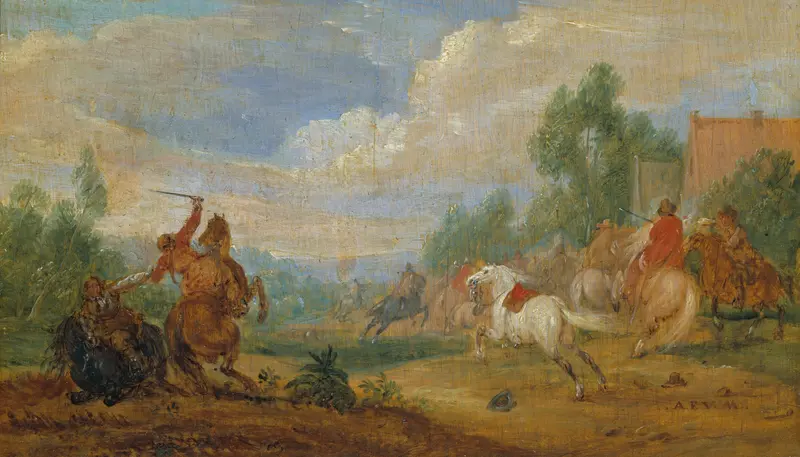
Cavalry Skirmish
Adam Frans van der Meulen
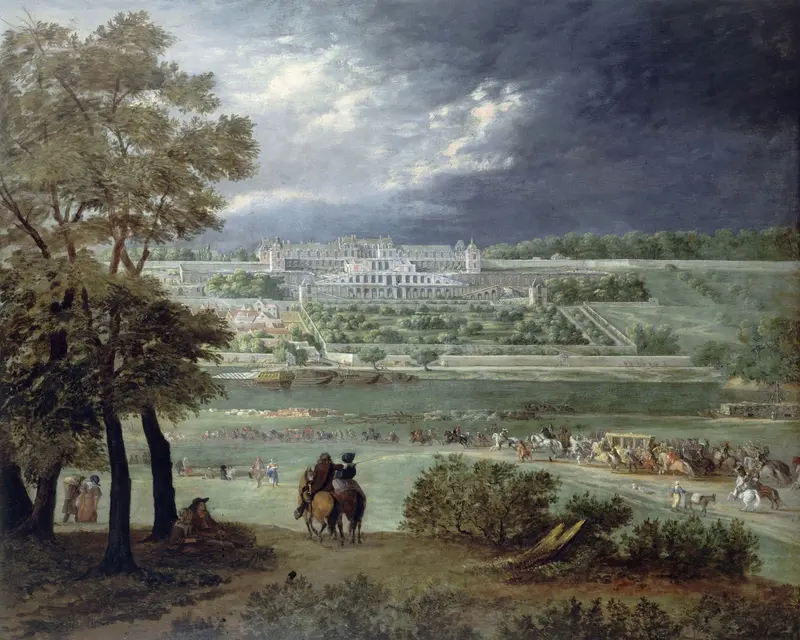
Le Château Neuf de Saint-Germain-en-Laye et les jardins, vus de la rive droite de la Seine
Adam Frans van der Meulen
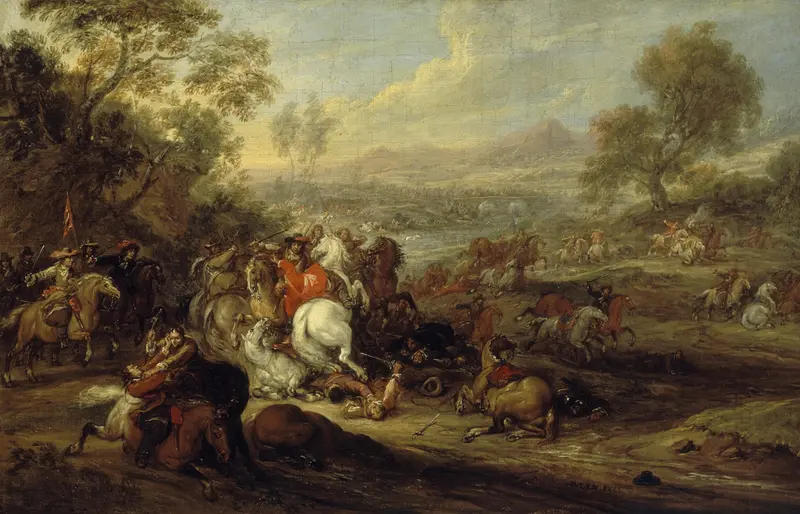
Choc de cavalerie ou Combat de cavalerie
Adam Frans van der Meulen
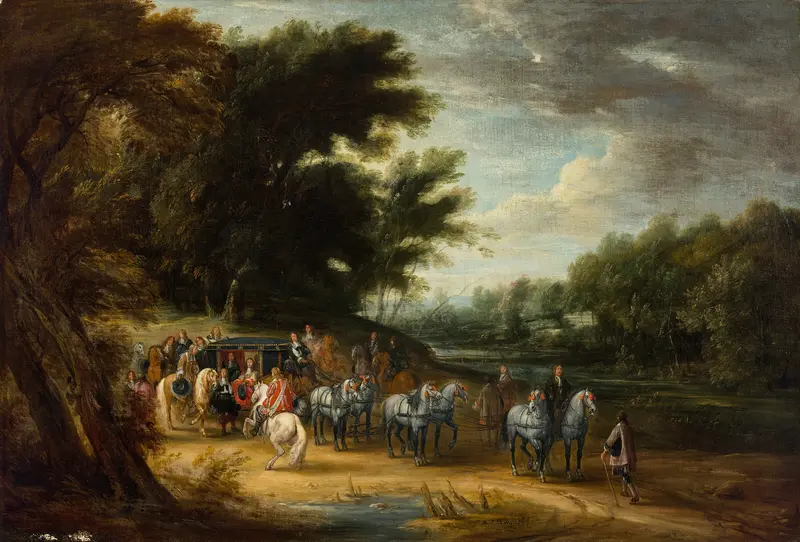
A nobleman in a state coach at rest escorted by his men and horses, with a gentleman on a white horse approaching and landscape beyond
Adam Frans van der Meulen





