Clouds at Sunset — History & Facts
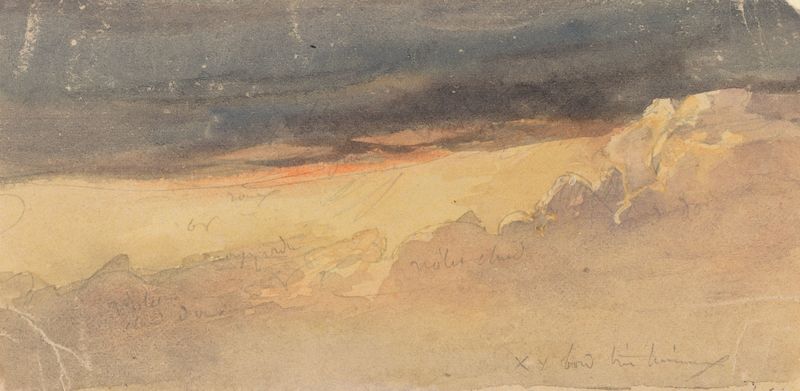
Did the painter know this moment would outlive them? The ephemeral beauty of a sunset holds a divine tension, inviting contemplation of time, existence, and the horizon that forever eludes us. Look to the upper left where vibrant hues of crimson and gold clash majestically against soft blues and grays. The light dances across billowy clouds, each brushstroke swirling in a delicate balance of chaos and harmony, leading your eye toward the horizon. Notice how the colors transition seamlessly, evoking the fleeting nature of daylight while promising the mysteries of the night ahead.
The composition offers an open expanse, creating a sense of both wonder and solitude. Within this canvas lies a profound dialogue between the transient and the eternal. The clouds, heavy with emotion, appear to cradle the sun, symbolizing both divine presence and the burden of time. There’s a contrast between the vibrant energy of the setting sun and the encroaching shadows of dusk, suggesting a moment suspended between hope and the inevitable darkness.
The vastness of the sky encapsulates the human desire for connection to something greater, while simultaneously acknowledging our solitude in the face of nature’s grandeur. In the absence of a specific date, James Hamilton Shegogue captured Clouds at Sunset during a period rife with artistic exploration and a deepening interest in nature’s splendor. His work reflects the Romantic ideals prevalent in the mid-19th century, where artists sought to convey emotional depth and spiritual transcendence through landscape. Amidst a world on the cusp of industrialization, he found solace in the natural world, crafting an image that not only resonates with beauty but also invites viewers to ponder their place within it.