Coast at Nervi — History & Facts
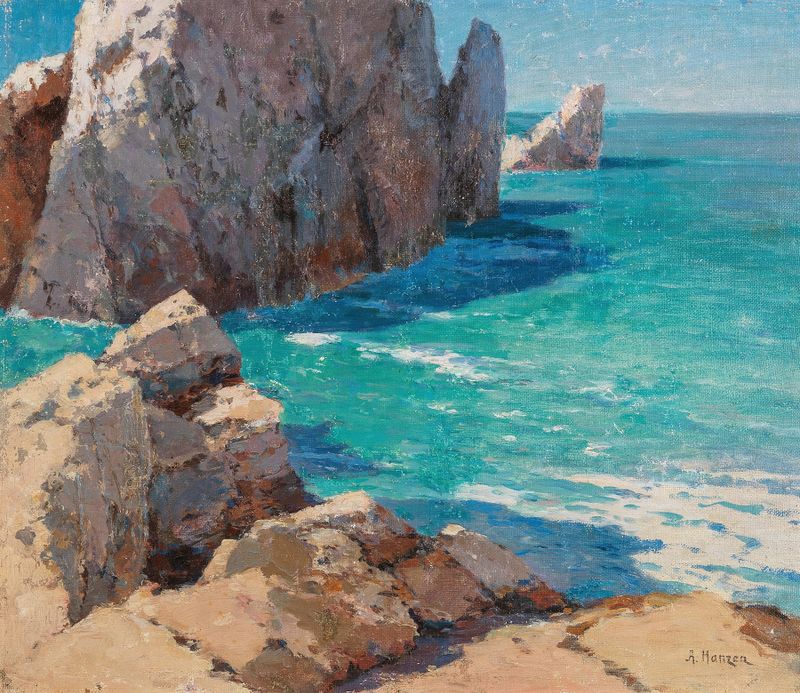
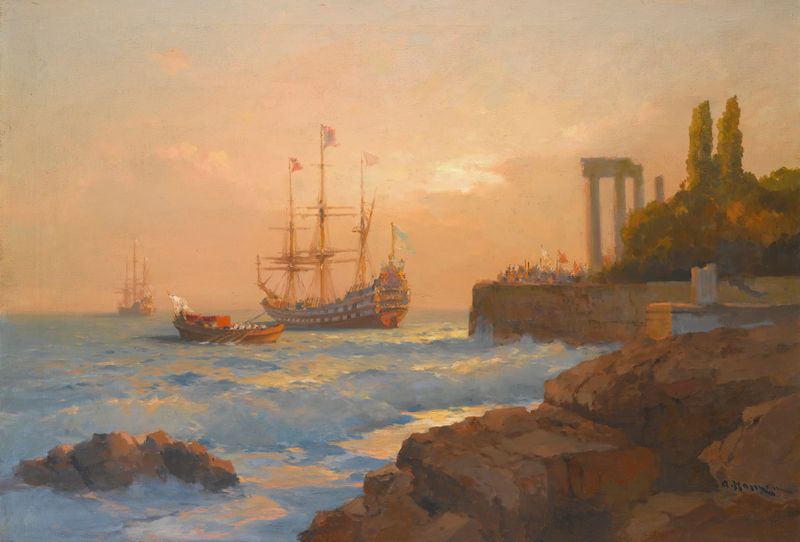
What secret hides in the quiet of the canvas? In Coast at Nervi, a tranquil shoreline whispers of hidden depths and silent obsessions, inviting the viewer into a moment where time stands still. Focus on the gentle curves of the coastline, where the land meets the soft caress of the sea. The artist uses a delicate palette of blues and greens that reflects the serene yet elusive quality of water, drawing your eye to the rhythmic dance of the waves. Notice how the interplay of light creates a shimmering effect, almost as if inviting you to step into the scene.
The horizon stretches far beyond what is seen, suggesting an infinite journey, both geographical and emotional. Yet, beneath this surface calm lies an undercurrent of tension. The jagged rocks at the shoreline contrast sharply with the smooth expanse of the water, symbolizing the struggle between nature's fury and tranquility. The distant cliffs loom like sentinels, casting long shadows that hint at the weight of unsaid thoughts and unfulfilled dreams.
Each brushstroke seems to pulse with the artist's fixation on this serene moment, capturing a fleeting beauty that teases permanence. Painted in the late 19th century, Coast at Nervi emerged during a time of great change in the world of art, as realism began to challenge romantic ideals. Hanzen, based in Russia, found himself amidst a growing fascination with landscapes that reflect personal emotion and deeper narratives. His works, often characterized by their quietude and introspection, mirror his own life at a time when the boundaries of artistic expression were expanding, revealing the layers of existence that lay beneath every serene surface.