Ship At Dusk — History & Facts
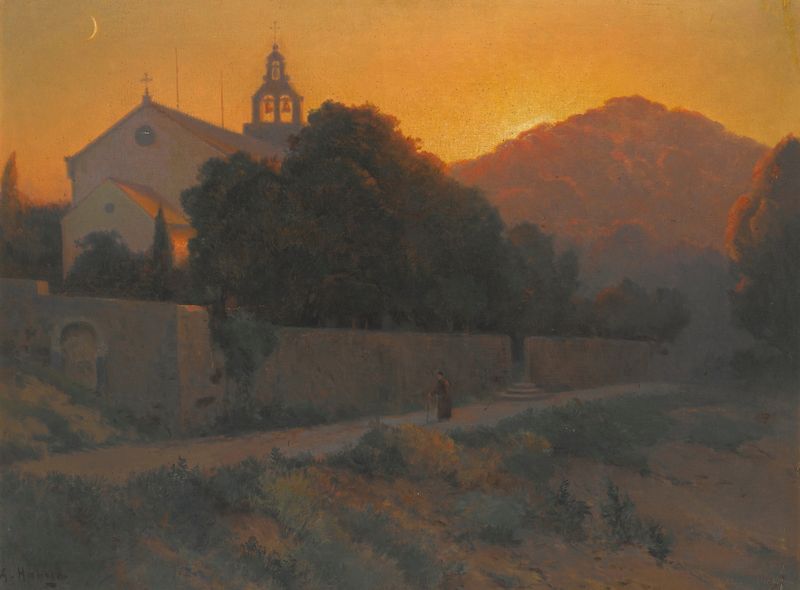
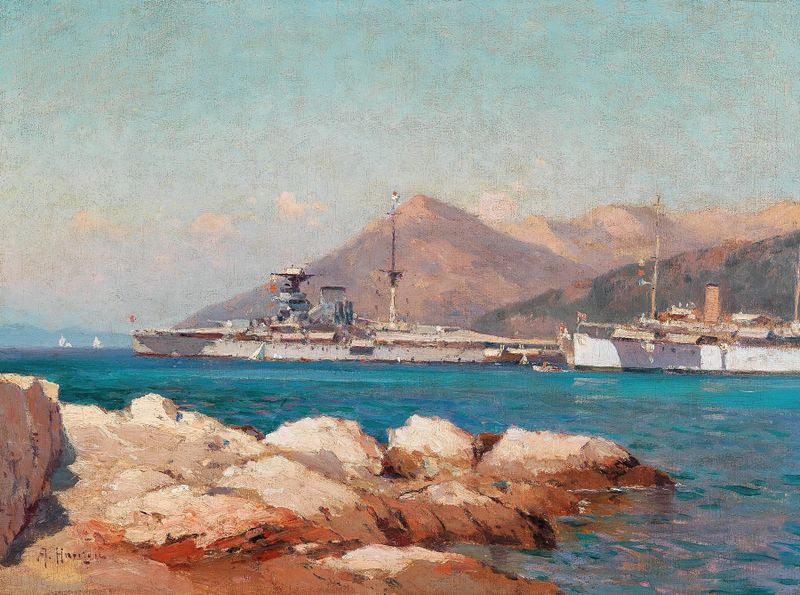
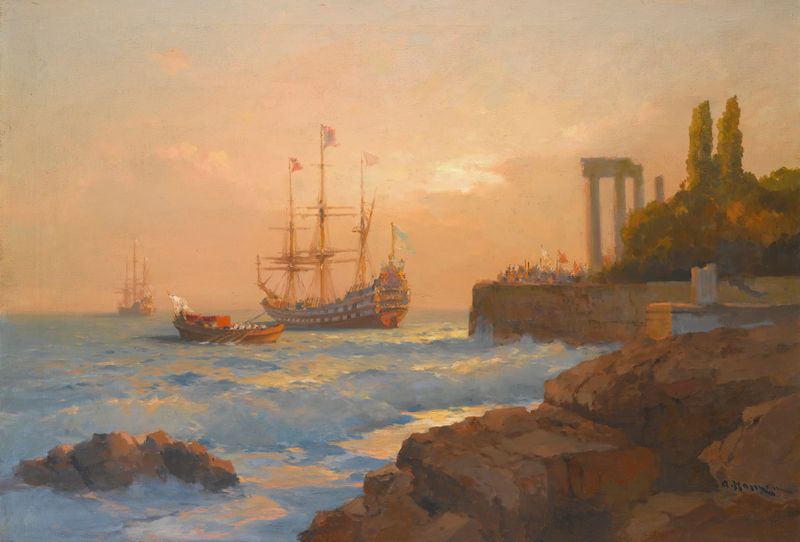
In the quiet of dusk, the horizon blurs, eliciting a deep yearning for what is just beyond the fading light. As shadows deepen and colors soften, one can’t help but feel the weight of longing encapsulated within the stillness. Look to the center, where the silhouette of the ship stands stark against a canvas that transitions from fiery oranges to deep blues. The vessel, poised on the water’s edge, serves as a focal point that draws the eye, creating a stark contrast to the gentle, enveloping glow of the twilight sky.
Notice how the brushstrokes seem to ripple like the water they depict, each movement subtly reflecting the tranquility of the moment, while the sky above radiates an almost ethereal beauty. This artwork reveals layers of emotional tension, each hue contributing to a sense of anticipation and reflection. The ship, though still, carries an essence of movement and adventure, hinting at journeys taken or yet to come. The interplay between light and shadow invites contemplation of the passage of time, embodying the bittersweet nature of memories that linger in twilight’s embrace — a reminder of both loss and hope. The origins of this piece lie shrouded in history, attributed to Alexei Vasilievich Hanzen, a noted Russian artist active during the 19th century, though the exact date of its creation remains elusive.
At this time, Hanzen was navigating the shifting currents of the Russian artistic landscape, influenced by Romanticism and the emerging trends of realism. His work often reflected an intimate connection with nature, exploring the emotional depths of human experience through the lens of the natural world.