Coast of Holland — History & Facts
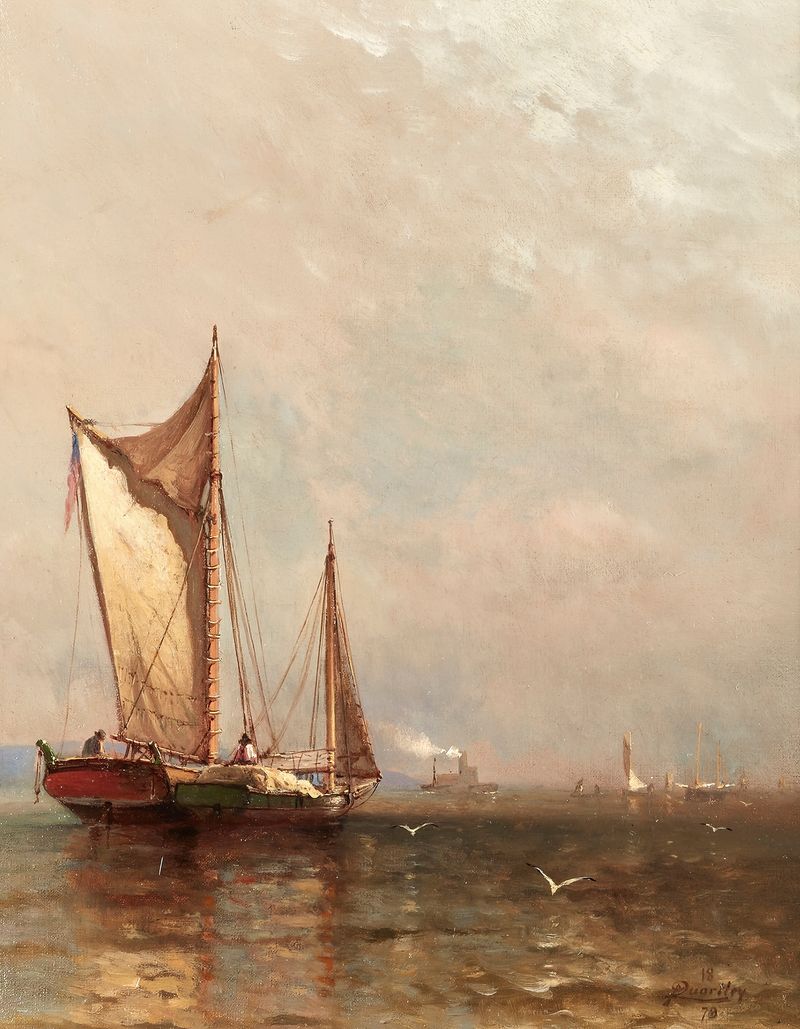
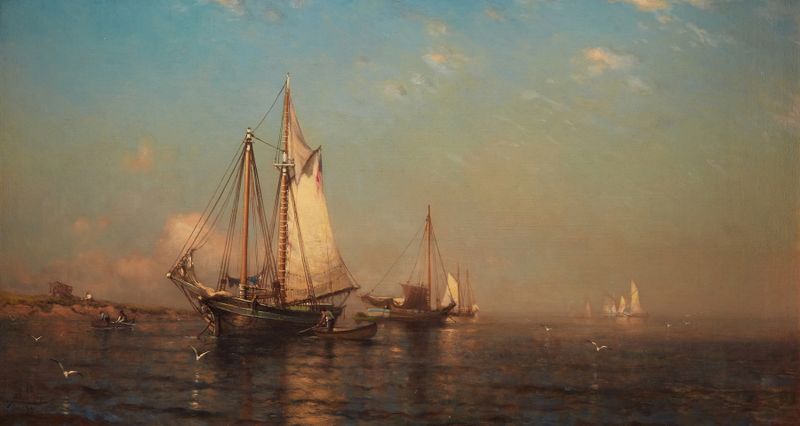
In the quietude of a moment captured, the melancholy of existence unfurls itself like a fragile sail in the wind. Look to the horizon where the cool blues of the sky meld seamlessly into the reflective waters. Notice how the gentle strokes of white suggest the movement of clouds, casting their softened light upon the tranquil sea. Your eye is drawn to the small boats near the shore, their sails billowing faintly, hinting at a journey that feels both hopeful and inevitable.
The muted palette evokes a sense of nostalgia, while the delicate brushwork brings a life to the scene that feels both fleeting and eternal. As you delve deeper, consider the small figures on the beach, almost lost against the swell of nature around them. Their postures suggest a moment of pause, perhaps contemplation in the face of a vast, indifferent world. This contrast between the intimacy of their presence and the expansive landscape amplifies the painting's emotional undertone.
Each detail—the ripples in the water and the soft reflections—whispers of a poignant solitude that resonates deeply with the human experience. In 1882, Quartley painted this piece while residing in the coastal town of Scheveningen, Netherlands. At this time, he was influenced by the Impressionist movement, embracing its innovative approaches to light and color. The world was shifting, and so was the art scene, yet Quartley remained committed to portraying the quiet beauty of nature, pulling from both his inner emotions and the changing tides of his surroundings.