Morning Off Marblehead — History & Facts
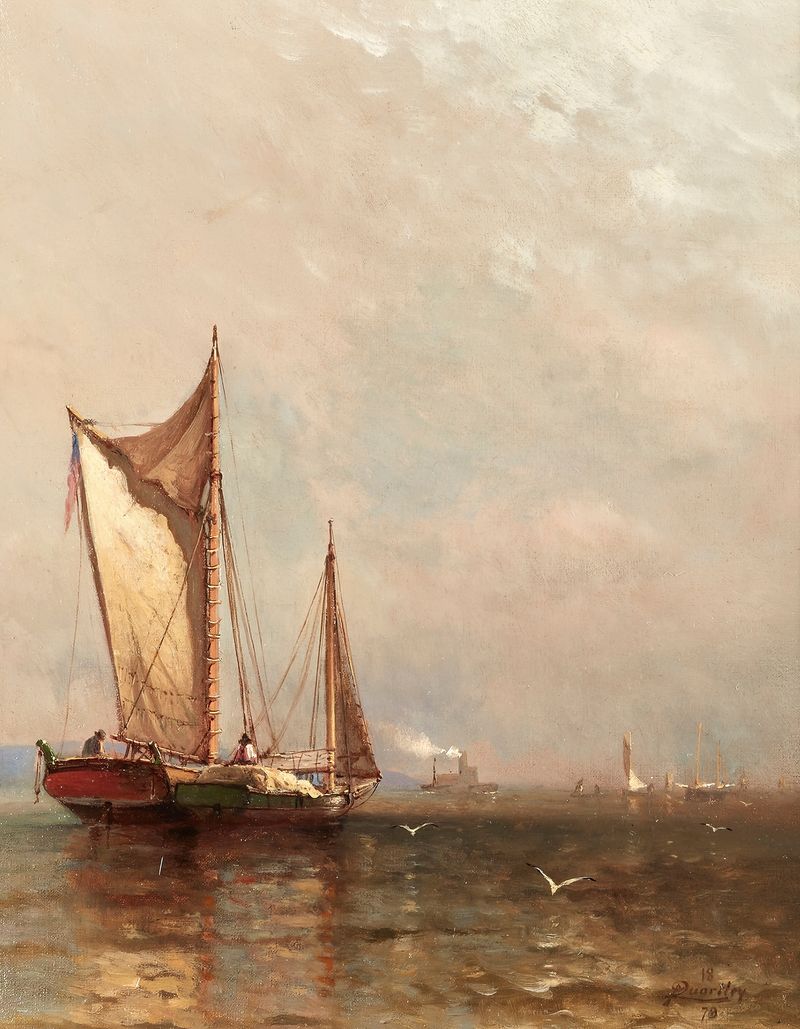
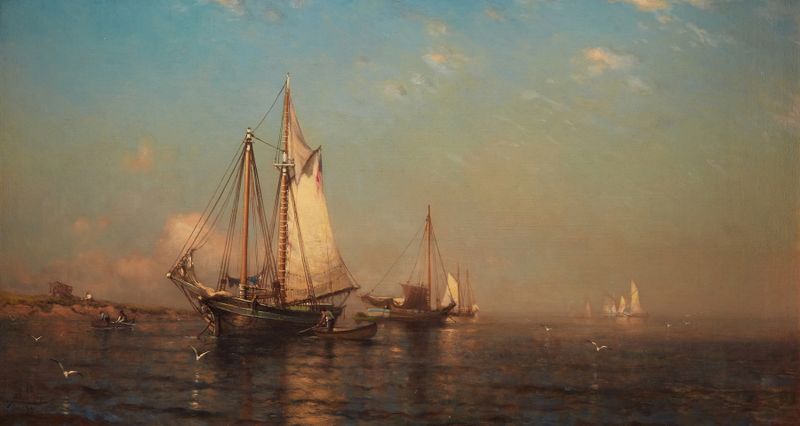
When did color learn to lie? In the stillness of dawn, light reveals and conceals the beauty of existence, capturing both the ephemeral and the eternal. Focus first on the horizon, where a delicate blend of cerulean blue and soft apricot hints at the sun's ascent. The painter's choice of color creates an ethereal glow that bathes the scene, while the calm waters reflect this awakening palette, merging sky and sea into one. Brushstrokes dance across the canvas, capturing the subtleties of morning mist that hovers gently over the landscape, inviting the viewer to breathe in the tranquility that pervades the scene. As the viewer delves deeper, notice the small fishing boats that punctuate the serene waters, their silhouettes delicate yet defined, representing human persistence against nature’s vastness.
The contrast between the vibrant sky and the muted earth tones of the boats speaks to the relationship between ambition and the beauty of simplicity. Quartley embodies the notion that even in stillness, life is rich with stories waiting to emerge from the depths. In 1877, while painting Morning Off Marblehead, Quartley was immersed in the American landscape movement, which celebrated the natural beauty of the nation. Living in a time when impressionism was gaining momentum, he sought to convey emotion through light and color.
This work reflects not only his technical prowess but also the spirit of an era that revered the beauty of nature and the everyday lives of those within it.