
Coastal Scene With Fisherfolk — History & Facts
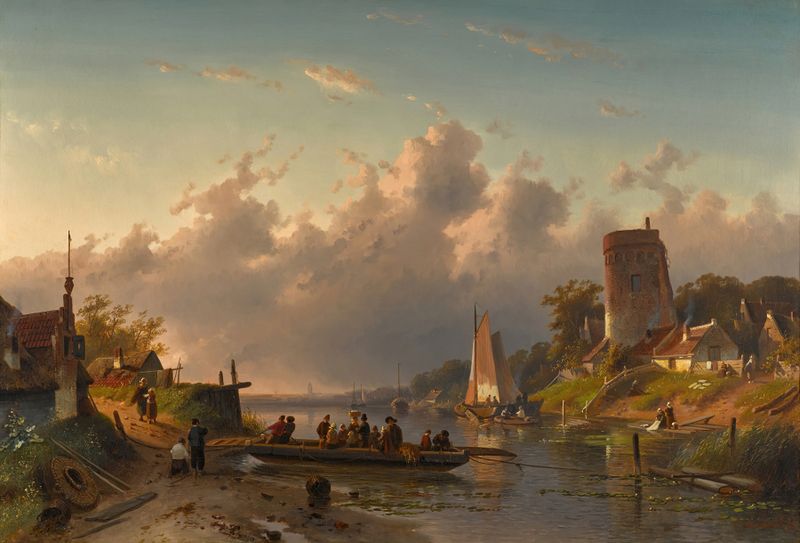
In the ebb and flow of time, beauty and decay coexist, whispering stories of life once vibrant. To engage with the painting, direct your gaze to the tranquil shoreline, where the earthy tones of wet sand blend seamlessly with the azure waves. Observe the fishermen, their figures outlined against the horizon, weathered yet resolute as they maneuver their boats. Notice the soft brushwork that gives life to the rolling waves, each stroke encapsulating movement and the transient nature of their toil.
The muted palette speaks to the somber reality of labor, while patches of sunlight filtering through the clouds create a contrast that breathes warmth into the scene. Diving deeper, consider the juxtaposition of vitality and decay, embodied in the fishermen’s toil against the backdrop of nature’s relentless march. The boats, weather-beaten and worn, symbolize the passage of time, illustrating how human endeavor is both sustained and eroded by the elements. The scattered fishing nets strewn across the sand hint at lost opportunities, evoking a sense of nostalgia for a way of life that is slowly fading. Created in 1855, during a time of significant social and industrial change in Europe, the artist captured a moment steeped in the realities of rural life.
Leickert painted this coastal scene while residing in the Netherlands, where the rise of industrialization began to alter traditional livelihoods. His work reflects a growing awareness of the fragility of beauty and the impact of human existence on nature, encapsulated in the simple yet poignant depiction of fishermen working against the tides of change.
More Artworks by Charles Leickert
Browse all →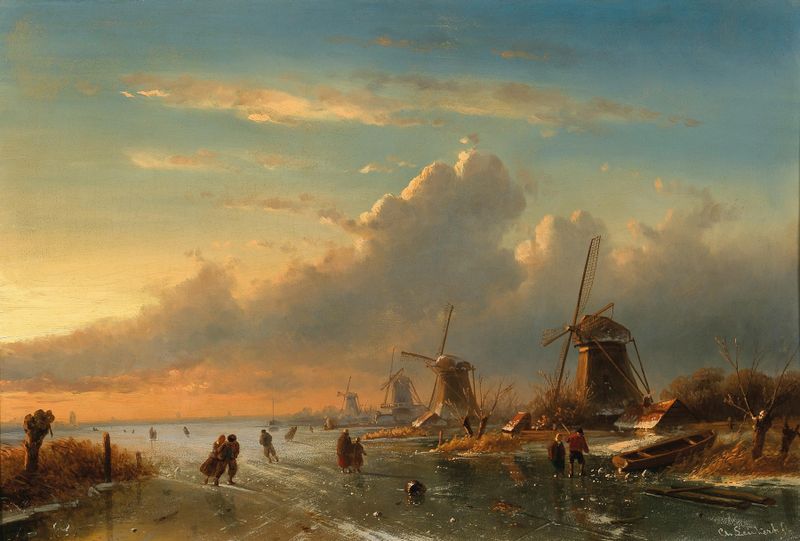
A winter landscape at sunset with figures on the ice
Charles Leickert
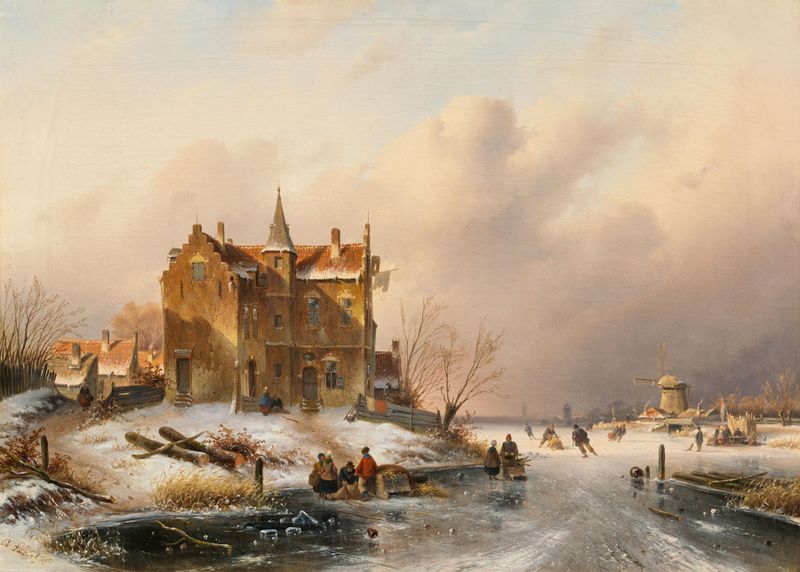
Winterlandschaft mit Schlittschuhläufern auf einem zugefrorenen See
Charles Leickert
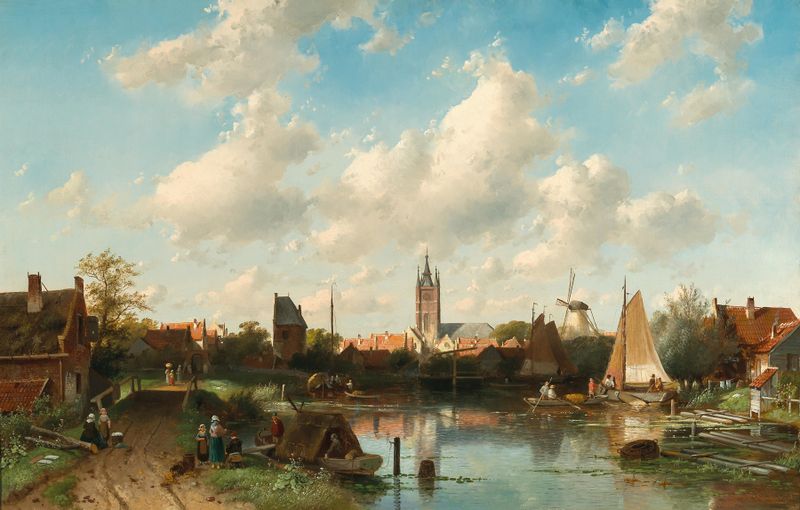
A View of Delft
Charles Leickert
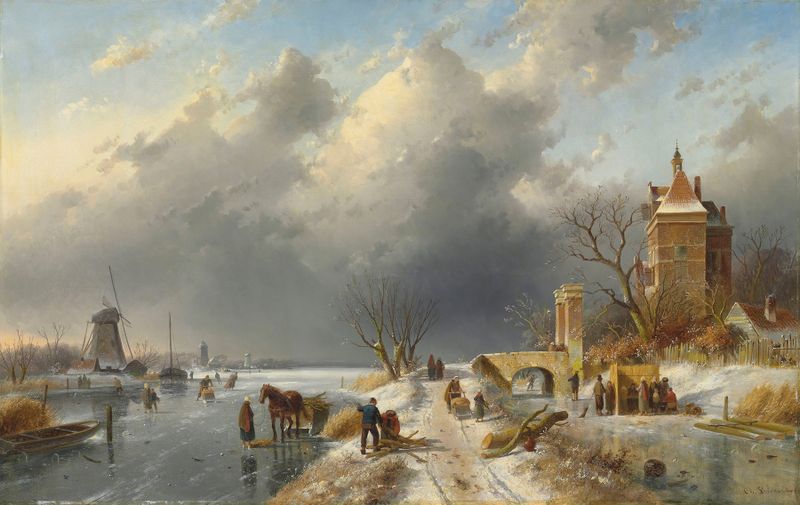
A winter landscape with figures on the ice
Charles Leickert

Ice Skaters at Sunset
Charles Leickert

A Vast River Landscape with Windmills
Charles Leickert

Winterrivierlandschap
Charles Leickert

A village street scene in winter
Charles Leickert
Evening at the Riverbank
Charles Leickert

A River Landscape with Figures on the Bank
Charles Leickert





