
Colored composition (Hommage to Johann Sebastian Bach) — History & Facts
A riot of color and movement pulls the viewer into Colored composition (Hommage to Johann Sebastian Bach), where the eye is never allowed to rest for long. The composition is a cascade of interlocking forms—zigzags, spirals, and bold arcs—each shape tumbling into the next as if swept along by an invisible rhythm. The palette is exuberant, with fiery reds and oranges colliding with cool blues and greens, suggesting both harmony and discord.
The black lines carve out pathways, almost like musical staves, guiding the gaze in unexpected directions and hinting at the work’s tribute to Bach. Here, abstraction does not mean chaos; instead, it feels as if every brushstroke is part of a larger orchestration, each color a note in a visual fugue. Created in 1912, this work emerges from a moment when artists like August Macke were searching for new ways to translate music and emotion into paint. The early twentieth century was a time of wild experimentation, as painters broke free from tradition and sought inspiration in everything from African sculpture to the theories of color and sound.
The homage to Bach is not literal but sensed in the painting’s structure—a nod to the composer’s intricate layering and bold architecture. Preserved in the Yorck Project’s vast digital collection, this piece stands as a testament to a brief, electric moment in European art, when color and form were set loose to find their own music. Let your eyes follow the lines and lose themselves in the rhythm—there is always more to discover here.
More Artworks by August Macke
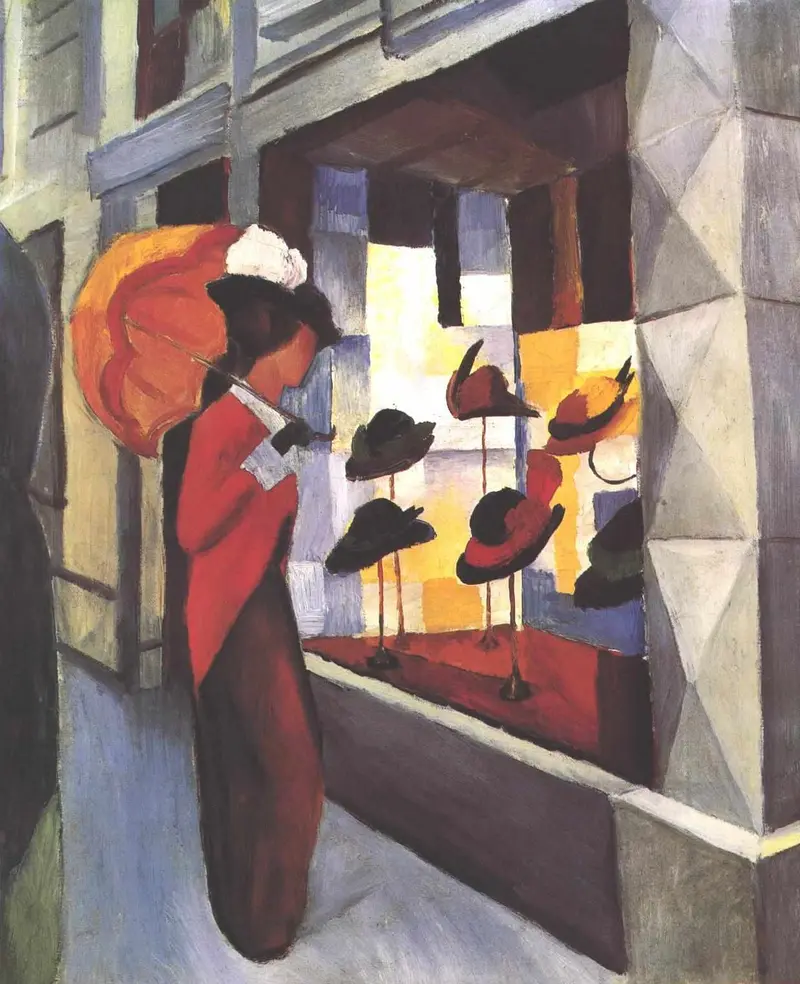
Woman with a Parasol in Front of a Hat Shop
August Macke

Street with Church in Kandern
August Macke
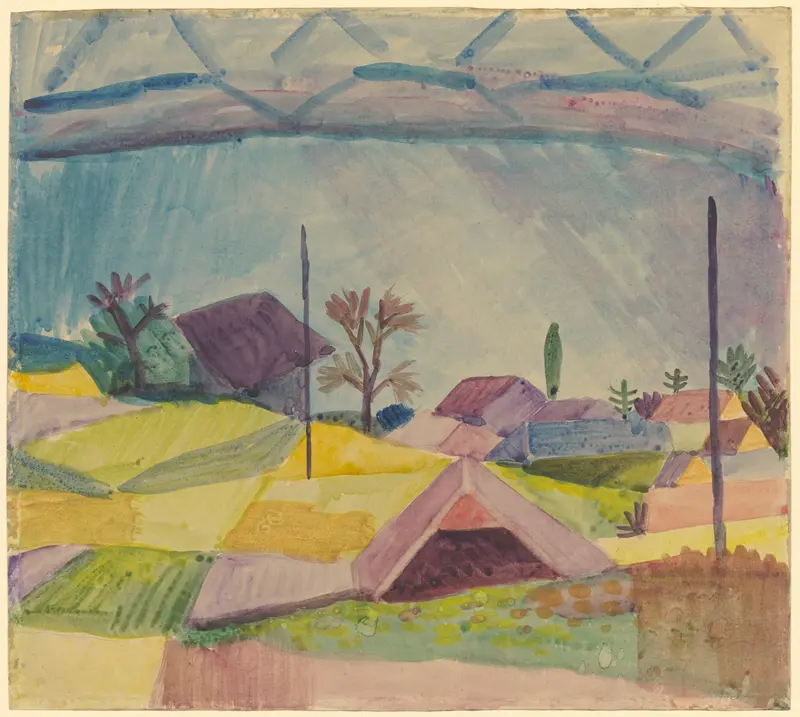
View of Hilterfingen
August Macke

Paar im Nachen
August Macke
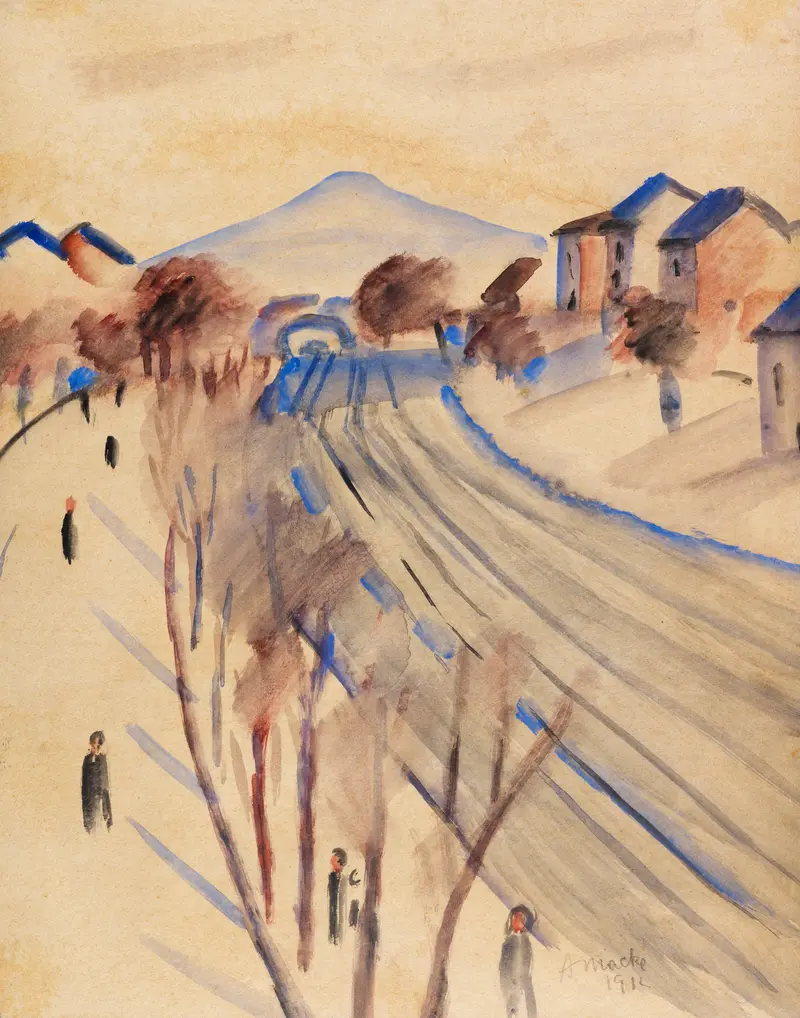
Ölberg mit Bahngleisen II
August Macke
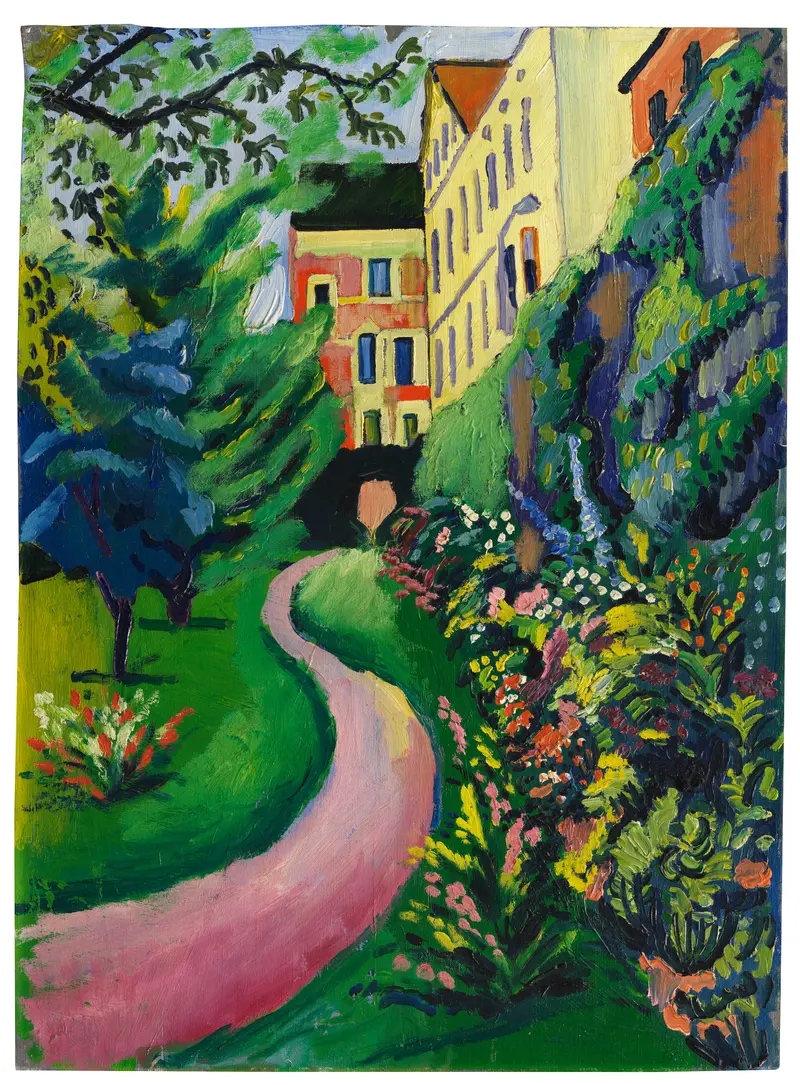
Unser Garten mit blühenden Rabatten
August Macke
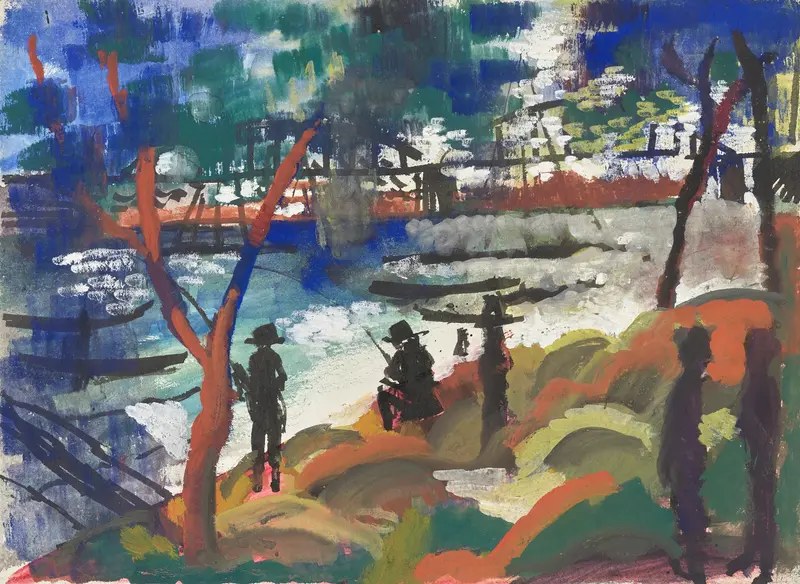
Angler am Fluss
August Macke
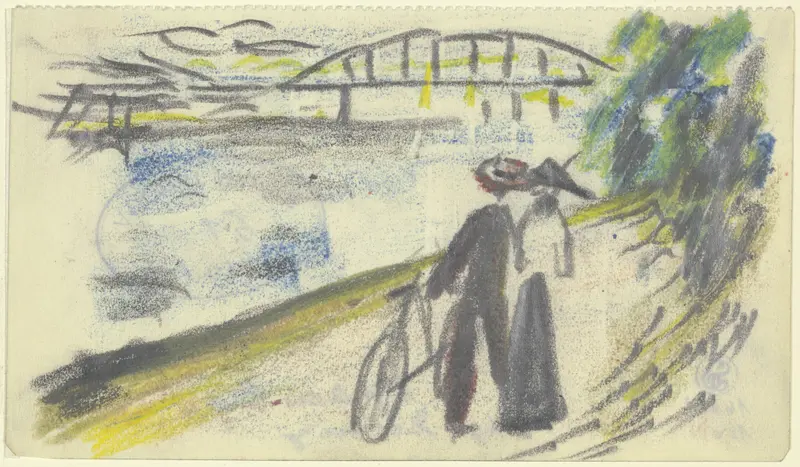
Path at the Rhine
August Macke
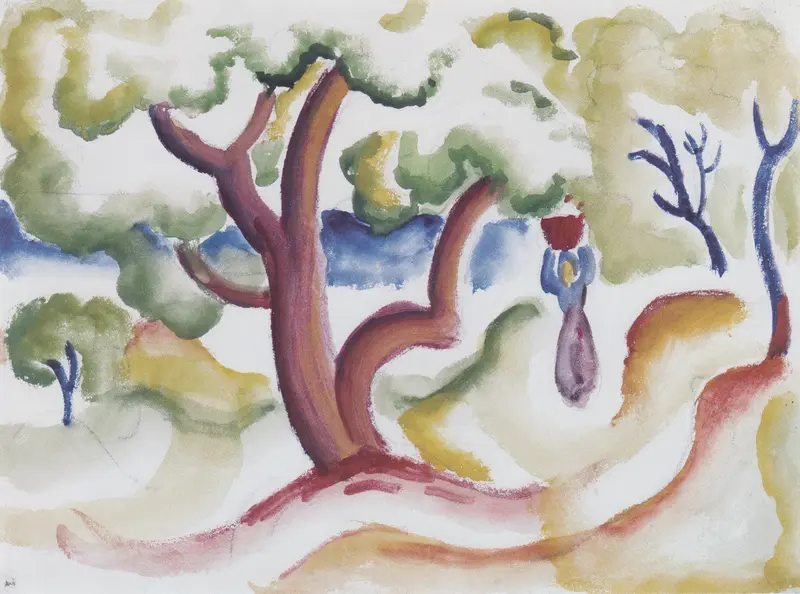
Frau mit Krug unter Bäumen
August Macke
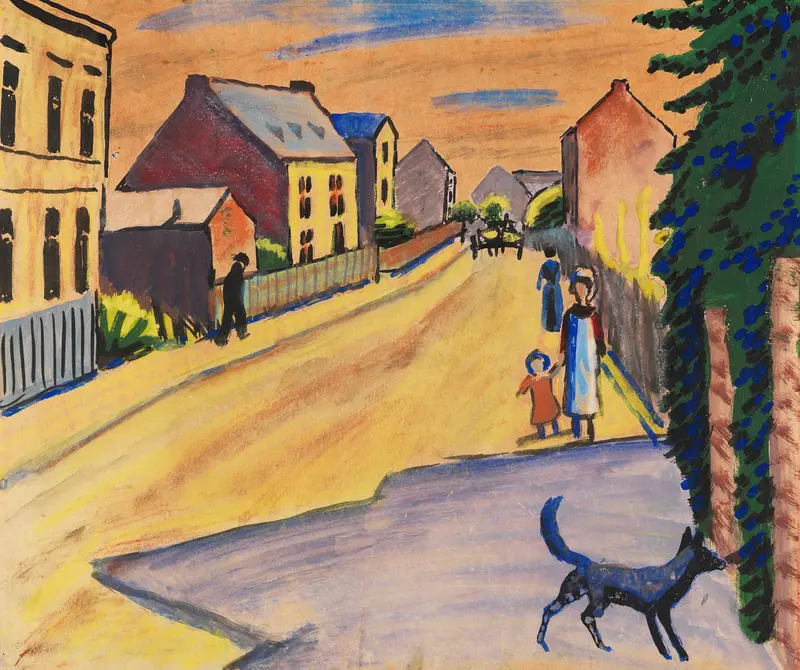
Sonnige Straße mit Hund
August Macke





