Composition in Chinoiserie style — History & Facts
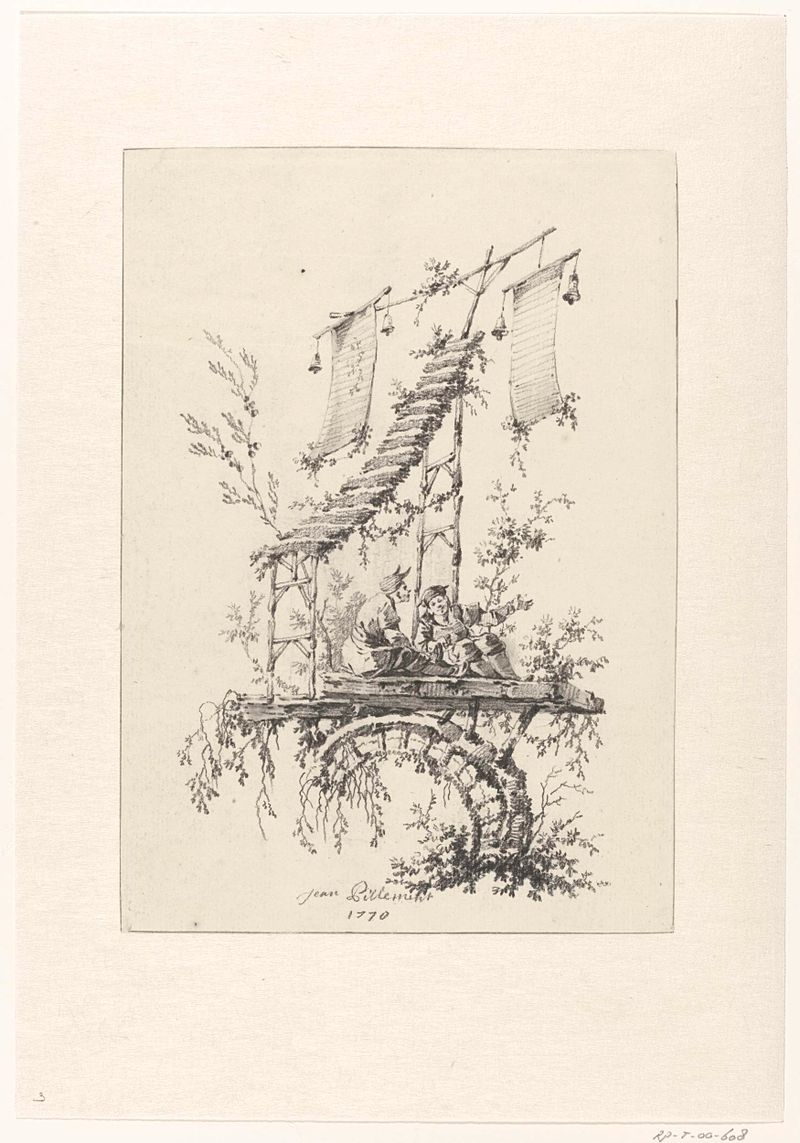
In this dreamlike tapestry of color and form, the essence of Chinoiserie transports us to a realm where East meets West, revealing hidden layers of desire and fantasy. Look to the left, where delicate pastel hues intertwine with intricate patterns. Notice how the graceful figures appear to dance among the lush foliage, their movements almost ethereal. The composition flows seamlessly across the canvas, inviting the viewer’s eye to wander through a labyrinth of flora and whimsy.
The soft gold accents add a touch of opulence, harmonizing with the muted tones to create an atmosphere of serene elegance. Yet, beneath the tranquil surface lies a contrasting tension. The exoticism of the imagery speaks to a cultural fascination, perhaps even a longing, that challenges the viewer to consider the complexity of colonial influences. The juxtaposition of dreamlike beauty against fleeting reality captures the bittersweet nature of aspiration—how dreams can illuminate our desires while simultaneously trapping us in their allure. Created in 1770, this work emerged during a period of growing interest in Asian aesthetics among European artists.
At this time, Pillement was thriving in Paris, where the Rococo style had begun to shift toward Neoclassicism. The art world was in flux, reflecting broader social changes, and Pillement's embrace of Chinoiserie exemplifies the era's fascination with the exotic, blending imaginative landscapes with a sophistication that still resonates today.