Ornamentale compositie in chinoiserie-stijl — History & Facts
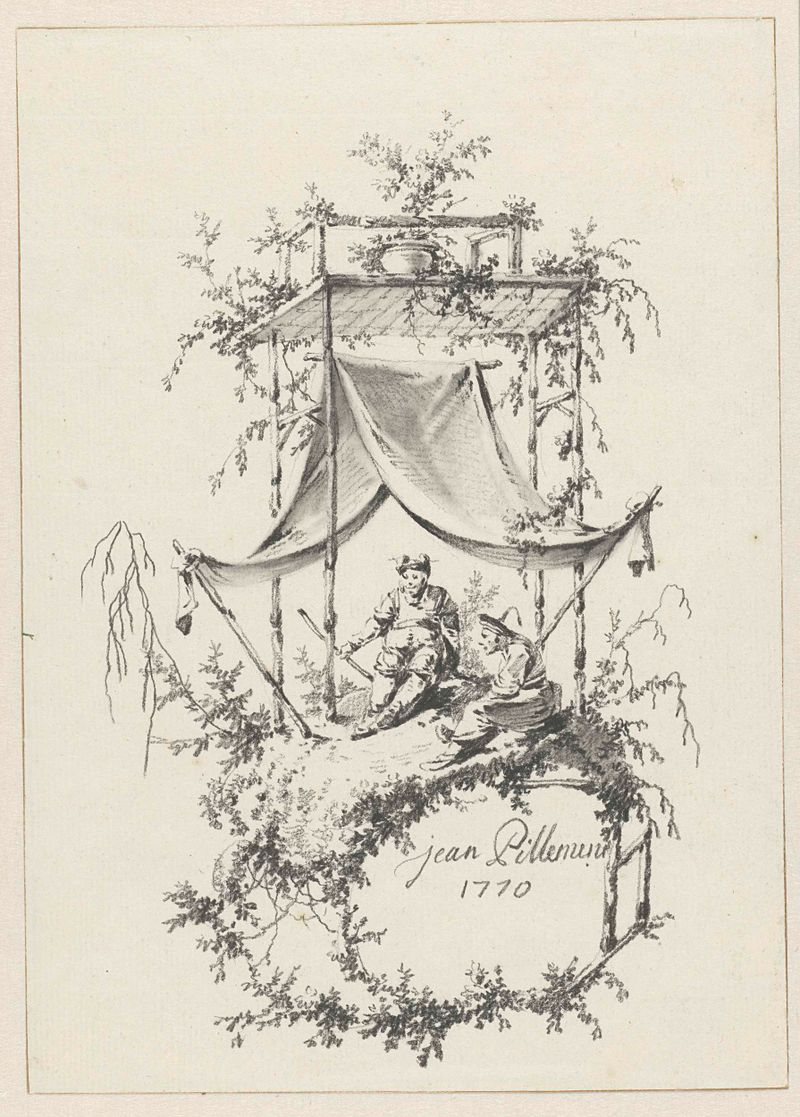
In the intricate dance of ornamentation, one finds beauty entwined with an underlying sense of solitude that resonates deeply within the composition. Focus on the vibrant colors that swirl and twist across the canvas, drawing your gaze to the harmonious balance achieved between the elaborate motifs. Notice how the golden accents catch the light, creating an almost ethereal glow that contrasts with the cool blues and greens surrounding them. The meticulous details of the chinoiserie style invite you to lose yourself in their complexity, each curve and line whispering secrets of a world both familiar and foreign. Beneath the lush surface lies an exploration of isolation—each ornamental element, while thriving in its vibrancy, floats within a sea of negative space.
The lavish details invoke a sense of longing, suggesting that even in beauty, there exists an emptiness that echoes through the landscape of the mind. The contrast between the richness of the patterns and the quietness of the background evokes an emotional tension, making the viewer ponder the interplay between aesthetic splendor and the solitude that accompanies it. In 1770, the artist created this piece in the midst of a flourishing European fascination with the East, reflecting a time when decorative arts were celebrated for their ornate beauty. Pillement, primarily known for his work in France, was immersed in the decorative trends of his day, drawing inspiration from the exoticism that characterized this period.
Through Ornamentale compositie in chinoiserie-stijl, he not only showcased his technical prowess but also hinted at a deeper social commentary woven quietly into the fabric of his art.