
Conflagration of the Masonic Hall, Chestnut Street, Philadelphia, Pennsylvania — History & Facts
In the chaos of flames, a yearning for safety dances among the embers of history. The juxtaposition of destruction and the vibrancy of life sparks a contemplation on loss and legacy. Look to the center where the Masonic Hall stands engulfed in a brilliant blaze, its walls reflecting fiery hues of orange and red. The surrounding darkness creates a stark contrast, accentuating the glow of the flames while lending a haunting quality to the crumbling structure.
This masterful use of light and shadow invites the viewer to traverse the painting, drawing the eye toward the swirling smoke that envelops the scene, hinting at both an end and a new beginning. Delve deeper, and you'll uncover layers of meaning within those fiery flickers. The fire signifies not only destruction but also transformation, echoing the trials and tribulations of a burgeoning society in early 19th-century America. The onlookers, painted with a mixture of horror and fascination, depict a community grappling with their collective loss, caught between despair and the hope that arises from rebirth.
Each figure embodies a unique story, emphasizing the universal nature of human resilience. In 1819, Samuel Jones rendered this work during a time when Philadelphia was experiencing rapid growth and change, both socially and artistically. Amidst a backdrop of emerging democratic ideals and the complexities of urban life, he captured the essence of a moment that intertwined tragedy with potential. This painting became a reflection not just of a physical fire, but of the fiery spirit of a city and its people striving to forge their future.
More Artworks by Samuel Jones
Browse all →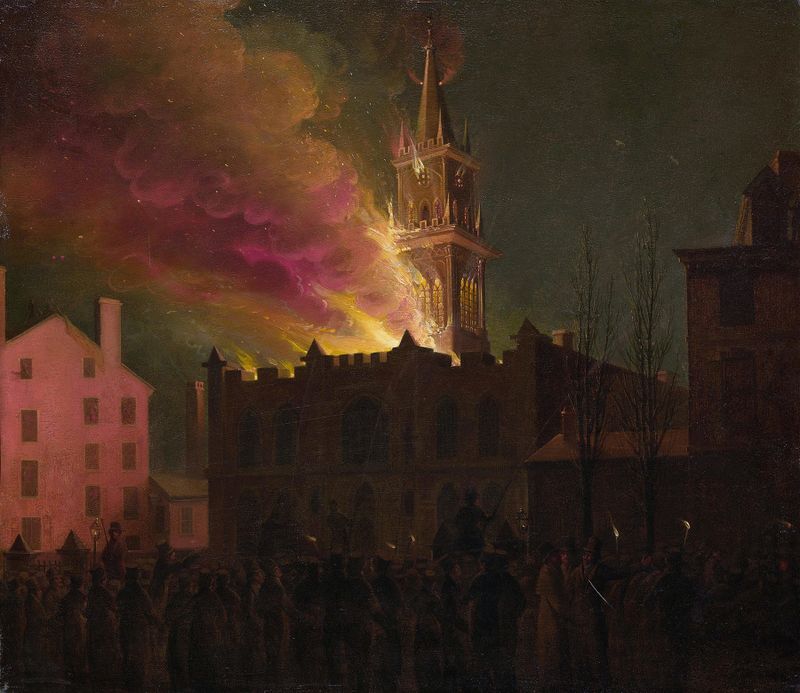
More Historical Art
Browse all →
The Night Watch Militia Company of District II under the Command of Captain Frans Banninck Cocq
Rembrandt van Rijn

Lincoln Memorial
Henry Bacon

The Third of May 1808
Francisco de Goya

Isaac and Rebecca, Known as ‘The Jewish Bride’
Rembrandt van Rijn

The Charge of the Mamelukes (1814)
Francisco de Goya

De vier ruiters van de apocalyps
Albrecht Dürer