
Construction of an Elevated Railway Bridge over the Cours de Vincennes — History & Facts
Who listens when art speaks of silence? In Construction of an Elevated Railway Bridge over the Cours de Vincennes, the viewer is beckoned into a world where the hum of progress is palpable, yet the serenity of the moment lingers just out of reach. Look to the left at the delicate interplay of light and shadow that dances across the massive steel beams, giving the structure an almost ethereal quality. The artist employs a muted palette, dominated by soft greens and ochres, evoking a sense of harmony between the burgeoning industrial landscape and the natural surroundings. Notice how the horizon recedes gently, guiding your gaze along the path of construction, inviting contemplation of both the bridge and its future significance. The painting captures the tension between the organic and the engineered, where nature's tranquility meets human ambition.
The solitary figures working beneath the arching framework symbolize the labor that goes into the creation of progress, while the distant trees represent a world that remains untouched. This poignant contrast raises questions about the cost of advancement—what do we gain, and what do we lose in the relentless march of industry? Paul Désiré Trouillebert created this work in 1888 during a period of rapid industrialization in France. He painted it while living in a time when the arts were beginning to embrace modernity, marking a shift toward capturing contemporary life and urban landscapes.
The elevated railway bridge itself signifies not just a structural achievement but also the intersection of art, technology, and the evolution of society.
More Artworks by Paul Désiré Trouillebert
Browse all →
Paysage aux lavandières
Paul Désiré Trouillebert
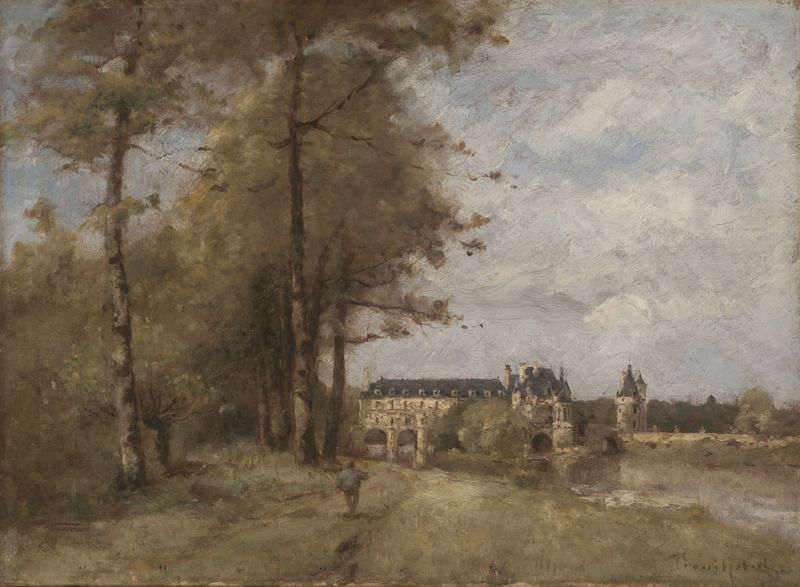
El castillo de Chenonceaux
Paul Désiré Trouillebert
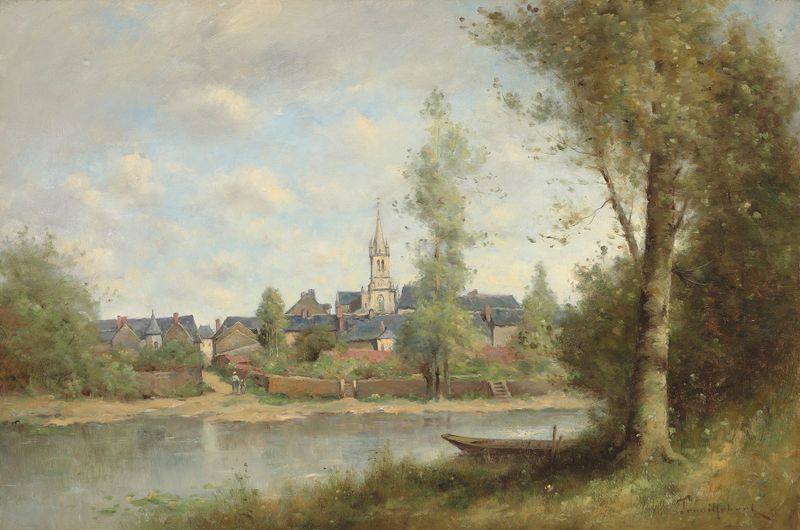
Vue De La Flèche
Paul Désiré Trouillebert

Heimweg am Fluss
Paul Désiré Trouillebert
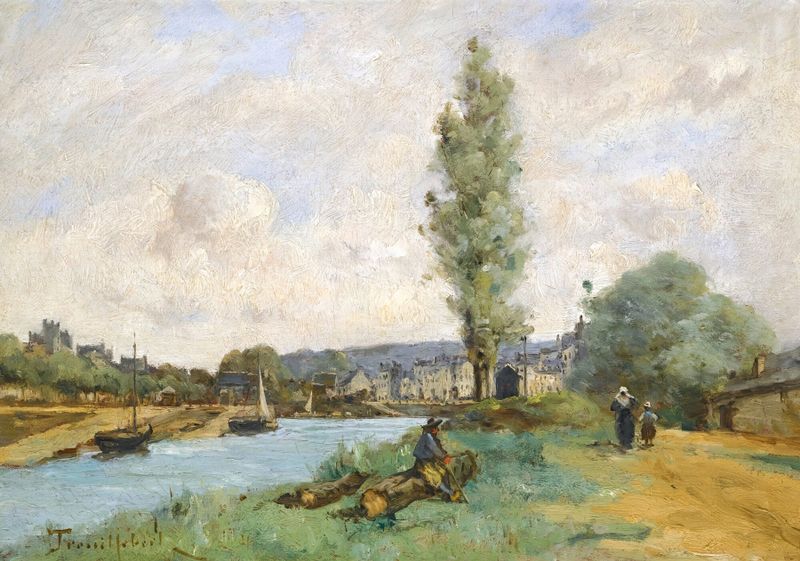
Le Pont De Landernau, Finistere
Paul Désiré Trouillebert
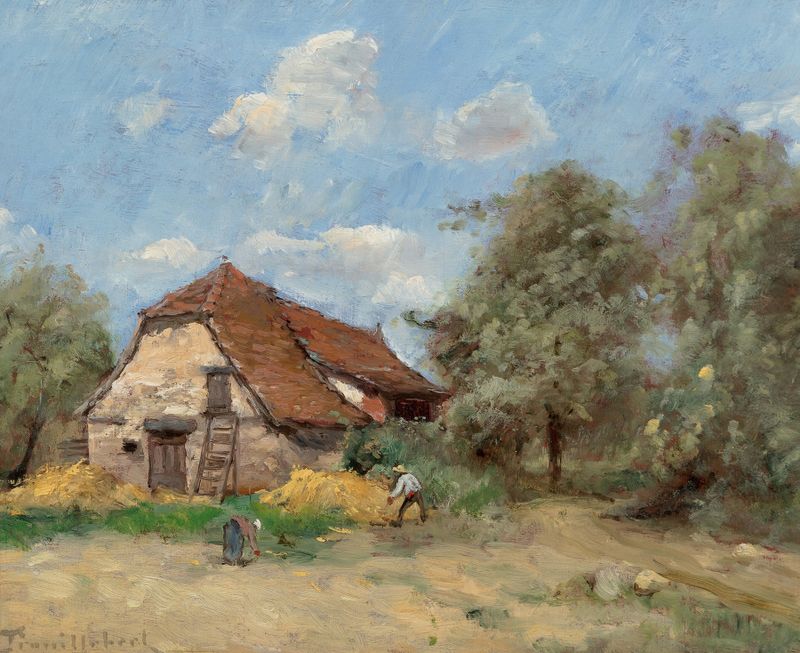
Le faucheur près de la ferme
Paul Désiré Trouillebert
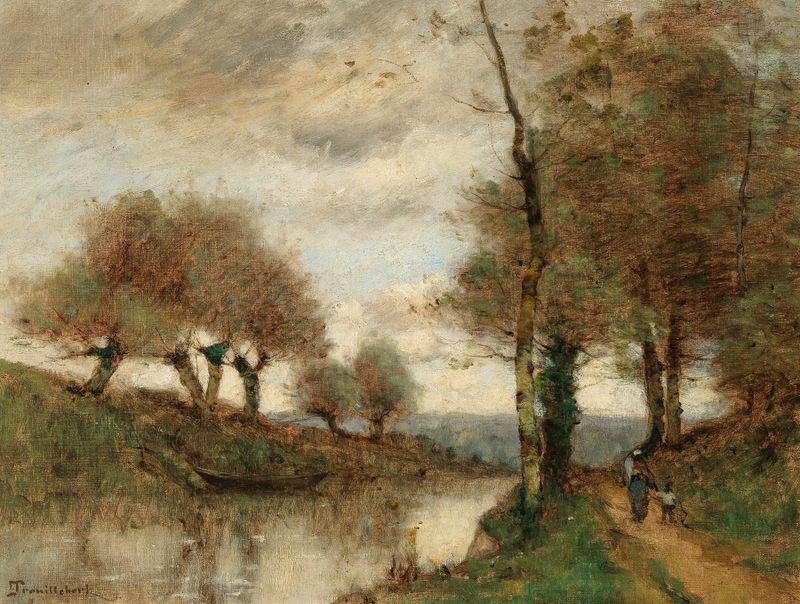
Returning Home along the River
Paul Désiré Trouillebert

Les Fagoteuses Au Bord De L’eau
Paul Désiré Trouillebert
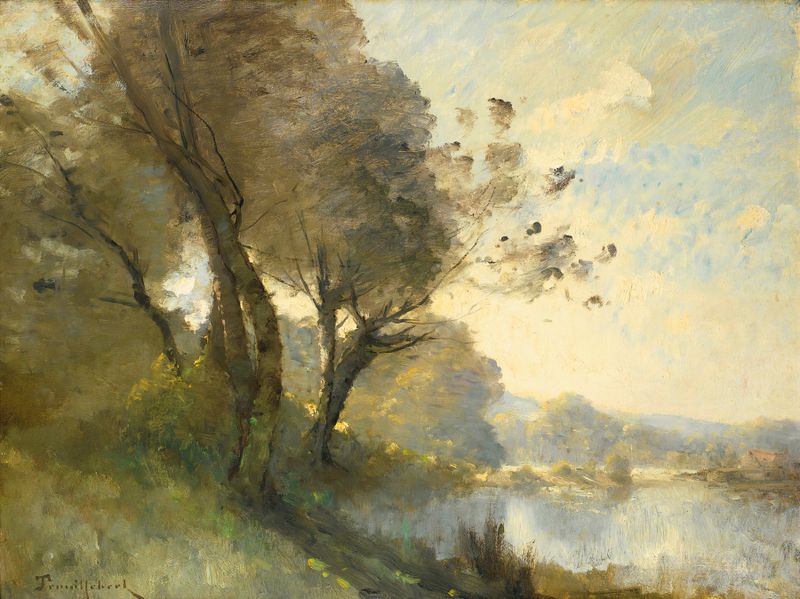
Barrage En Ruine Sur La Vienne
Paul Désiré Trouillebert
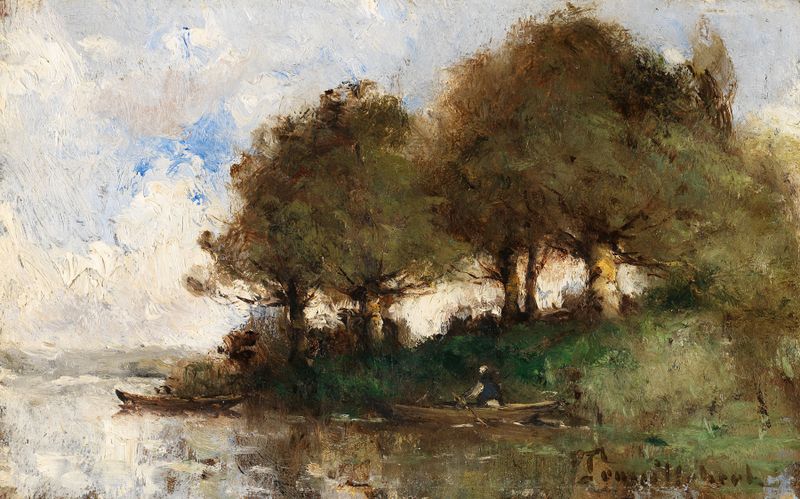
Flussufer
Paul Désiré Trouillebert
More Architecture Art
Browse all →
The statue of Liberty
Frédéric Auguste Bartholdi

View of Houses in Delft, Known as ‘The Little Street’
Johannes Vermeer

View of Houses in Delft, Known as ‘The Little Street’
Johannes Vermeer

The Cathedral in Rouen. The portal, Grey Weather
Claude Monet

The yellow house
Vincent van Gogh

The Church in Auvers-sur-Oise, View from the Chevet
Vincent van Gogh