Conway Castle, North Wales — History & Facts
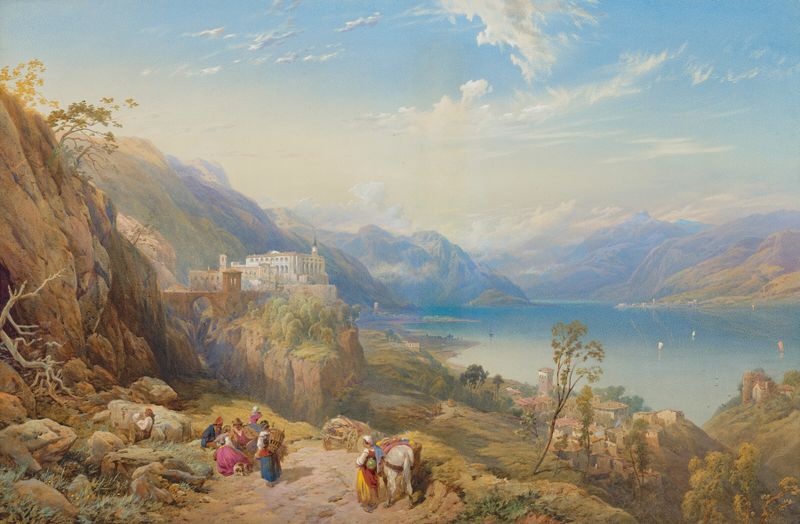
In a landscape layered with history, the shadows of Conway Castle whisper tales of past violence and resilience. Look closely at the imposing fortress nestled against the rugged Welsh terrain. Notice how the artist captures the interplay of light and shadow on the castle's weathered stone, each stone telling stories of battles fought and sieges endured. The muted greens and grays of the surrounding landscape contrast sharply with the castle’s stony façade, evoking a sense of melancholy that permeates the scene.
Richardson's brushwork reveals both the solidity of the castle and the fragility of its surroundings, inviting us to ponder the passage of time. The castle stands as a formidable witness, embodying the tension between human ambition and the raw power of nature. The way the clouds swirl ominously above suggests a brewing storm, while the quiet waters below hint at a calm that belies the castle's tumultuous history. Each detail, from the distant mountains to the rippling water, echoes the duality of strength and vulnerability, evoking a visceral connection to the violence that shaped this land. In 1847, Richardson painted this work during a period of romanticism in England, where artists sought to express emotional depth and a connection to nature.
Living in a time of industrial change, he often turned to historical landscapes that resonated with a sense of lost glory. As he captured the essence of Conway Castle, he created not just a visual representation but a meditation on the enduring scars of history amidst the beauty of the Welsh countryside.