Rocky Landscape with Fort — History & Facts
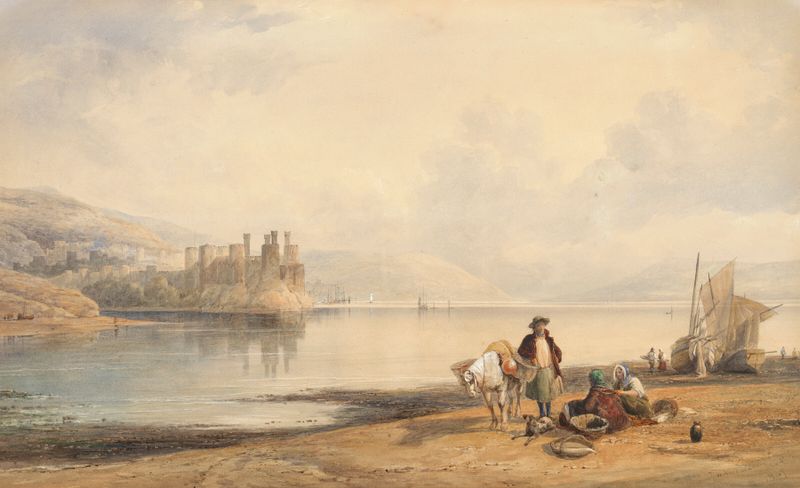
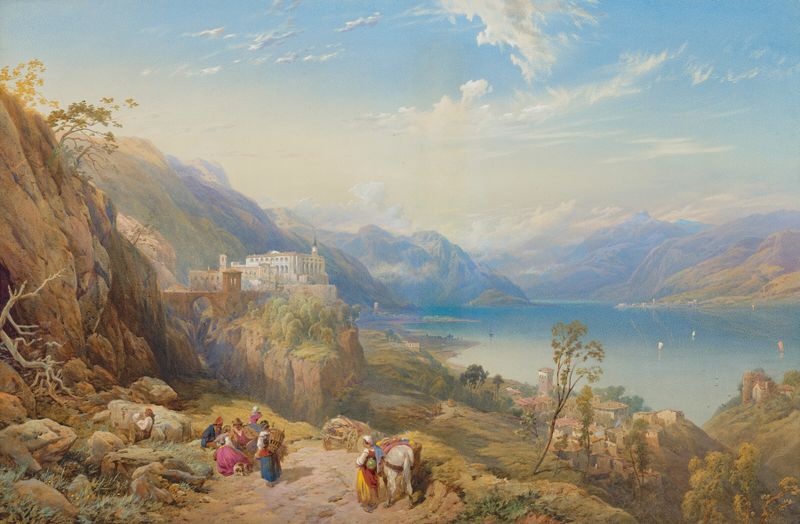
In the midst of a rocky landscape, fleeting moments of hope emerge, nestled among the rugged terrain and turbulent skies. Look to the foreground, where the jagged rocks rise sharply, their earthy tones contrasting with the softer, ethereal hues of the distant fort that stands resolute against the backdrop. Notice how the interplay of light and shadow breathes life into the canvas, illuminating the fort's walls while casting enigmatic shadows over the stones below. The palette, a harmonious blend of greens and browns, invites the viewer to appreciate the resilience of nature against human structures, weaving a silent narrative of coexistence. Upon closer inspection, the fort seems to symbolize a beacon of protection and optimism amidst the harshness of the landscape.
Its presence suggests a story of human endeavor, yet the surrounding ruggedness highlights the fragility of such aspirations. The tension between the solid fort and the volatile rocks speaks to the struggle for stability in a world shaped by uncertainty—a poignant reminder of enduring hope in the face of adversity. Created in an undefined time, the artist captured this essence while traversing a period in which Romanticism was flourishing in Britain. During this era, Richardson was engaged in the exploration of nature's raw beauty and emotional depth, reflecting the ideals of the movement that sought to evoke feelings through the sublime landscapes that surrounded him.
The work echoes the broader artistic conversations of the time, where nature was not just a backdrop but a vital part of the human experience.