
Cook Strait, New Zealand — History & Facts
In the delicate dance of color and form, transformation takes shape, echoing the transient nature of life itself. Look to the foreground, where the deep blues and greens collide in waves, capturing the relentless rhythm of the Cook Strait. Notice the rugged cliffs to the left—bold strokes and earthy tones suggest their steadfastness against the passage of time, while the lighter hues in the sky evoke a sense of infinite possibility. Each element of the composition, from the sweeping clouds to the churning waters, pulls the eye into a dialogue about change and continuity. Beneath the surface, contrasting forces converge: the calmness of the sky hints at tranquility, while the turbulent sea speaks to the chaos of nature.
These elements coexist, symbolizing the duality of existence—how beauty is often born from tumult. The viewer might sense a metaphor for life’s unpredictable journey, where moments of serenity punctuate the storm, urging us to embrace both. Nicholas Chevalier painted this evocative landscape during a period marked by exploration and discovery, likely in the mid-19th century while residing in Australia. The painting reflects not only his artistic evolution but also the broader context of Romanticism, which celebrated the sublime beauty and terror of nature.
In a world undergoing rapid change, Chevalier’s work captures the essence of transformation—a theme that resonates deeply across generations.
More Artworks by Nicholas Chevalier
Browse all →
Coast near Dunedin
Nicholas Chevalier
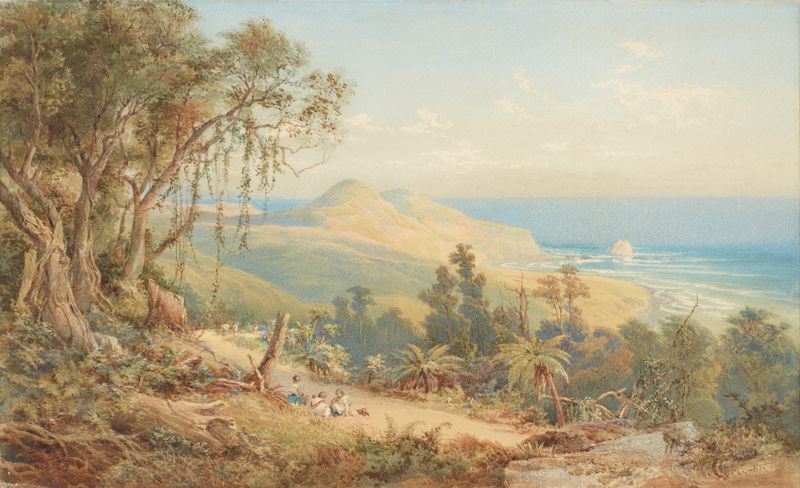
Sandfly Bay, Otago
Nicholas Chevalier

Buckler Burn at the head of Wakatipu Lake
Nicholas Chevalier

Mr MacKellar’s Station, the Waimea Plains, Southland
Nicholas Chevalier
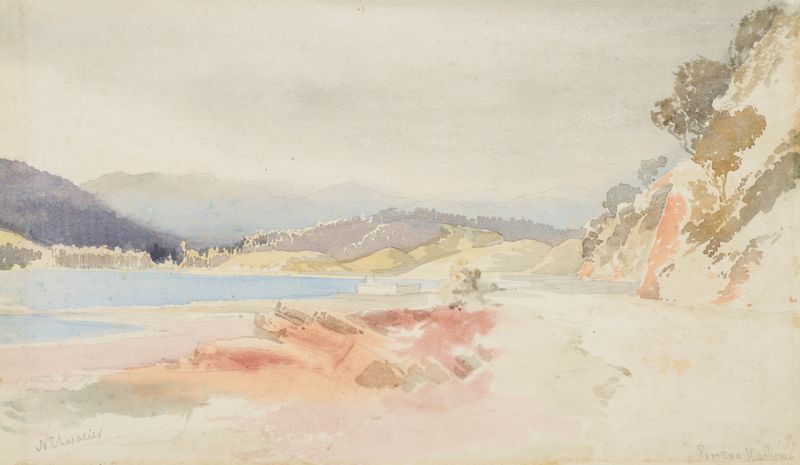
Porirua Harbour
Nicholas Chevalier
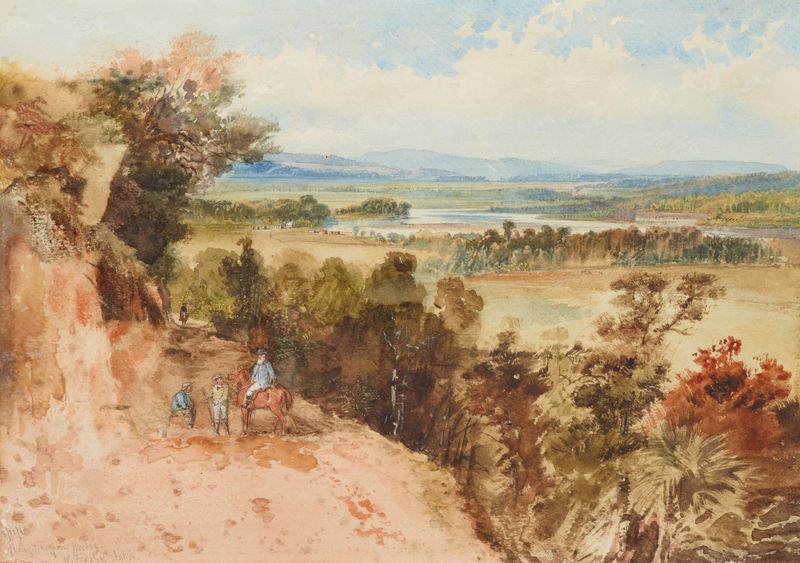
Rangitikei from Westoe, W. Fox Esq’s Station
Nicholas Chevalier

The Upper Rangitikei
Nicholas Chevalier
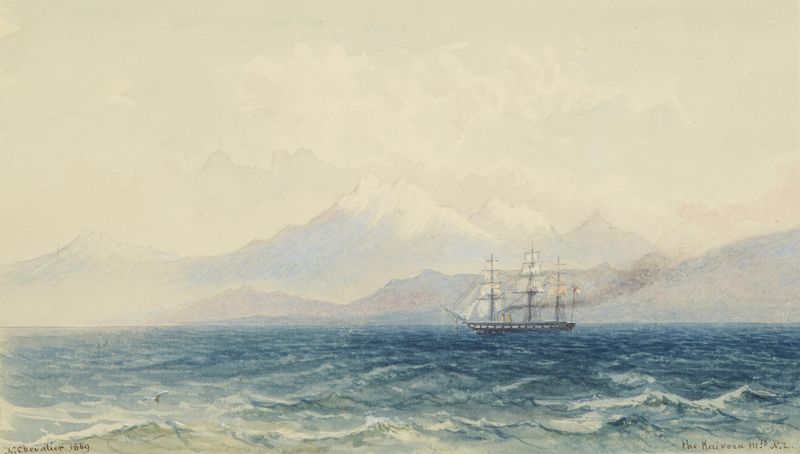
The Kaikoura Mountains, N.Z.
Nicholas Chevalier

Upper Hutt Valley
Nicholas Chevalier

The Tararua Mountains and the Waipoua River
Nicholas Chevalier





