Discover insights about this artwork
Corpse of Christ, oil study for the ‘Pietà’ — History & Facts
In Corpse of Christ, the viewer is confronted with a somber palette dominated by dark hues. The figure of Christ lies lifeless, draped in a white cloth that starkly contrasts with the surrounding shadows. The setting is minimal, focusing attention on the body, which is rendered with anatomical precision.
This study captures a moment of stillness and sorrow, emphasizing the tragedy of the scene. The painting is an oil study, likely created as a preparatory work for the larger Pietà. The artist employs a realistic approach, showcasing his skill in depicting human anatomy and emotion. The use of light and shadow enhances the three-dimensionality of the figure, drawing the viewer's eye to the details of Christ's form.
This technique is characteristic of von Stuck's Symbolist style, where emotional depth is conveyed through physical representation. Franz von Stuck was a prominent figure in the Symbolist movement, known for his dramatic and often melancholic themes. This work, created in the 1890s, reflects his interest in the human condition and the exploration of mortality. An interesting fact about this piece is that it served as a study for a larger composition, demonstrating von Stuck's meticulous preparation process.
His ability to blend realism with symbolism makes this work a significant contribution to late 19th-century art.
More Artworks by Franz von Stuck
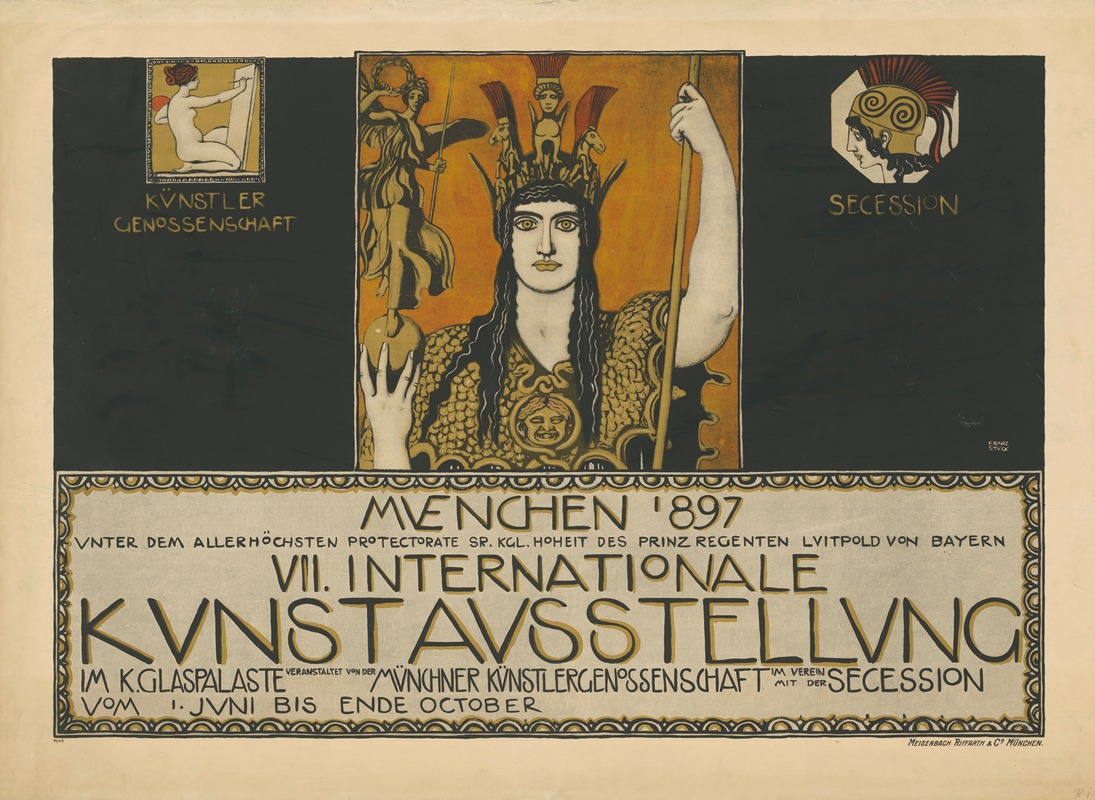
7. Internationale Kunstausstellung des Vereins Bildender Künstler München Secession
Franz von Stuck
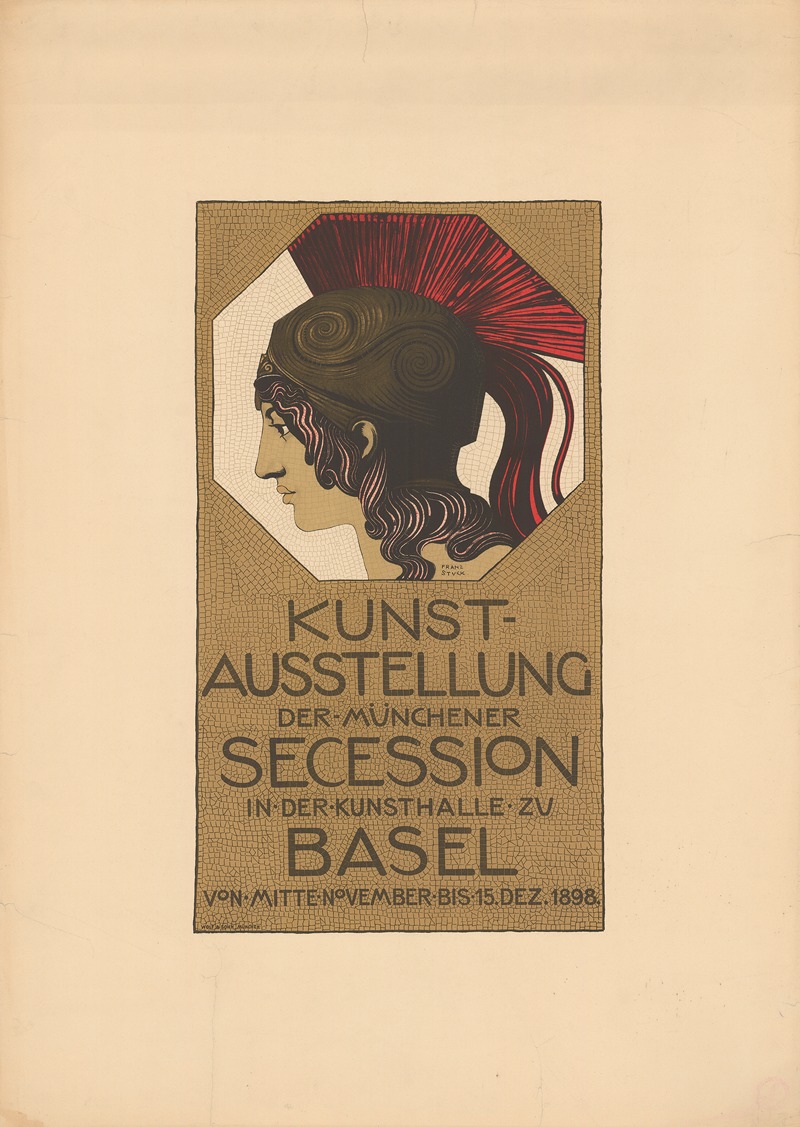
Kunstausstellung der Münchener Secession in der Kunsthalle zu Basel
Franz von Stuck

Susanna im Bade
Franz von Stuck

The Dancer Saharet
Franz von Stuck

The Spring
Franz von Stuck
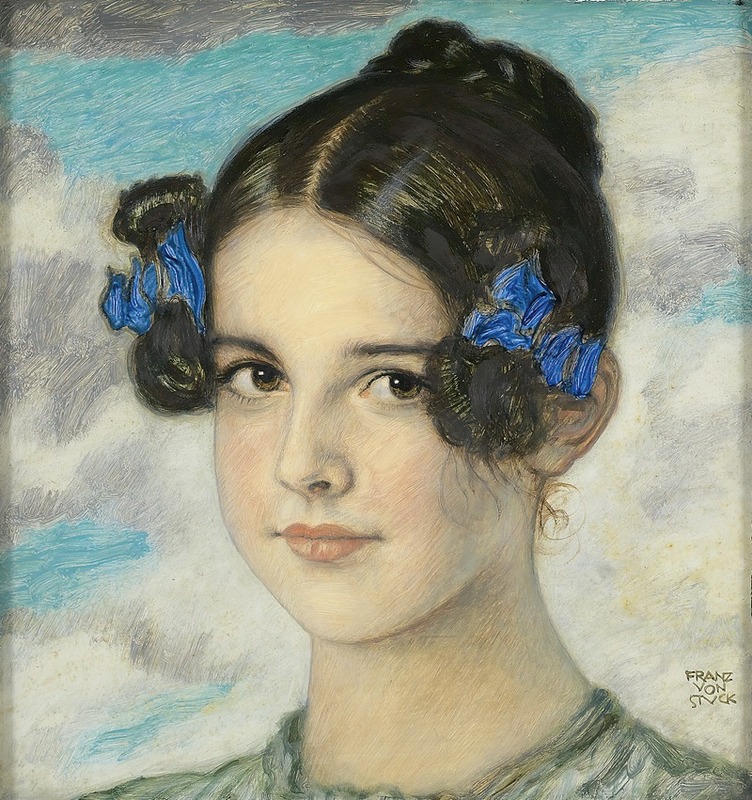
Tochter Mary
Franz von Stuck

Portrait einer Dame mit Spitzenkragen
Franz von Stuck
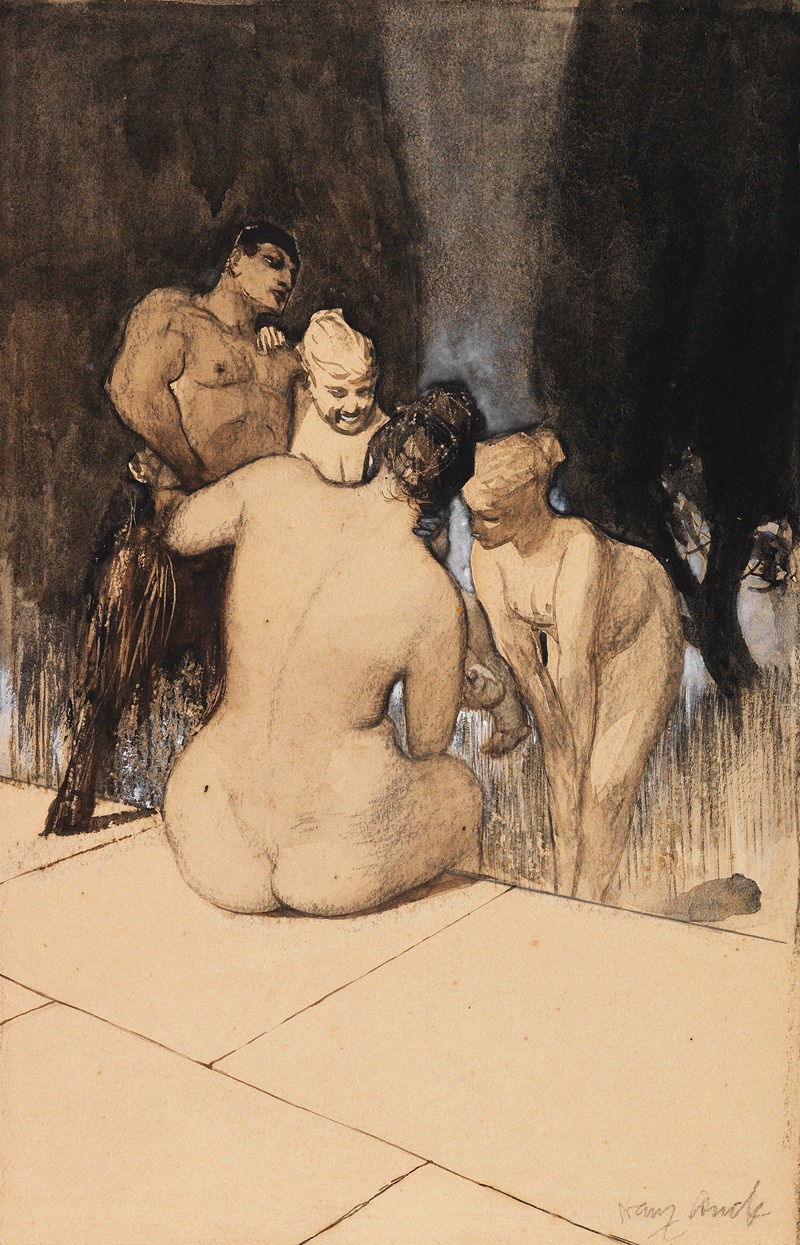
Satyr mit Nymphen und Kind
Franz von Stuck

Oedipus solves the mystery of the Sphinx
Franz von Stuck
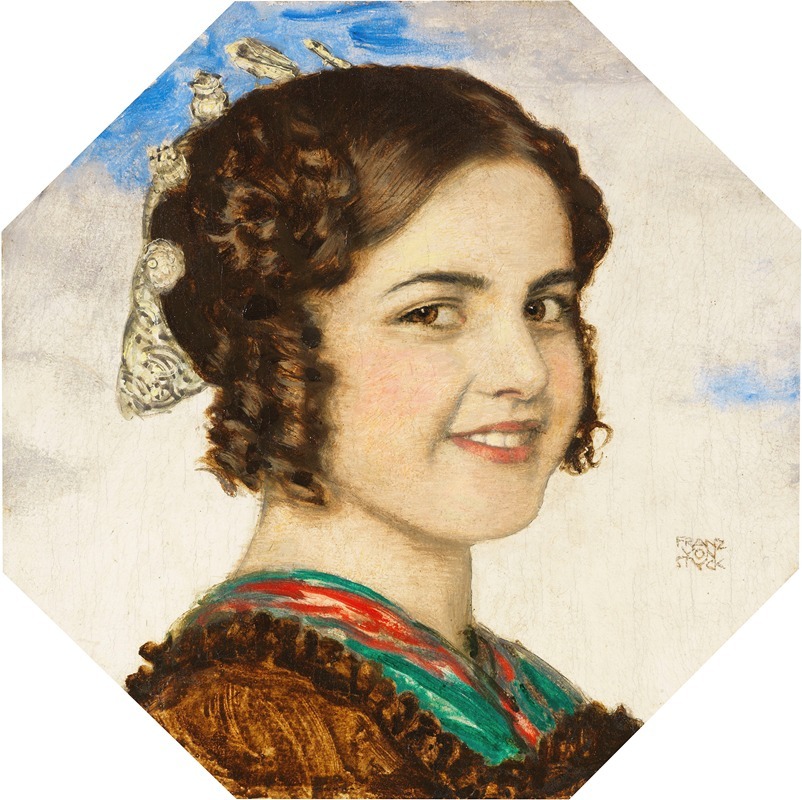
Porträt der Tochter Mary
Franz von Stuck