Cottage and calf — History & Facts
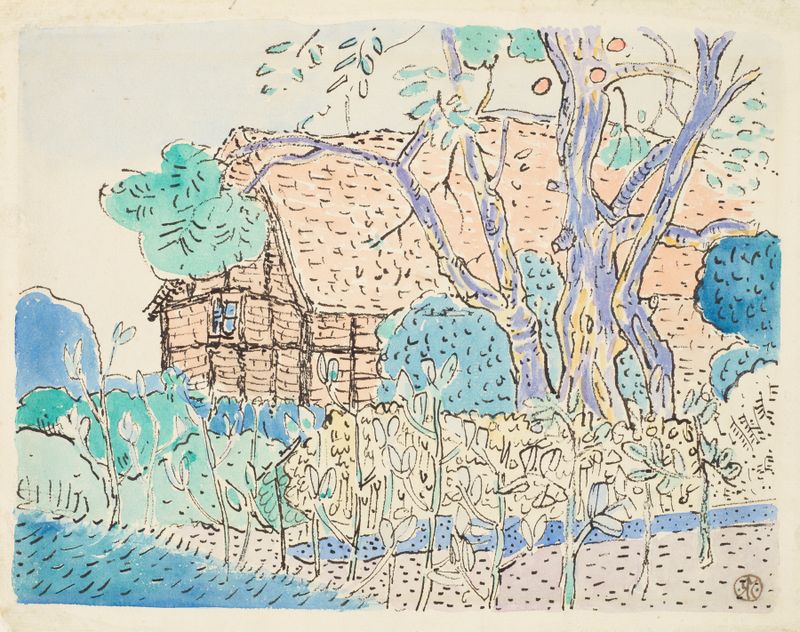
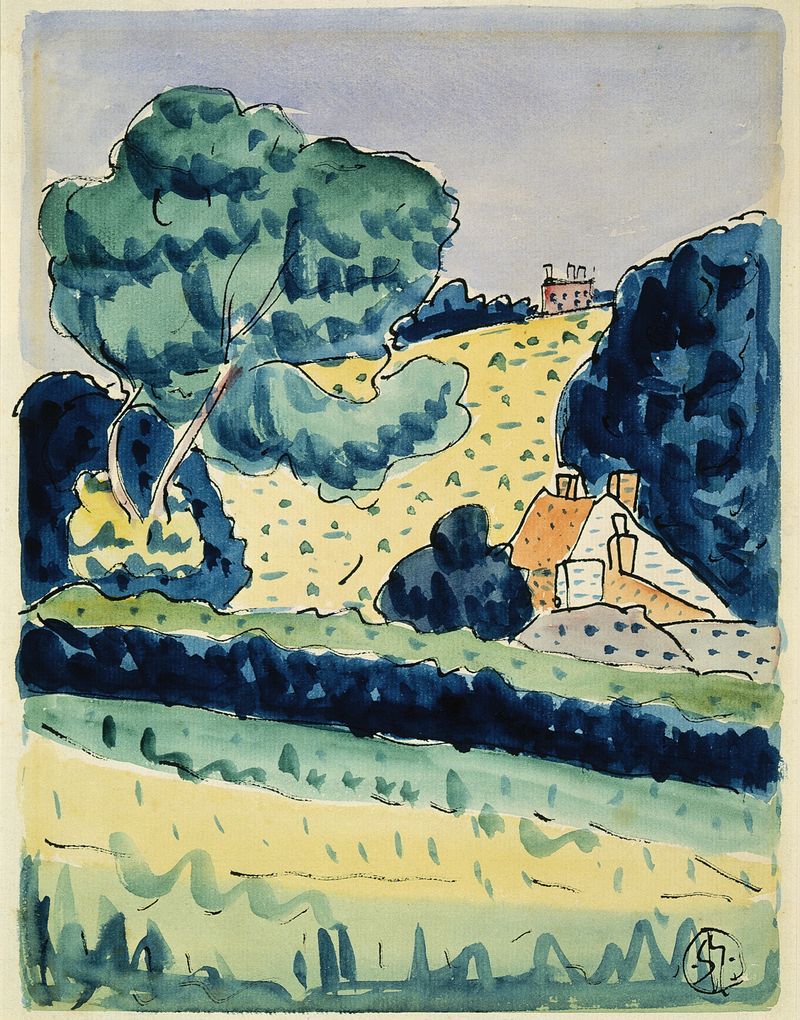
Who was Raymond McIntyre painting for when they created Cottage and calf? Look closely at the gentle landscape where the cottage nestles in the embrace of verdant hills. The soft palette of greens and browns evokes a sense of tranquility, drawing the viewer into this bucolic scene. Notice how the warm light bathes the cottage, illuminating its rustic details, while the curious calf stands nearby, a symbol of innocence and vitality against the backdrop of nature. This painting captures the essence of transformation—life evolving within the landscape.
The contrast between the sturdy cottage and the fragile calf invites contemplation on the cycles of existence. The interplay of light and shadow creates a rhythm that mirrors the natural world’s quiet pulse, suggesting a moment of stillness before impending change. Each brushstroke tells a story, revealing McIntyre's deep connection to the environment and a life intertwined with nature. Raymond McIntyre created Cottage and calf during a period when he was closely engaged with the natural beauty of rural scenes.
Active primarily in the early to mid-20th century, McIntyre was influenced by the American Regionalist movement, which emphasized the importance of local landscapes and community. During this time, he sought to capture the essence of rural life, a response to the rapid industrialization occurring in the broader world, reflecting a yearning for simpler, more intimate connections with nature.