Bridge over river — History & Facts
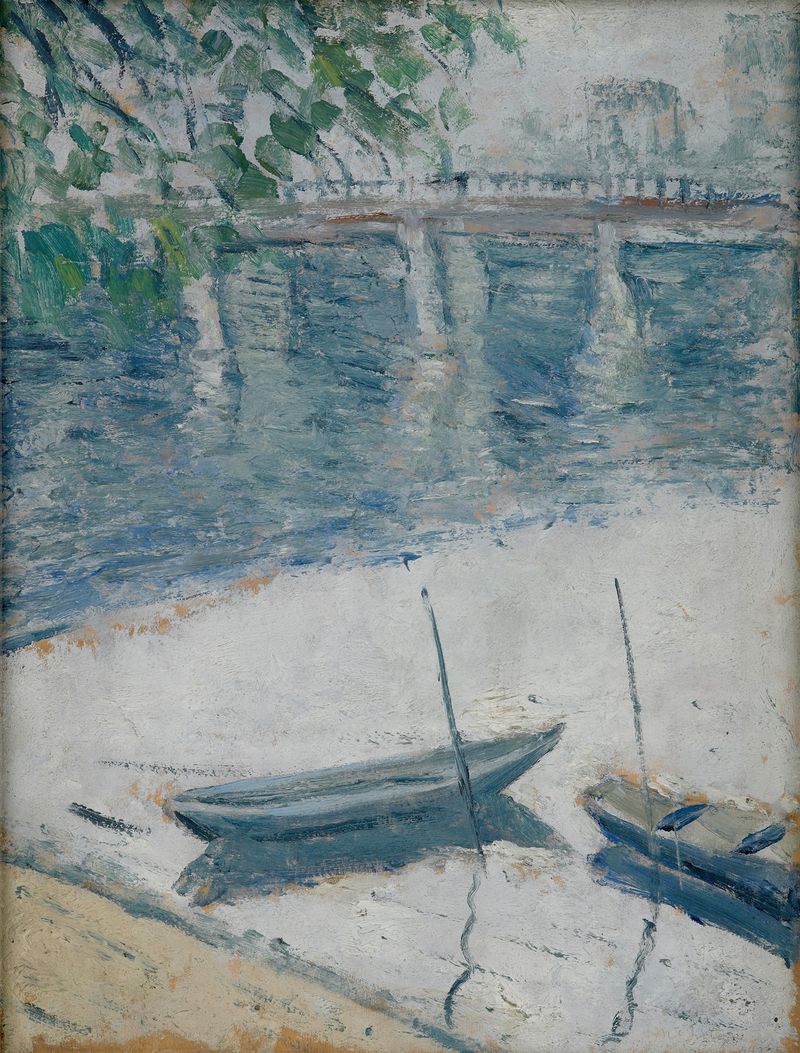
Here, in the interplay of shadow and light, we find a haunting beauty that speaks of depth beneath the surface. The bridge, a stoic yet fragile structure, stands against both nature and the passage of time, evoking a sense of melancholy that draws the viewer in. Focus on the bridge at the center of the canvas, where the delicate arches stretch gracefully over the gently flowing river. Notice how the sunlight filters through the trees on the riverbank, creating a dappled pattern that dances across the water’s surface.
The contrasting dark shadows beneath the bridge hint at hidden depths, inviting contemplation on what lies beyond the visible. McIntyre’s use of muted colors enhances the atmosphere, allowing the golden highlights to flicker like memories amid the somber tones. Within this tranquil scene lies an emotional tension; the bridge symbolizes both connection and separation. The shadow lurking beneath serves as a reminder of the fragility of life and the invisible burdens we carry.
The water, ever-flowing, represents the passage of time, while the shadows suggest the presence of loss and longing, making the serene landscape simultaneously uplifting and haunting. During the time this piece was created, Raymond McIntyre was exploring new techniques and compositions, seeking to capture the essence of his surroundings in a profound way. Working in the early 20th century, he was influenced by the American landscape and the evolving art movements of his time. The serenity of nature contrasted with the complexities of human emotion, a theme that permeated his work and resonates powerfully in this piece.