
Court Of The Lions, The Alhambra, Granada — History & Facts
Can paint confess what words never could? In Court Of The Lions, The Alhambra, Granada, the artist weaves a narrative of hope, inviting viewers to step into a world where light and shadow dance in harmony. Look to the left at the intricate arabesques that adorn the walls, their delicate patterns whispering stories of centuries past. Notice how the warm glow from the sun illuminates the courtyard, casting playful reflections on the water's surface. The vibrant tiles, meticulously arranged, draw the eye toward the central fountain, where water flows with a serene grace—each droplet seemingly a symbol of life itself.
The composition balances architectural elegance with natural beauty, creating an oasis that feels both timeless and alive. Yet, beneath this serene façade lies a deeper emotional tension. The contrast between the rigid lines of the architecture and the fluidity of the water evokes a struggle between permanence and transience. The figures scattered throughout the scene, though small, add a sense of scale and humanity, suggesting that even within the confines of grandeur, there exists a yearning for connection and understanding.
Each element harmonizes to reflect a quest for hope amidst history's weight. François Antoine Bossuet painted this exquisite scene in 1844 during a time of artistic revival in Europe, influenced by Romantic ideals. The Alhambra, a symbol of cultural richness and historical depth, served as an inspiration for many artists and travelers. Immersed in a world shifting toward modernity, Bossuet sought to capture the enduring spirit of the past, encapsulating in his work a profound reverence for beauty that transcends time.
More Artworks by François Antoine Bossuet
Browse all →
Innenansicht des Kolosseums in Rom
François Antoine Bossuet

Venice, a view of the Grand Canal with Santa Maria della Salute
François Antoine Bossuet
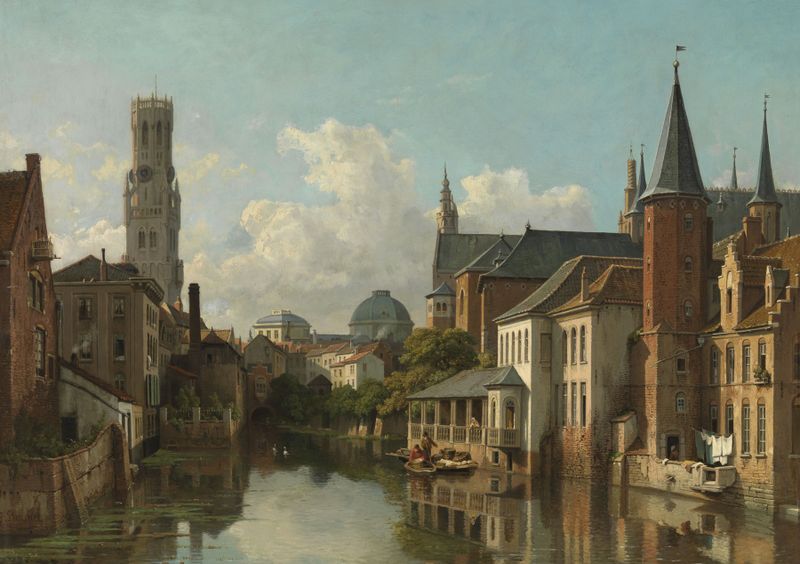
The Quai of the Rosary in Bruges
François Antoine Bossuet
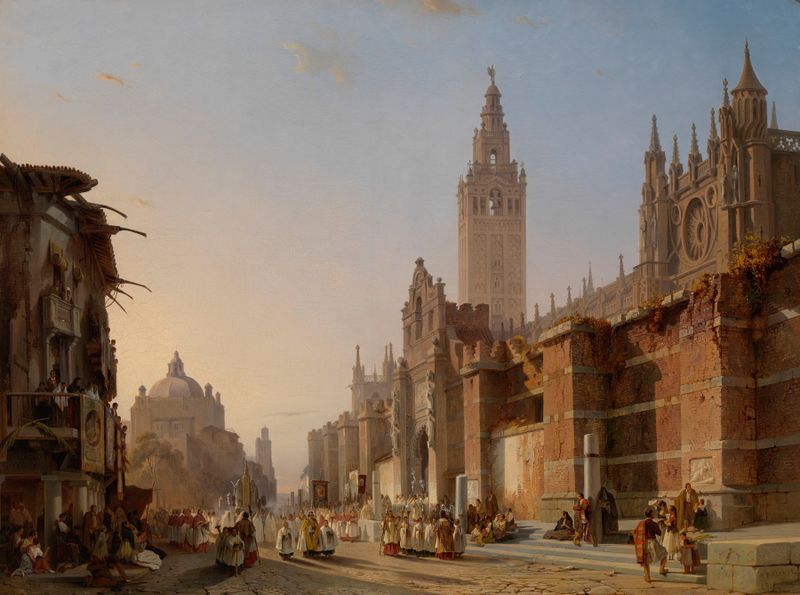
The Cathedral of Seville
François Antoine Bossuet

Vue d’une ville, probablement du Nord de l’Espagne
François Antoine Bossuet
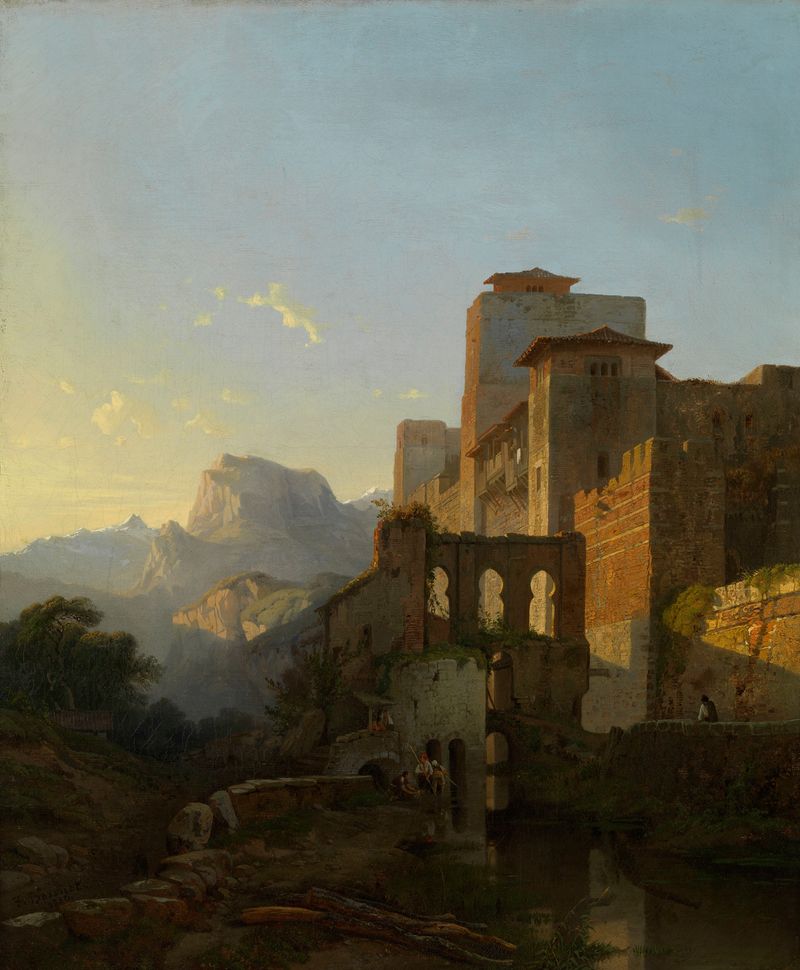
Landscape at Ugíjar (Southern Spain)
François Antoine Bossuet
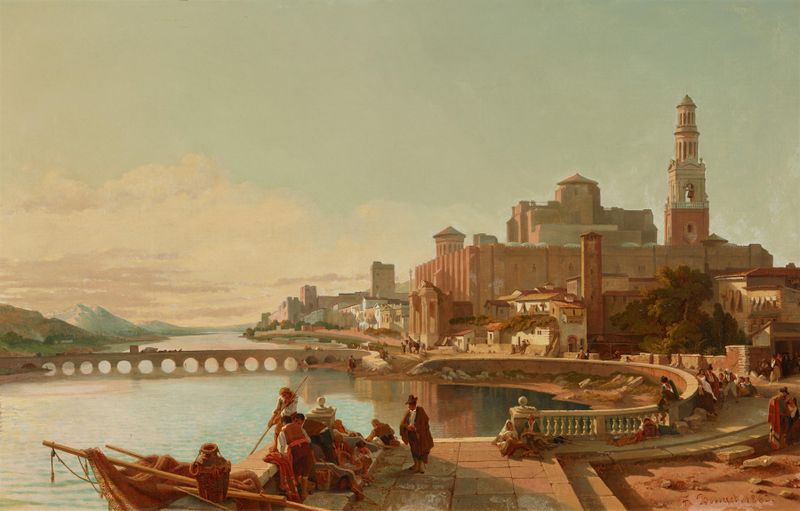
Fischer und weitere Figuren am Ufer des Guadalquivir mit Blickauf die römische Brücke und der Großen Moschee von Cordoba
François Antoine Bossuet
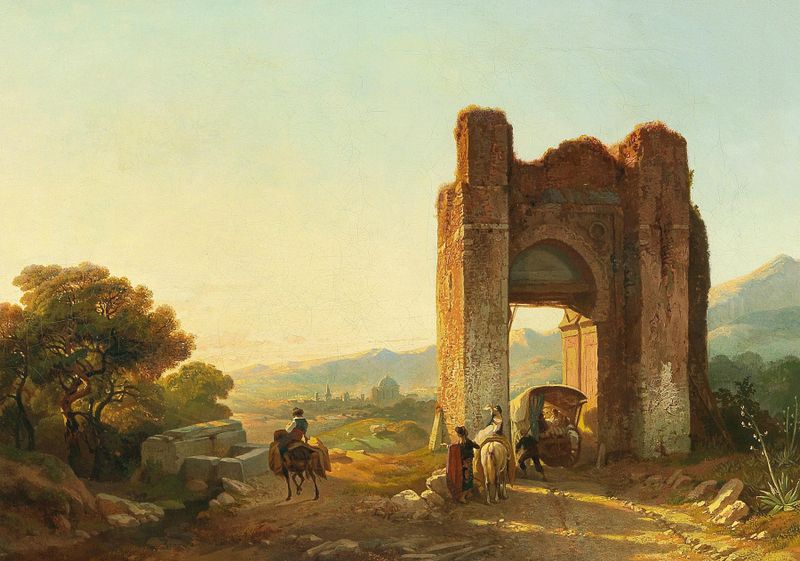
A romantic landscape with Mauritanian ruins and figures
François Antoine Bossuet
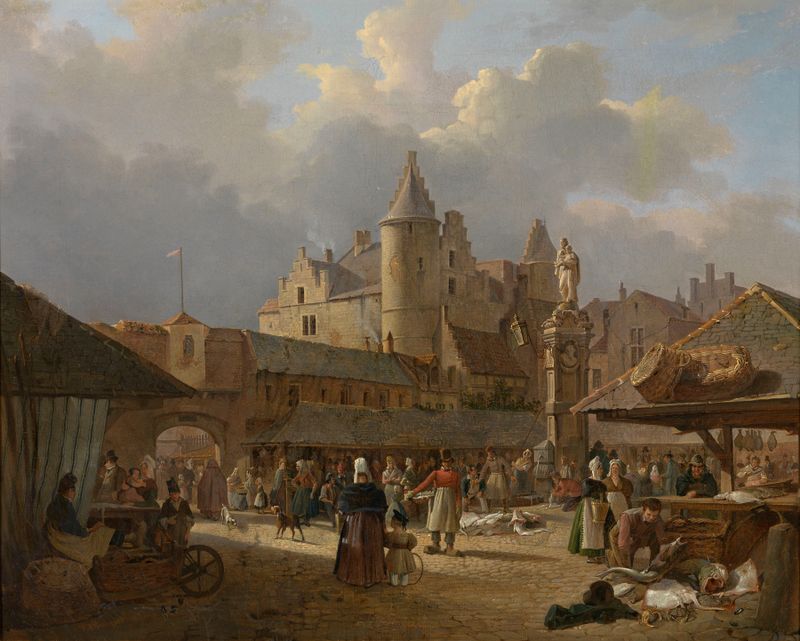
The Old Fish Market in Antwerp
François Antoine Bossuet
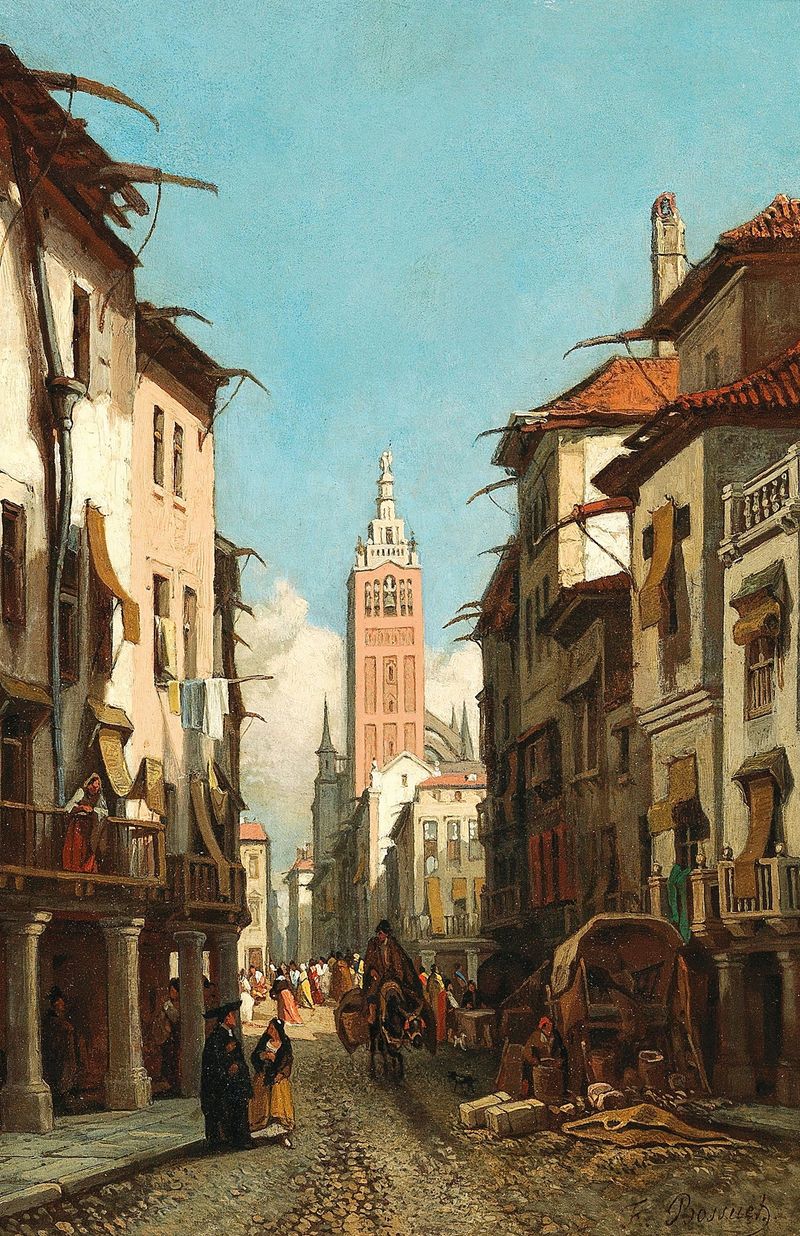
Rue de la Giralda
François Antoine Bossuet
More Architecture Art
Browse all →
The statue of Liberty
Frédéric Auguste Bartholdi

View of Houses in Delft, Known as ‘The Little Street’
Johannes Vermeer

View of Houses in Delft, Known as ‘The Little Street’
Johannes Vermeer

The Cathedral in Rouen. The portal, Grey Weather
Claude Monet

The yellow house
Vincent van Gogh

The Church in Auvers-sur-Oise, View from the Chevet
Vincent van Gogh