
Courtesan- After Eisen — History & Facts
Courtesan- After Eisen depicts a woman with bold features and vibrant clothing, sitting gracefully. She is surrounded by a rich background of colors, possibly hinting at luxury and allure. The use of deep reds and greens creates a striking contrast that draws the viewer's eye.
Van Gogh's brushstrokes are energetic, adding texture and movement to the scene. If you look closely, you can see the details in her clothing, such as intricate patterns and textures that give life to the fabric. The background is filled with swirling colors that seem to echo the emotions of the subject. Notice how Van Gogh's unique style gives the woman's face a sense of depth and expression.
The painting captures a moment of intimacy and allure, inviting viewers to imagine her story. Vincent van Gogh created this work during the late 19th century, a time when he was exploring new artistic ideas. He was influenced by the Impressionists and often painted scenes that reflected his emotional state. This painting is believed to be inspired by a print from the artist Édouard Manet, showing Van Gogh's admiration for fellow artists.
Despite its lesser-known status, it reveals Van Gogh's continuous evolution as an artist.
More Artworks by Vincent van Gogh

Starry Night
Vincent van Gogh

Van Gogh's Chair
Vincent van Gogh

The Night Café
Vincent van Gogh
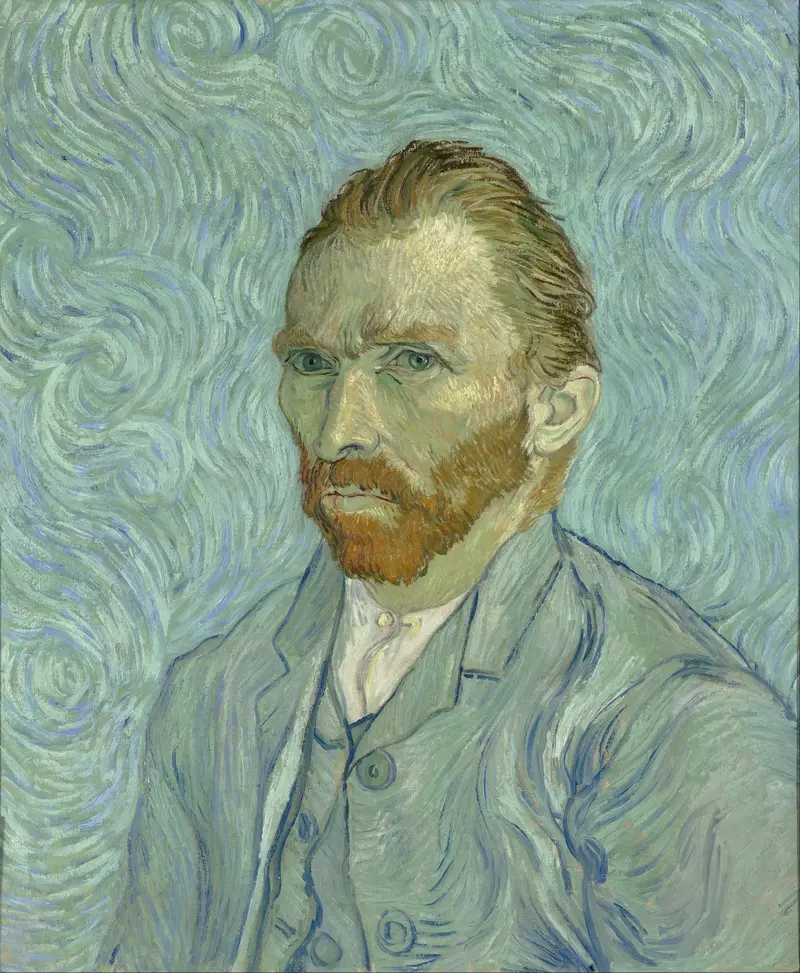
Self-Portrait (1889)
Vincent van Gogh

Café Terrace at Night
Vincent van Gogh

Almond Blossom
Vincent van Gogh

Flowering Garden
Vincent van Gogh

A Wheatfield, with Cypresses
Vincent van Gogh

Orchard in Blossom (Plum Trees)
Vincent van Gogh

Snowy Landscape with Arles in the Background
Vincent van Gogh
More Genre Scene Art

Banquet of the Officers of the St George Civic Guard
Frans Hals

Rembrandt and Saskia in the Scene of the Prodigal Son
Rembrandt van Rijn

Bal du moulin de la Galette
Pierre-Auguste Renoir

Quadrille at the Moulin Rouge
Henri de Toulouse-Lautrec

A Burial at Ornans
Gustave Courbet

When Will You Marry?
Paul Gauguin