
Courtyard of Antwerp Town Hall — History & Facts
In the hushed corners of a city, color dances between history and the present, revealing hidden stories waiting to be told. Look to the vibrant blues and earthy browns that dominate the scene, their interplay drawing your gaze towards the intricate architecture of the town hall. Notice how the light illuminates the warm tones, creating a contrast with the cool shadows that linger in the corners. The meticulous detailing of the figures framed within the courtyard whispers of daily life, each gesture frozen in time, creating a rich tapestry of interactions and emotions that resonate beyond the surface. Delve deeper, and the composition reveals a dialogue between solitude and community.
The figures, though physically close, seem ensconced in their own worlds, evoking a sense of shared yet separate experiences. The artist’s choice of color enhances these contrasts—brilliant splashes of vibrant hues mimic the lively chatter of townsfolk, while the shadowy recesses suggest untold stories concealed within the walls of the town hall itself. Leys painted this work during a time when the 19th-century art scene was gradually shifting, leaning towards realism and a renewed interest in the everyday. Living in Belgium, he embraced his cultural heritage, embedding the local essence within his art.
While the precise date remains unknown, the piece embodies the artist's dedication to capturing the spirit of his surroundings and the stories woven into the fabric of public spaces.
More Artworks by Jan August Hendrik Leys
Browse all →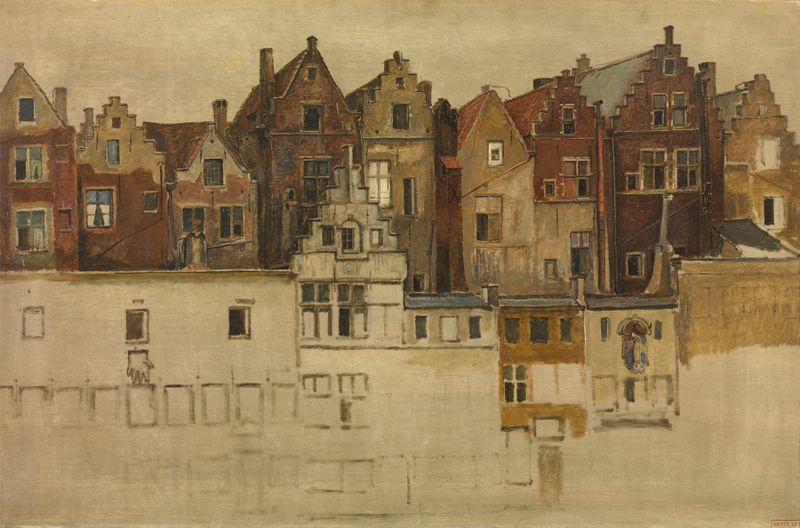



More Architecture Art
Browse all →
The statue of Liberty
Frédéric Auguste Bartholdi

View of Houses in Delft, Known as ‘The Little Street’
Johannes Vermeer

View of Houses in Delft, Known as ‘The Little Street’
Johannes Vermeer

The Cathedral in Rouen. The portal, Grey Weather
Claude Monet

The yellow house
Vincent van Gogh

The Church in Auvers-sur-Oise, View from the Chevet
Vincent van Gogh