
Houses of Old Antwerp, Handschoenmarkt — History & Facts
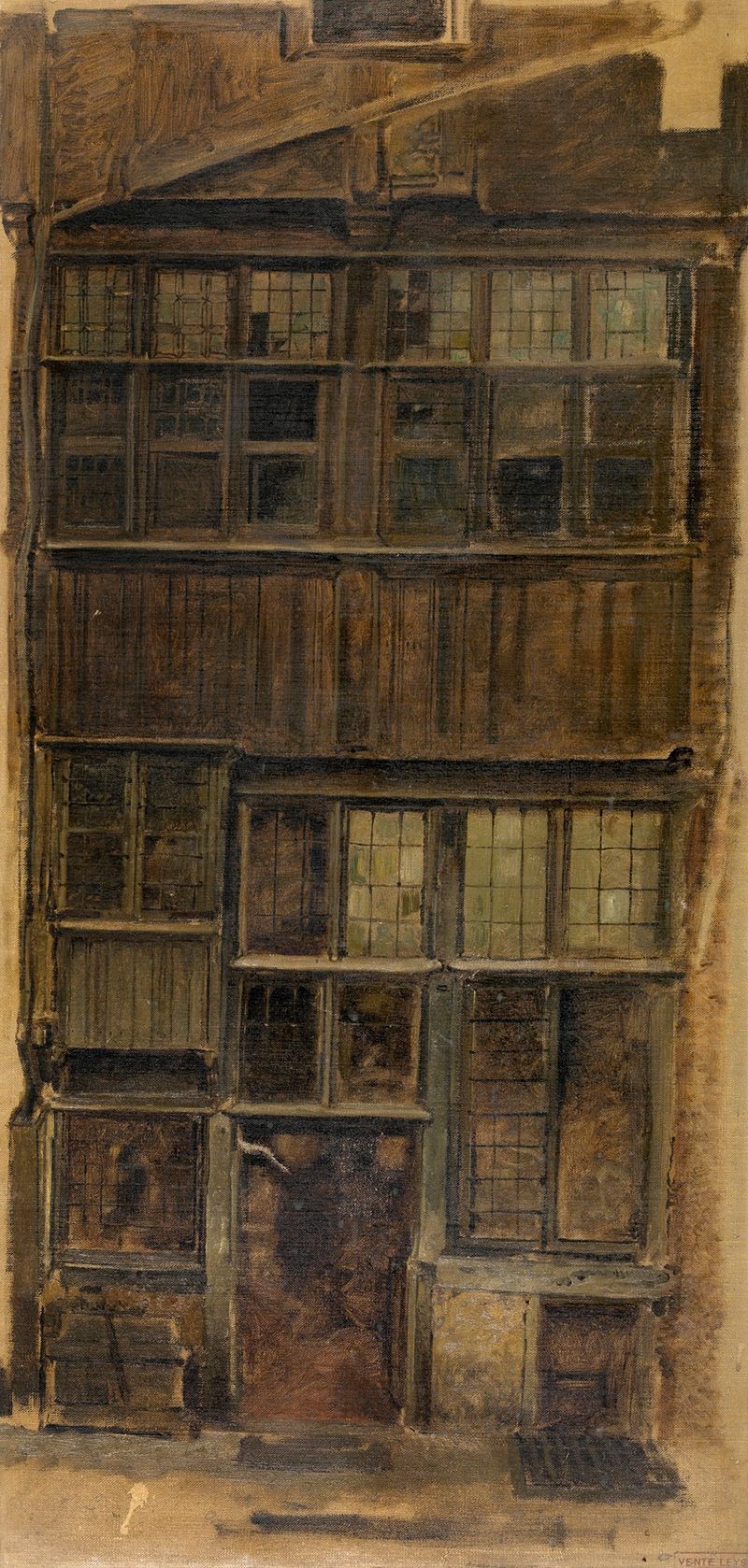
In the midst of chaos, the stillness of old houses holds stories that echo through the ages, revealing the layers of lives once lived within their walls. Look to the left at the weathered facades, their muted colors steeped in history and wear. As your gaze travels along the cobblestone path, notice the delicate interplay of light and shadow that dances across the surfaces, highlighting the intricate architectural details. The artist’s brushwork captures a sense of nostalgia, blending realism with a hint of romanticism, revealing both the charm and decay of this urban landscape. Yet beneath the tranquil exterior lies an undercurrent of emotional tension.
The seemingly serene scene hints at the frenetic life that once bustled through these streets, suggesting the invisible chaos of the past. The juxtaposition of the ornate architectural features against the simple, worn cobblestones invites reflection on the passage of time and the stories hidden beneath the surface. Each window, shuttered or ajar, stands as a silent witness to a multitude of confessions, both joyous and sorrowful. In 1866, while living in Belgium, Leys painted this evocative piece during a period of significant change in the art world, as artists began to embrace realism and depart from the strictures of Romanticism.
This work reflects his commitment to capturing the essence of his surroundings, as well as the emotional resonance of places steeped in history. Leys' exploration of urban life encapsulates the transitional spirit of the time, bridging the gap between past and present.
More Artworks by Jan August Hendrik Leys
Browse all →



More Architecture Art
Browse all →
The statue of Liberty
Frédéric Auguste Bartholdi

View of Houses in Delft, Known as ‘The Little Street’
Johannes Vermeer

View of Houses in Delft, Known as ‘The Little Street’
Johannes Vermeer

The Cathedral in Rouen. The portal, Grey Weather
Claude Monet

The yellow house
Vincent van Gogh

The Church in Auvers-sur-Oise, View from the Chevet
Vincent van Gogh