Covered Wagon at the Fair Drawn by Six Oxen — History & Facts
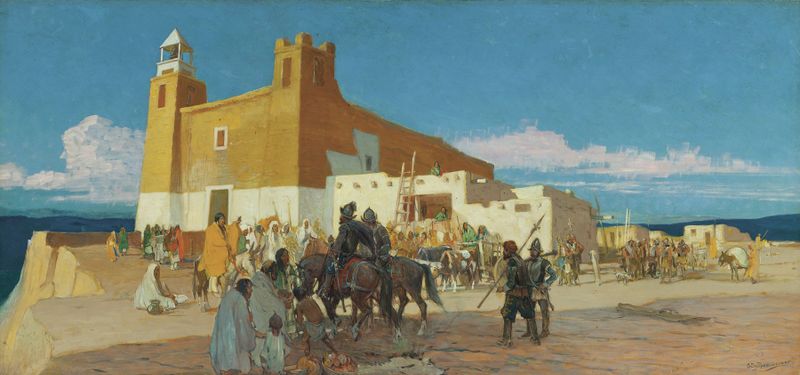
What if silence could speak through light? In Covered Wagon at the Fair Drawn by Six Oxen, the stillness surrounding the wagon transforms a moment of festivity into a profound reflection on solitude and resilience. Look to the left at the covered wagon, its muted hues capturing the essence of an era long past. Notice how the soft, natural light envelops the oxen, hinting at their strength and obedience. The artist's palette is subdued, employing earthy tones that suggest both the weight of history and the quiet vibrancy of life.
The gentle brushstrokes create texture, inviting the viewer to feel the fabric of the wagon's cover and the ruggedness of the oxen's hides. Beneath the surface lies a deeper narrative, one that contrasts the bustling fair with the isolation embodied by the wagon. The juxtaposition of the animated crowd in the background and the lone wagon implies a tension between communal joy and personal solitude. Each ox, tethered to the wagon, symbolizes resilience in the face of change, while the silence captured in the scene allows for introspection, urging the viewer to ponder the stories of those who traveled unaccompanied through life’s fairgrounds. Oscar Edmund Berninghaus created this work in 1914, during a time when American art was increasingly embracing regionalism and the depictions of everyday life.
Working in Taos, New Mexico, he was part of a movement that sought to highlight the landscape and culture of the American Southwest. This painting reflects his keen observation of the human experience intertwined with the natural world, underscoring the simplicity and depth of life during a rapidly changing era.