Cows at Noon — History & Facts
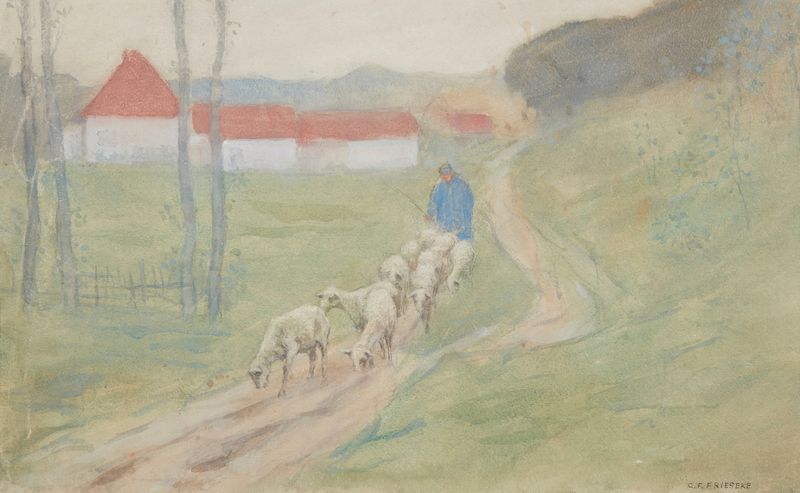
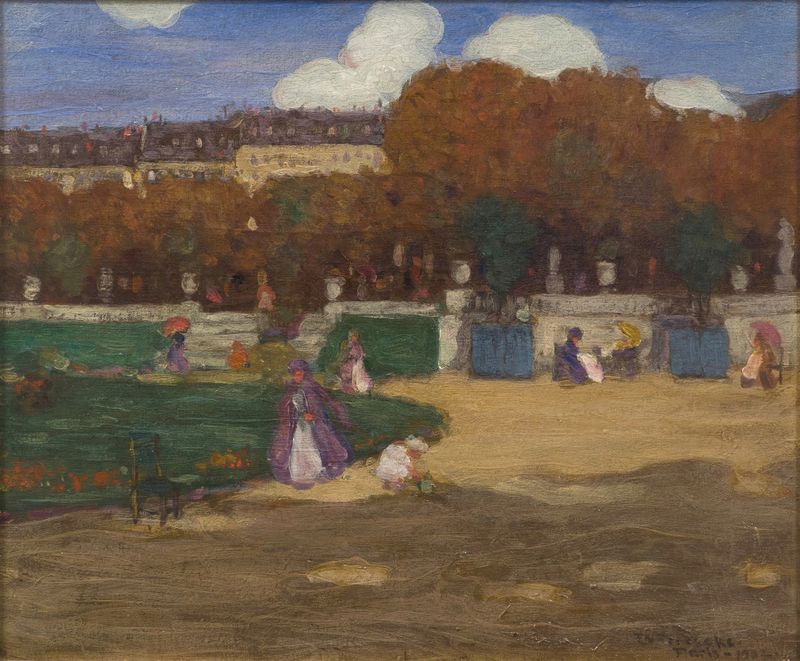
Each stroke captures not just form, but the essence of existence, inviting us to reflect on deeper truths. Look to the center, where a tranquil landscape unfurls beneath a sky dappled with soft blues and whites. The cows, grounded and serene, graze peacefully on the lush green grass, their forms solid yet fluid in the sunlight's embrace. Notice how the light dances on their backs, illuminating the textures of their coats, while shadows play at their feet, creating a harmonious balance between light and dark that envelops the entire scene. Beyond the pastoral beauty lies a tension between the simplicity of rural life and the complexities of modernity encroaching on it.
The cows symbolize not only a pastoral ideal but also a connection to nature that is increasingly fragile. The stillness of the moment suggests a fleeting peace, powerful in its quietude, as if the world beyond the canvas is in constant motion while these creatures remain timeless. In 1924, the artist found solace in the rural landscapes of America, a stark contrast to the rising tumult of urban life. This period marked a significant moment in his career, as he embraced Impressionistic techniques while focusing on serene, intimate scenes of nature.
Frieseke’s work during this time reflects not only his personal journey but also an artistic shift towards celebrating the truths that lie in simplicity and tranquility, encapsulated beautifully in this piece.