Leading the Sheep — History & Facts
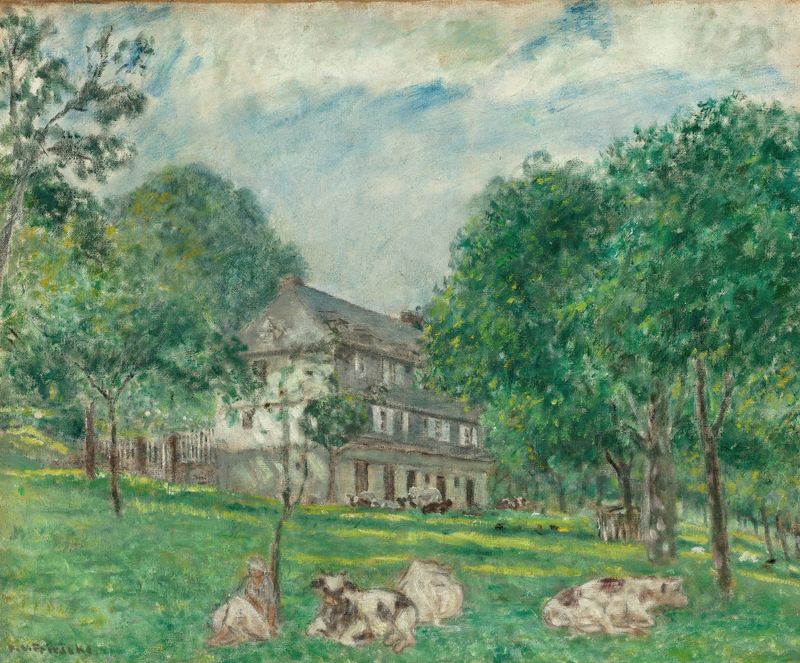
In the gentle embrace of nostalgia, we often find the echoes of our past woven into the fabric of memory. This poignant exploration invites us to reflect on the delicate interplay of our experiences, both vivid and muted, as they coalesce into a tapestry of life. Focus first on the soft, dappled light that bathes the central figures in warmth, revealing their serene expressions as they guide a flock of sheep across a verdant landscape. The interplay of rich greens and gentle browns creates a harmonious palette, drawing the viewer into the tranquil setting.
Notice how the brushstrokes convey both movement and stillness — the flowing lines of the sheep contrast with the calm, grounded figures, encapsulating a moment of unity with nature. As you delve deeper, consider the symbolism of the sheep, representing innocence and dependence, juxtaposed against the guiding figures who embody wisdom and care. The subtle tension between presence and absence is palpable; it’s not just a pastoral scene, but an invitation to reflect on the roles we play in our own lives. Each brushstroke whispers the past, evoking a sense of longing and connection to simpler times, where the rhythm of life was dictated by nature’s cadence. Created during the early 20th century, this work emerged from Frieseke’s time in Giverny, France, where he immersed himself in the Impressionist movement.
His focus on light and color was a response to the changing world around him, shaped by both personal experiences and the broader context of modernity. As art evolved, he captured the essence of his surroundings, revealing the beauty found in everyday moments.