Luxembourg Gardens, Paris — History & Facts
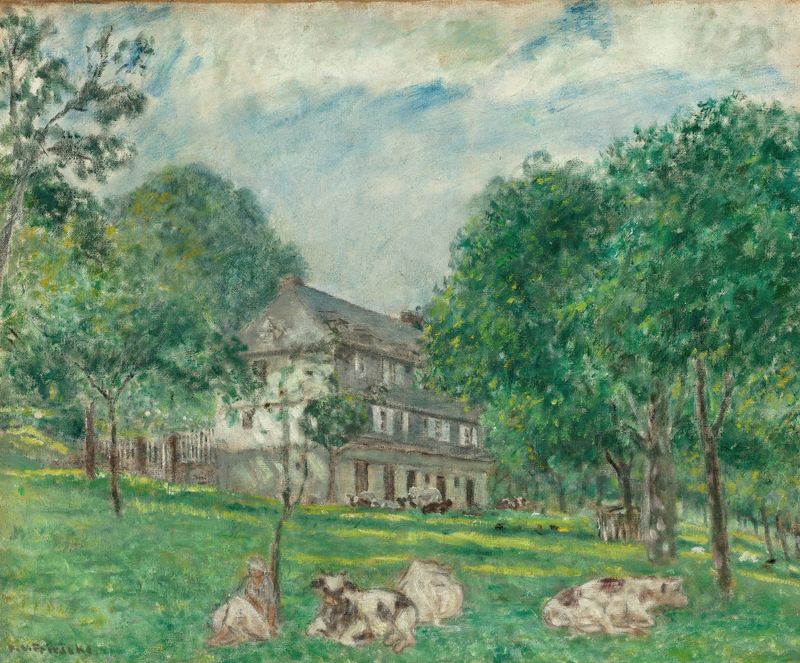
A soft breeze rustles through the lush greenery of the Luxembourg Gardens, as vibrant patches of sunlight dance across the manicured lawns. A woman in a flowing white dress reclines on a sun-drenched bench, lost in a world of her thoughts, while a child plays nearby, their laughter echoing like distant chimes. The vivid colors create an illusion of tranquility, yet an underlying tension simmers, as if the beauty around them conceals an edge of madness waiting to burst forth. Focus first on the woman, her serene expression contrasting starkly with the chaos of colors swirling around her.
Look closely at the luminous brushstrokes that give life to the foliage, where deep greens and golden yellows intertwine, creating a sense of vibrant energy. Notice how the light falls upon her dress, highlighting its purity while shadows loom subtly behind her, hinting at darker undertones beneath the surface beauty. The juxtaposition of the blooming gardens and the solitary figure represents both calm and chaos—a delicate balance between the peace of nature and the inner turmoil of the mind. The child’s carefree play serves as a stark reminder of innocence lost, suggesting a fleeting glimpse of joy before the encroaching complexities of adulthood.
Each element within the frame harmonizes yet battles for attention, embodying a moment that is both idyllic and fraught with hidden emotions. In 1902, the artist painted this scene while living in Paris, a vibrant city at the height of artistic experimentation. Frieseke found inspiration in the Impressionist movement, which was redefining how artists perceived and depicted light and color. During this period, he actively explored themes of modern life, capturing fleeting moments of beauty against the backdrop of an ever-changing world.