Crimean landscape — History & Facts
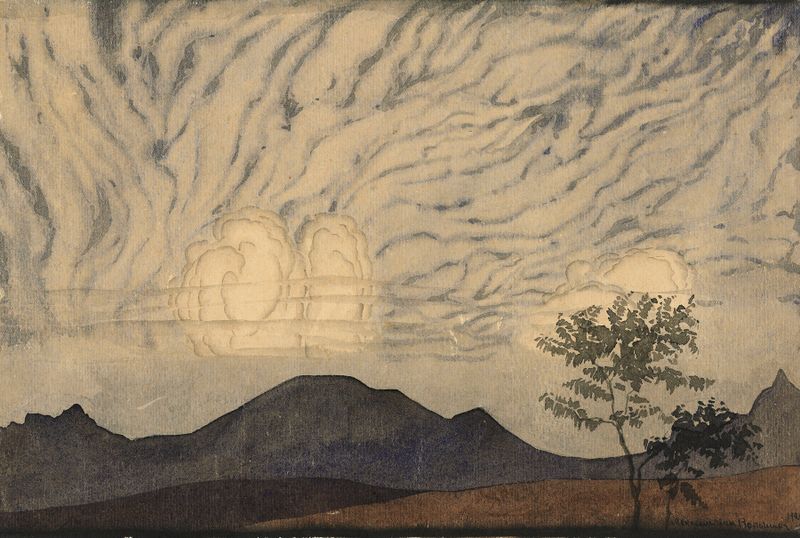
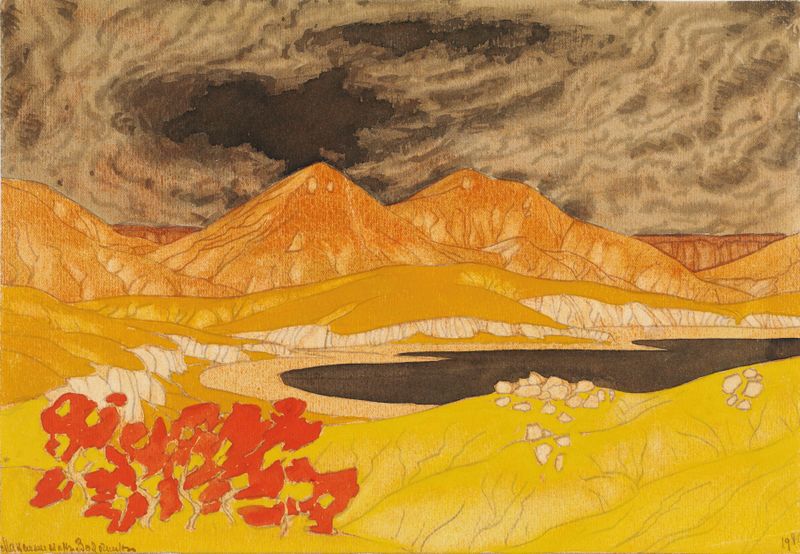
Can beauty exist without sorrow? In the haunting expanse of Crimean Landscape, the answer lingers in the air like a whisper, wrapped in the shadows of a forgotten past. Look to the horizon, where the muted blues of the sea meet the melancholic greys of the sky, creating an atmosphere thick with emotion. Notice how the soft brushstrokes blend together, suggesting the stillness of a moment pregnant with unspoken thoughts and untold stories. The rugged cliffs stand imposing yet fragile, bathed in a light that hints at both hope and despair.
The composition draws the eye across the canvas, from the tumultuous rocks to the serene waters, reflecting the duality of nature’s beauty intertwined with its inherent dangers. Hidden within the layers, there is a tension between the vastness of the scene and the solitude it evokes. The interplay of light and shadow captures the fear of isolation that echoes through the landscape, while the natural elements serve as silent witnesses to the turmoil of human existence. Each detail—the craggy terrain, the distant waves—becomes a metaphor for the emotional struggles that linger in the heart, a reminder that beauty often coexists with fear. At the time of creating this work, the artist found himself on the brink of major shifts in his personal and artistic life.
Living in Crimea during a period of burgeoning modernist movements, he was deeply influenced by the natural beauty surrounding him and the historical tensions of the region. These experiences shaped his artistic voice, allowing him to convey complex emotions through the tranquil yet foreboding landscapes he depicted.