Crimean landscape — History & Facts
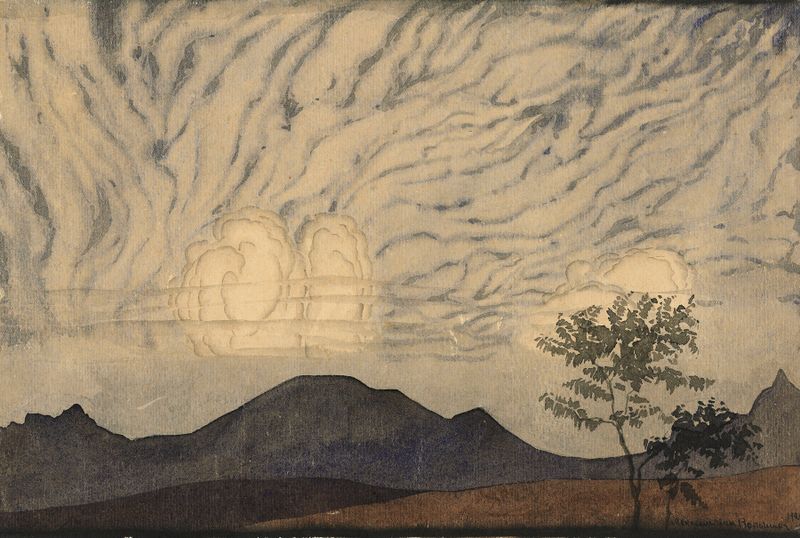
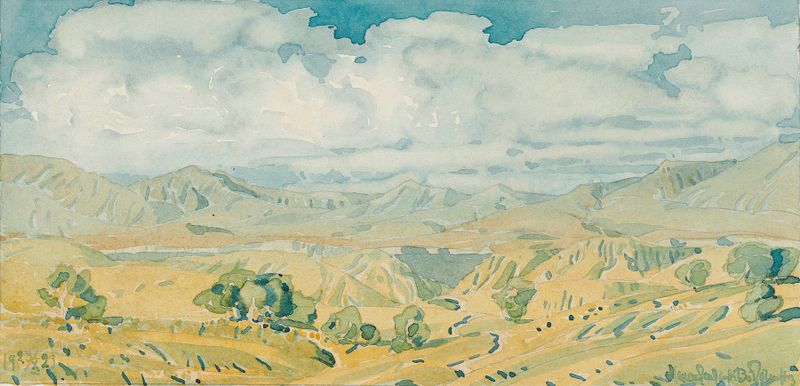
Did the painter know this moment would outlive them? In the vast expanse of nature’s embrace, a void echoes, inviting contemplation and melancholy—an everlasting silence captured on canvas. Look to the center, where the undulating hills rise and fall beneath a pale sky, gently washed in hues of gray and olive. The brushstrokes, fluid yet deliberate, create a sense of movement, as if the landscape breathes and shifts with every gaze. To the left, darkened trees stand sentinel, their twisted branches reaching out like fingers of memory, drawing your eye deeper into the scene.
It’s here that the artist’s technique reveals the emotional weight of the place; the muted palette evokes a sense of nostalgia and reflection, while the interplay of shadow and light suggests the passage of time. Within this tranquil yet haunting composition lies a duality. The landscape, while serene, is imbued with an underlying tension—the absence of human presence amplifies the feeling of isolation. The void is not merely empty; it is filled with unspoken histories, lost connections, and the permanence of nature juxtaposed against fleeting moments of life.
The intricate details, such as the scattered leaves and the distant horizon, suggest both continuity and the ephemeral nature of existence. Created in a period marked by artistic exploration and personal introspection, the work was conceived during a time when the artist grappled with the complexities of identity and belonging. Voloshin, amidst a rich cultural milieu, sought to articulate his experiences and thoughts through landscapes that transcended mere representation, inviting viewers to reflect on their own place within the continuum of time.