Crimean landscape — History & Facts
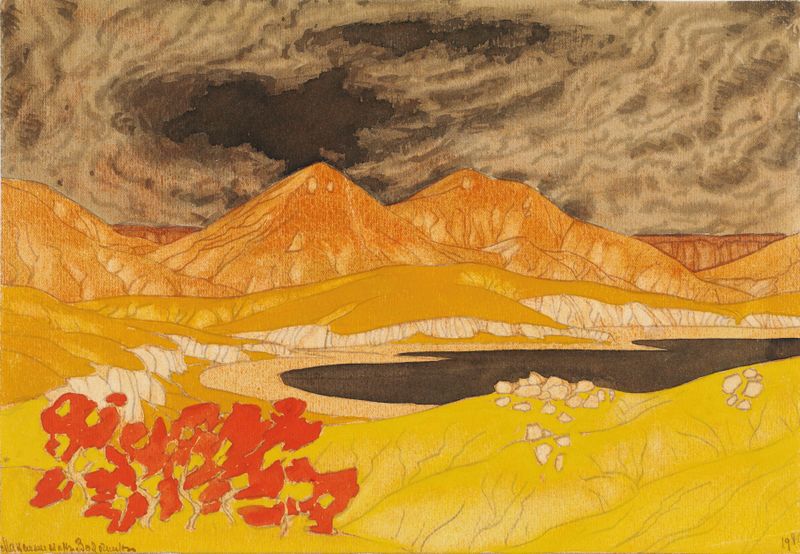
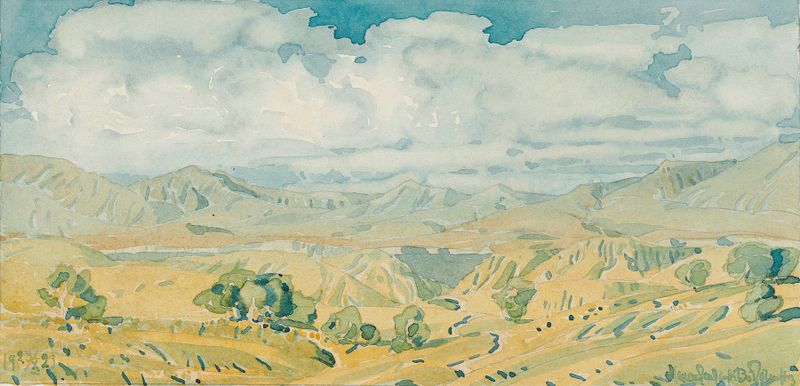
What if beauty was never meant to be finished? The ephemeral nature of a moment hangs delicately in the balance between reality and illusion, asking us to linger just a moment longer. Look to the sweeping horizon where the muted colors of dusk blend into one another, a gentle gradient of soft purples and blues. Notice how the delicate brushstrokes create a shimmering effect upon the water, blurring the line between earth and sky. In the foreground, the silhouettes of trees stand in quiet contemplation, their dark forms stark against the lightening sky, drawing the viewer's eye toward the distant hills that cradle the fading day. The interplay of light and shadow reveals deeper tensions, as tranquil beauty coexists with the subtle whispers of longing and melancholy.
The placid water reflects not only the landscape but evokes a sense of introspection, suggesting that what we see may not wholly represent what exists. Each stroke becomes a fleeting thought, a fragment of a larger narrative that resists completion, prompting us to consider our own passage through time and the nature of what we perceive. Maksimilian Voloshin painted this landscape during a period of personal and artistic exploration, likely in the early 20th century, at a time when he was living in Crimea. The world around him was undergoing significant change, yet he remained dedicated to capturing the essence of his surroundings, infusing his work with a blend of romanticism and realism that characterized his contributions to modern Russian art.