
Dawn Landscape with Classical Ruins — History & Facts
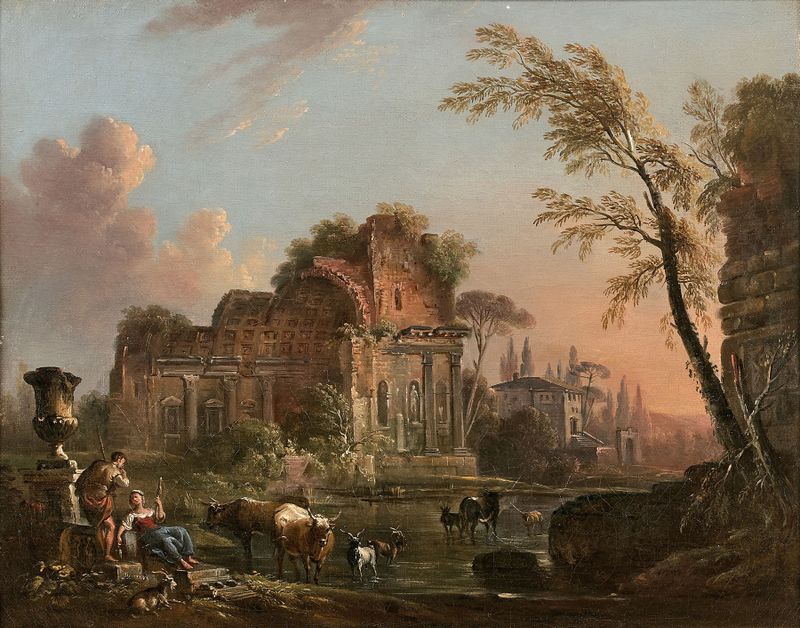
In a world where everything is fleeting, how do we capture the essence of fragility? Art, in its quiet persistence, offers a sanctuary for memories that might otherwise slip away. Look to the left at the delicate interplay of soft pastel hues, where gentle pinks and light blues blend seamlessly to evoke the dawn. The ruins stand dignified against this serene backdrop, their crumbling stones illuminated by the first light of day. Note how the artist employs soft brushwork to create a misty atmosphere, inviting the viewer to ponder the fleeting beauty of both nature and civilization.
The composition, with its horizon line set low, emphasizes the expansive sky, reminding us of the ever-looming passage of time. Hidden within the ruins lies a poignant contrast: the enduring strength of these ancient structures against the ephemeral beauty of dawn. Each stone, weathered and fragile, tells a story of decay and resilience. The serene landscape cradles this juxtaposition, as nature steadily reclaims its space, whispering of inevitable change.
It evokes feelings of nostalgia, urging one to reflect on the legacies we leave behind and the transient moments we hold dear. In the 1760s, Lallemand painted this work during a time when the Neoclassical movement was gaining momentum, emphasizing a return to the ideals of antiquity. He was influenced by the picturesque landscapes of Italy, where he spent much of his time. This period of his life, marked by an exploration of themes surrounding nature and ruins, shaped the tender yet powerful vision captured in this piece.
More Artworks by Jean-Baptiste Lallemand
Browse all →
La charge du prince de Lambesc dans le jardin des Tuileries, le 12 juillet 1789
Jean-Baptiste Lallemand

The east side of the Château de Montmusard, Dijon, seen from the gardens
Jean-Baptiste Lallemand
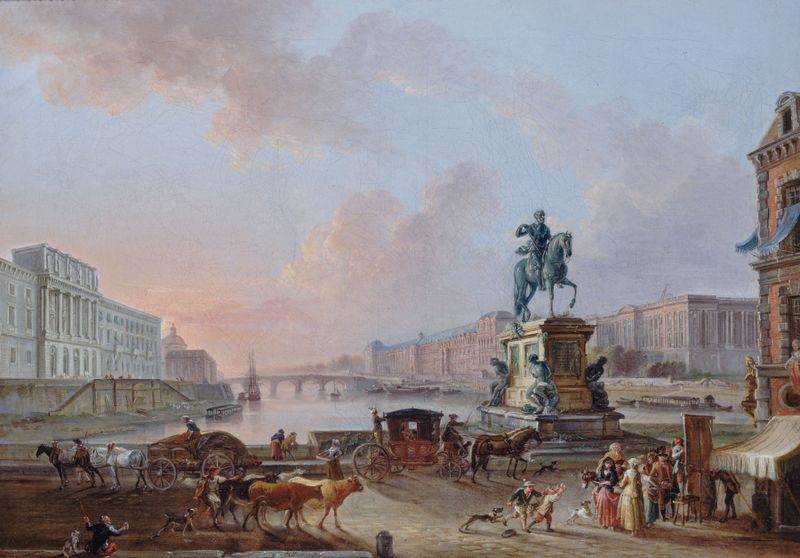
La Monnaie, le Pont Royal et le Louvre, vus du terre-plein du Pont-Neuf
Jean-Baptiste Lallemand
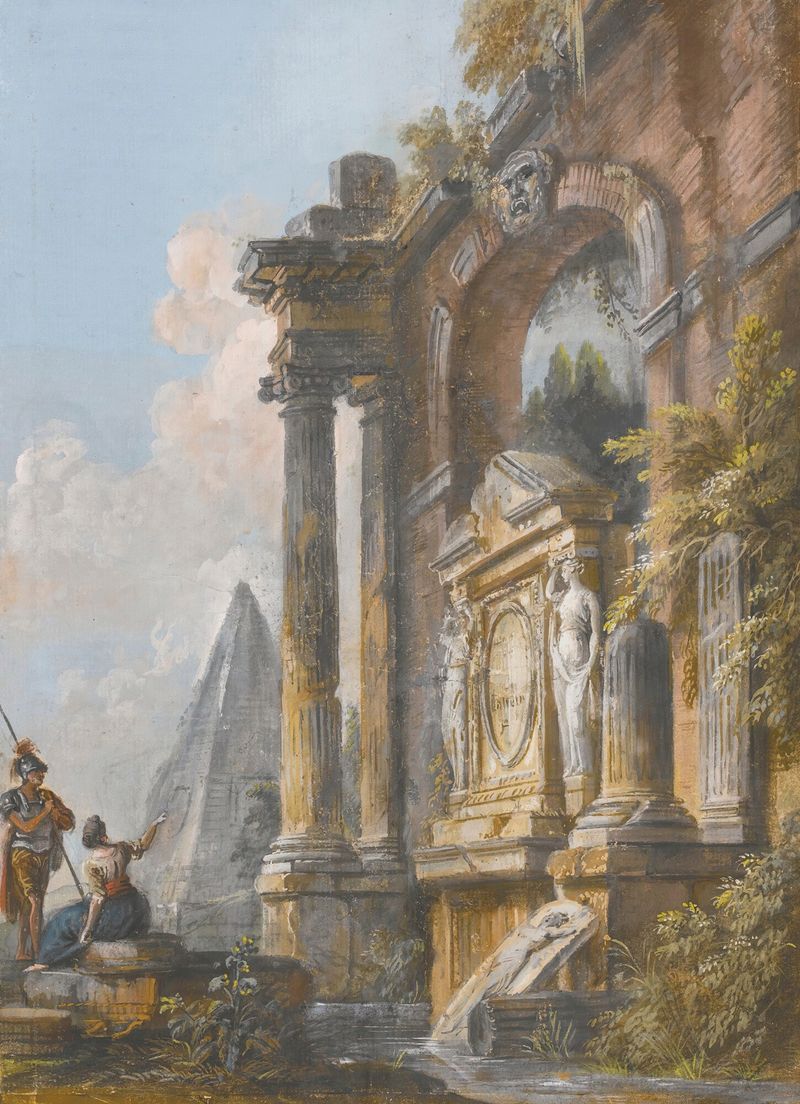
A View Of The Pyramid Of Caius Cestius And Ancient Ruins With A Soldier And Young Lady In The Foreground
Jean-Baptiste Lallemand
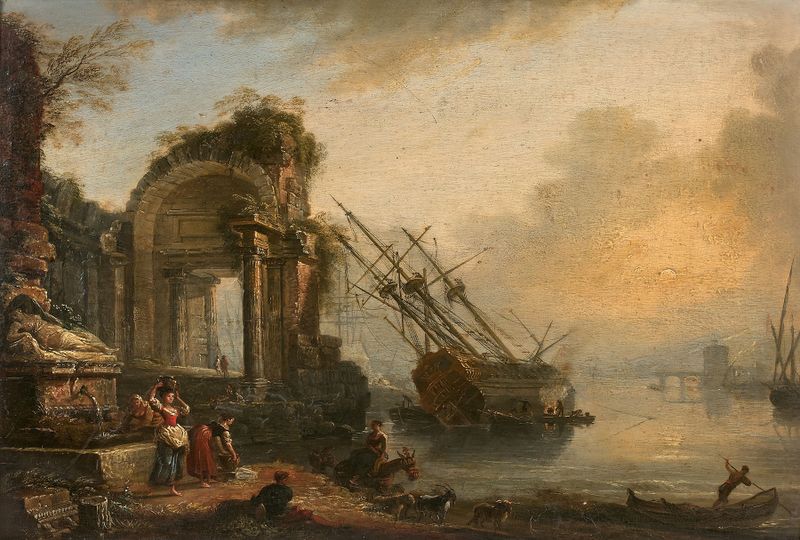
Littoral animé de personnages au Levant et Littoral animé de personnages au couchant
Jean-Baptiste Lallemand
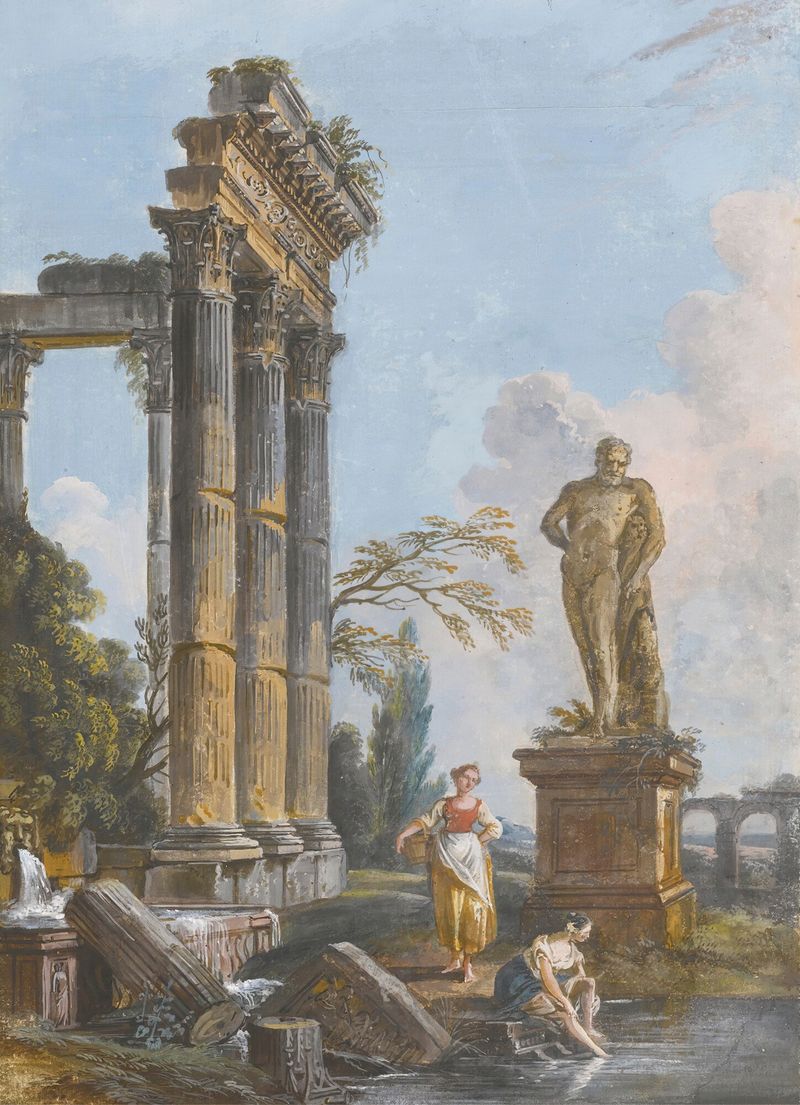
A View Of A Ruined Temple With Washerwomen
Jean-Baptiste Lallemand
Bergers près de ruines antiques dans un paysage
Jean-Baptiste Lallemand





