
La charge du prince de Lambesc dans le jardin des Tuileries, le 12 juillet 1789 — History & Facts
What if beauty was never meant to be finished? In La charge du prince de Lambesc dans le jardin des Tuileries, le 12 juillet 1789, the vivid chaos of the moment captures the tumult of an era on the brink of transformation. Look to the center where the prince, mounted and resolute, charges through the crowd, a dramatic focal point surrounded by a swirl of animated figures. The artist employs dynamic brushstrokes and a palette of muted earth tones to convey the urgency of the scene, while flecks of brighter hues punctuate the tension, emphasizing both chaos and the surreal beauty of the unfolding drama. The jarring movement contrasts sharply with the serene backdrop of the Tuileries gardens, showcasing Lallemand's skill in harmonizing the raucous with the picturesque. Delve into the figures surrounding the prince—some display fierce determination, while others exude panic and fear.
This juxtaposition of emotion portrays a society grappling with upheaval, where loyalty clashes with desperation. Further, the fluidity of the prince's form against the rigidly painted architecture suggests an illusion of power crumbling under the weight of impending revolution, reflecting the fragile nature of authority itself. In 1789, Lallemand created this work amidst the fervor of the French Revolution, a period marked by violent upheavals and shifting allegiances. At this time, he resided in Paris, where the palpable tension of the city seeped into his art.
The intense political climate and his personal experiences shaped this depiction, highlighting the intersection of beauty, chaos, and the transformative power of art during a pivotal moment in history.
More Artworks by Jean-Baptiste Lallemand
Browse all →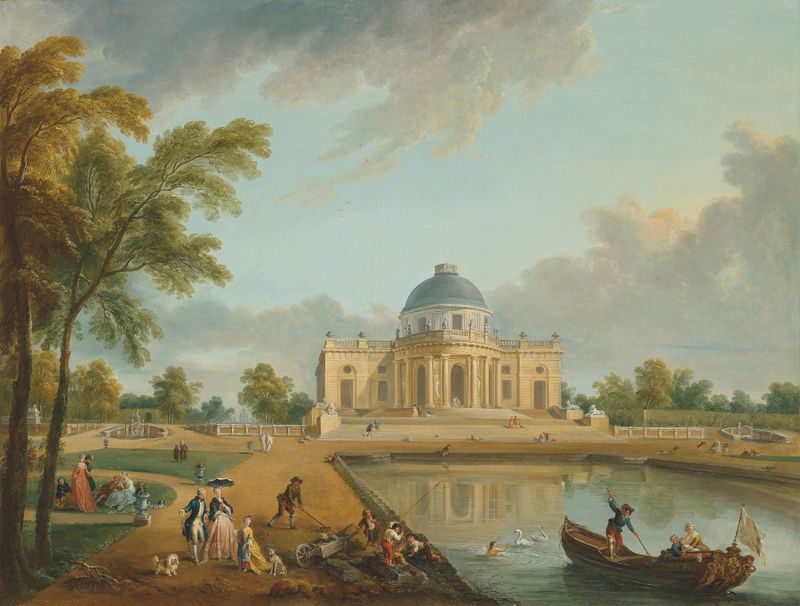
The east side of the Château de Montmusard, Dijon, seen from the gardens
Jean-Baptiste Lallemand
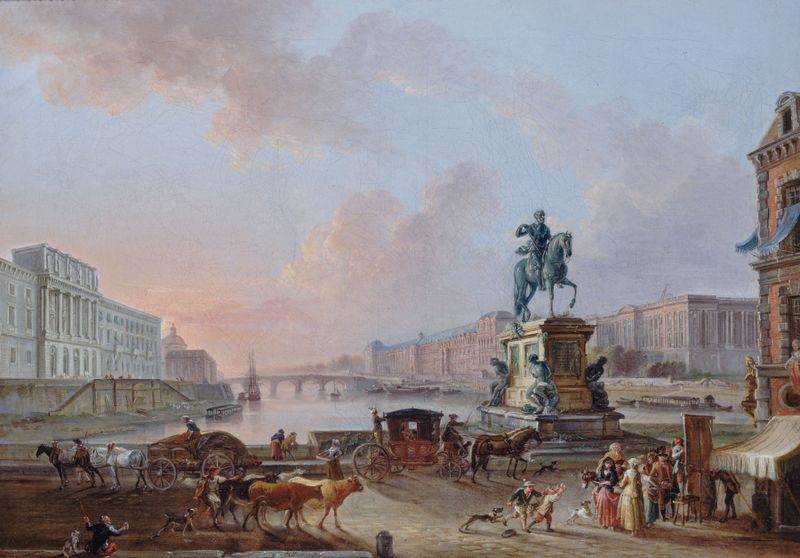
La Monnaie, le Pont Royal et le Louvre, vus du terre-plein du Pont-Neuf
Jean-Baptiste Lallemand
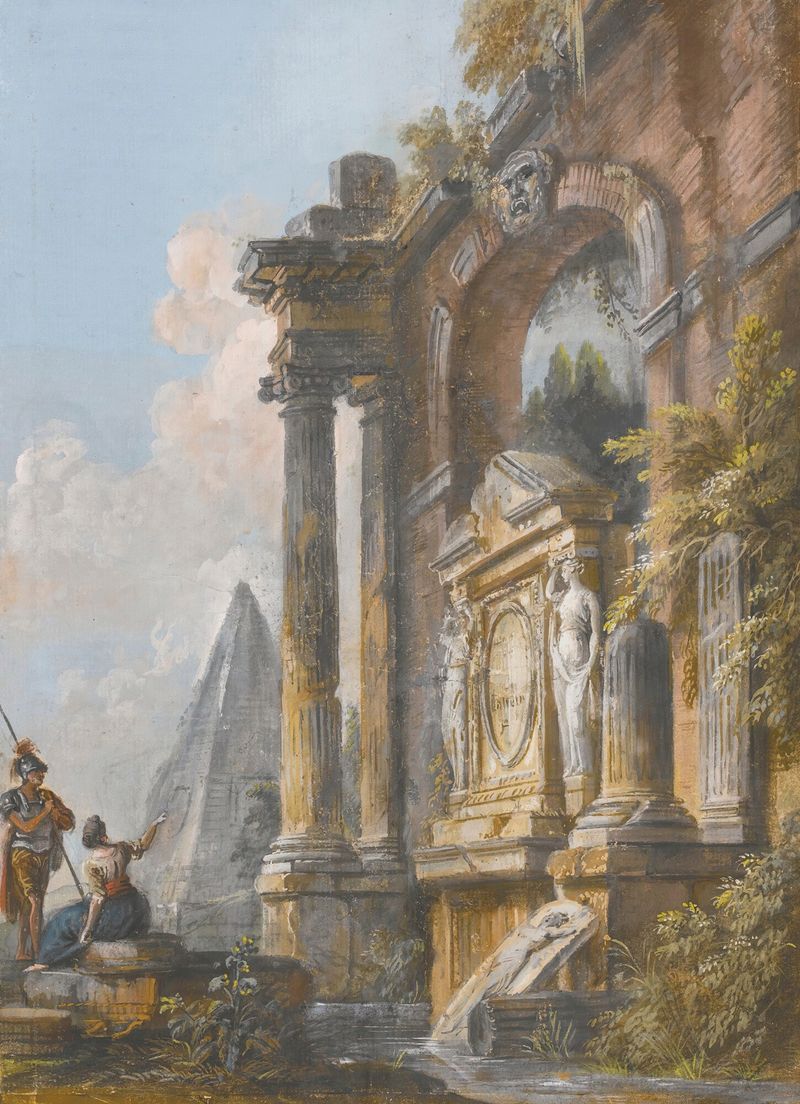
A View Of The Pyramid Of Caius Cestius And Ancient Ruins With A Soldier And Young Lady In The Foreground
Jean-Baptiste Lallemand
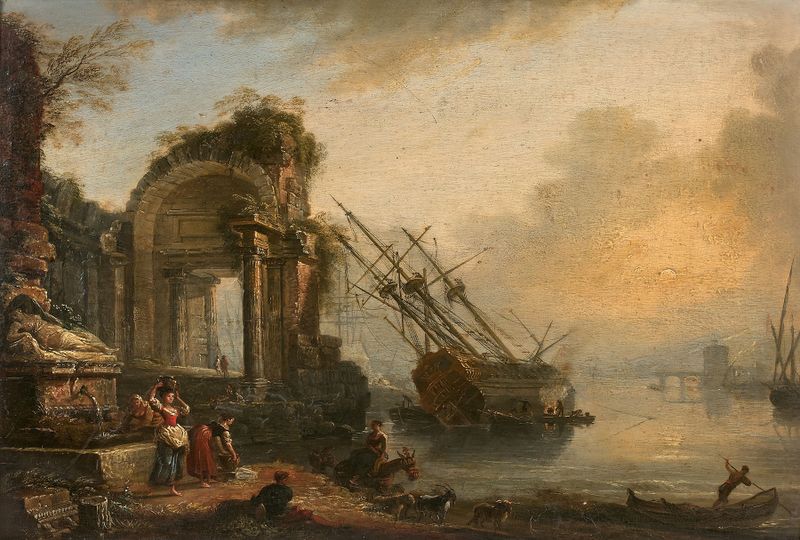
Littoral animé de personnages au Levant et Littoral animé de personnages au couchant
Jean-Baptiste Lallemand
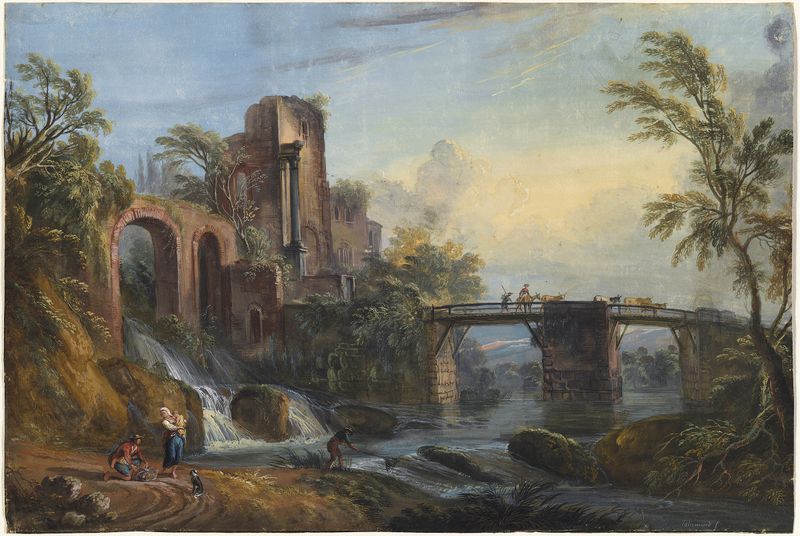
Dawn Landscape with Classical Ruins
Jean-Baptiste Lallemand
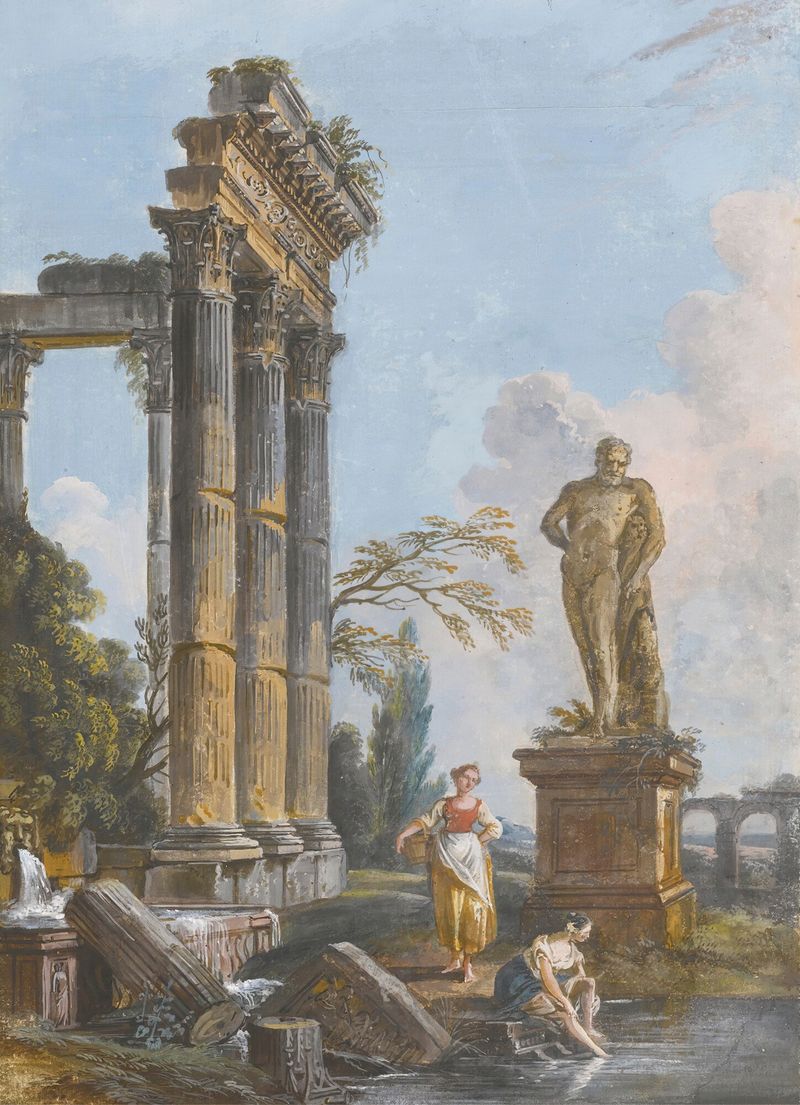
A View Of A Ruined Temple With Washerwomen
Jean-Baptiste Lallemand
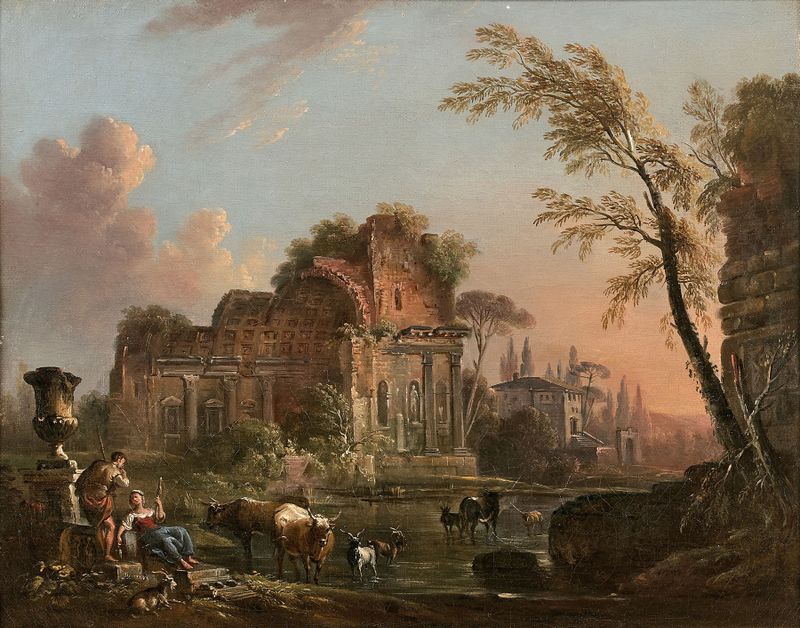
Bergers près de ruines antiques dans un paysage
Jean-Baptiste Lallemand
More Historical Art
Browse all →
The Night Watch Militia Company of District II under the Command of Captain Frans Banninck Cocq
Rembrandt van Rijn

Lincoln Memorial
Henry Bacon

The Third of May 1808
Francisco de Goya

Isaac and Rebecca, Known as ‘The Jewish Bride’
Rembrandt van Rijn

The Charge of the Mamelukes (1814)
Francisco de Goya

De vier ruiters van de apocalyps
Albrecht Dürer