
De aanbidding der koningen — History & Facts
Could beauty survive in a century of chaos? The intricate tableau of De aanbidding der koningen invites us to ponder the profound interplay of fate and reverence as it unfolds in a moment suspended in time. Look to the center of the canvas where the three kings, adorned in sumptuous robes of emerald, crimson, and gold, gather around the humble figure of the Christ child. Their gestures radiate awe and devotion, each hand raised in a silent pledge of allegiance. The rich palette of colors contrasts against the muted tones of the surrounding architecture, drawing the viewer's eye to the radiant glow emanating from the newborn.
Notice how the light gracefully envelops the figures, illuminating their expressions and casting ethereal shadows, enriching the spiritual ambiance of this sacred moment. Hidden within the lush details are echoes of emotional tension and destiny. The kings, representing the union of different realms, convey a universal acknowledgment of divinity, yet their varied expressions hint at personal journeys and sacrifices. The star above shines brightly, symbolizing guidance and fate, while the modest setting juxtaposes the opulence of the visitors, inviting contemplation on the nature of true kingship and humility.
Such contrasts resonate with the viewer, urging us to reflect on our own paths in a world rife with uncertainty. This work emerged from the studio of a lesser-known artist active between 1510 and 1530, a time when the Renaissance was transforming the landscapes of art and philosophy in Europe. The era was marked by religious upheaval and a blossoming of individual expression, as artists sought to reconcile faith with human experience. In this context, the artist captured a poignant moment, merging the sacred with the secular, and reminding us that beauty often flourishes even amidst chaos.
More Artworks by Monogrammist S (16e eeuw)
Browse all →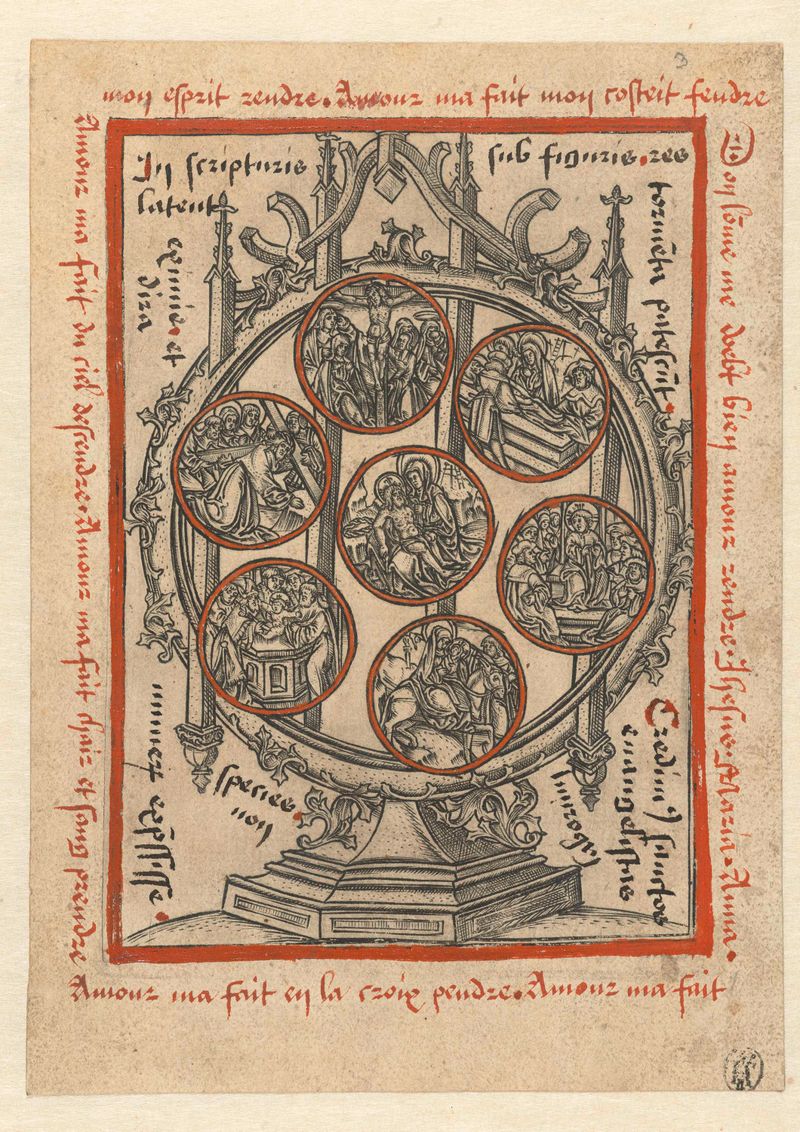
Zeven smarten van Maria
Monogrammist S (16e eeuw)

Maria met kind en vier scènes uit haar leven.
Monogrammist S (16e eeuw)

Zeven Smarten van Maria
Monogrammist S (16e eeuw)

Heilige Dominicus
Monogrammist S (16e eeuw)

Christus verschijnt aan Maria Magdalena
Monogrammist S (16e eeuw)
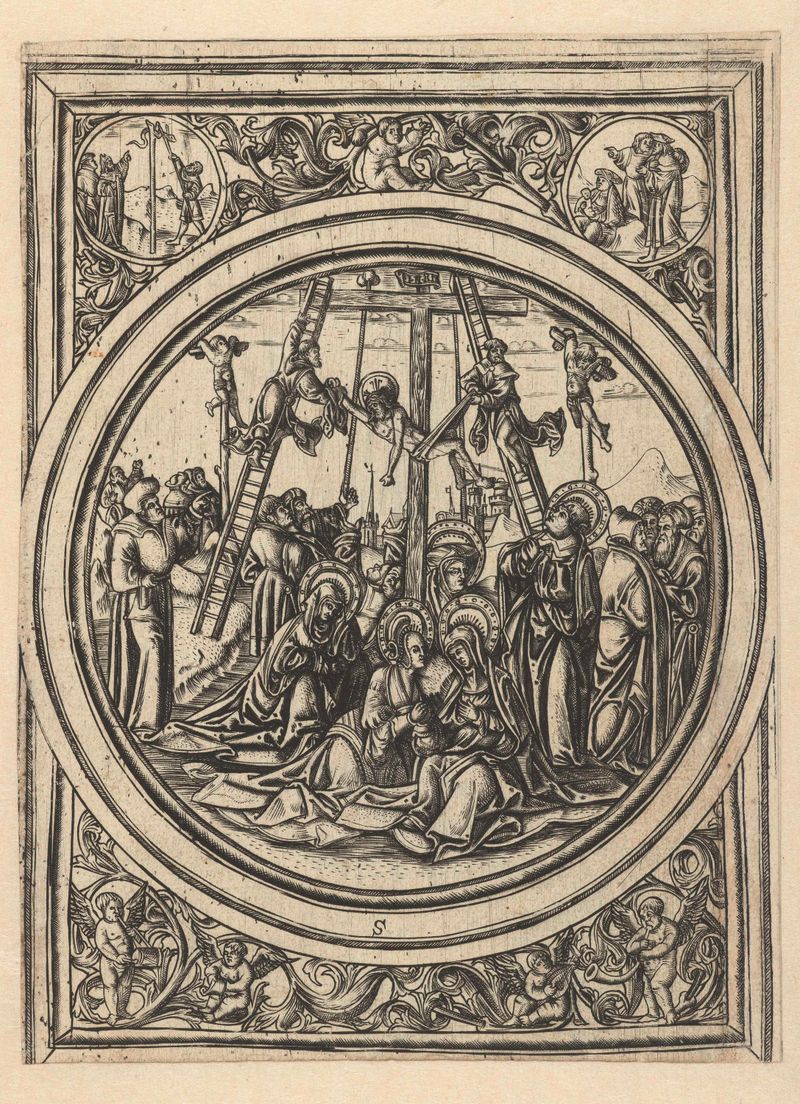
Kruisafname
Monogrammist S (16e eeuw)
More Religious Art
Browse all →
The Return of the Prodigal Son
Rembrandt van Rijn

The Garden of Earthly Delights
El Bosco

Count Orgaz’ funeral
El Greco

The Hundred Guilder Print: the central piece with Christ preaching, the plate arched
Rembrandt van Rijn

The Descent from the Cross
Rogier van der Weyden

The return of the prodigal son
Rembrandt van Rijn