
Zeven Smarten van Maria — History & Facts
The canvas doesn’t lie — it simply waits. In the stillness of a moment, each brushstroke reverberates with a sense of awe, capturing the delicate interplay between divine and earthly realms. Look to the center where the figure of the Virgin Mary holds her child, a beacon of serenity amid a tapestry of intricate details. Notice how the light bathes their faces, illuminating an expression of profound tenderness.
The meticulous patterns surrounding them—floral motifs, vibrant draperies, and the subtle gradation of colors—draw the eye in a mesmerizing dance, guiding us to the heart of the scene. Beneath the surface beauty, the artwork speaks of contrasts: the innocence of youth against the weight of responsibility, the transient nature of life juxtaposed with the eternal promise of faith. Each character surrounding Mary embodies a distinct emotion, from joy to contemplation, reflecting the spectrum of human experience. These subtle interactions weave a narrative that resonates beyond the canvas, inviting profound reflection on our spiritual journeys. Created between 1510 and 1530, this work emerged from the hand of an artist known only as Monogrammist S, during a period when Northern European art was on the cusp of the Reformation.
The era was marked by a burgeoning focus on humanism and a nuanced exploration of religious themes. The artist's meticulous attention to detail and symbolism would align with the era’s desire for both beauty and introspection, influencing contemporaneous discussions around faith and devotion.
More Artworks by Monogrammist S (16e eeuw)
Browse all →
De aanbidding der koningen
Monogrammist S (16e eeuw)
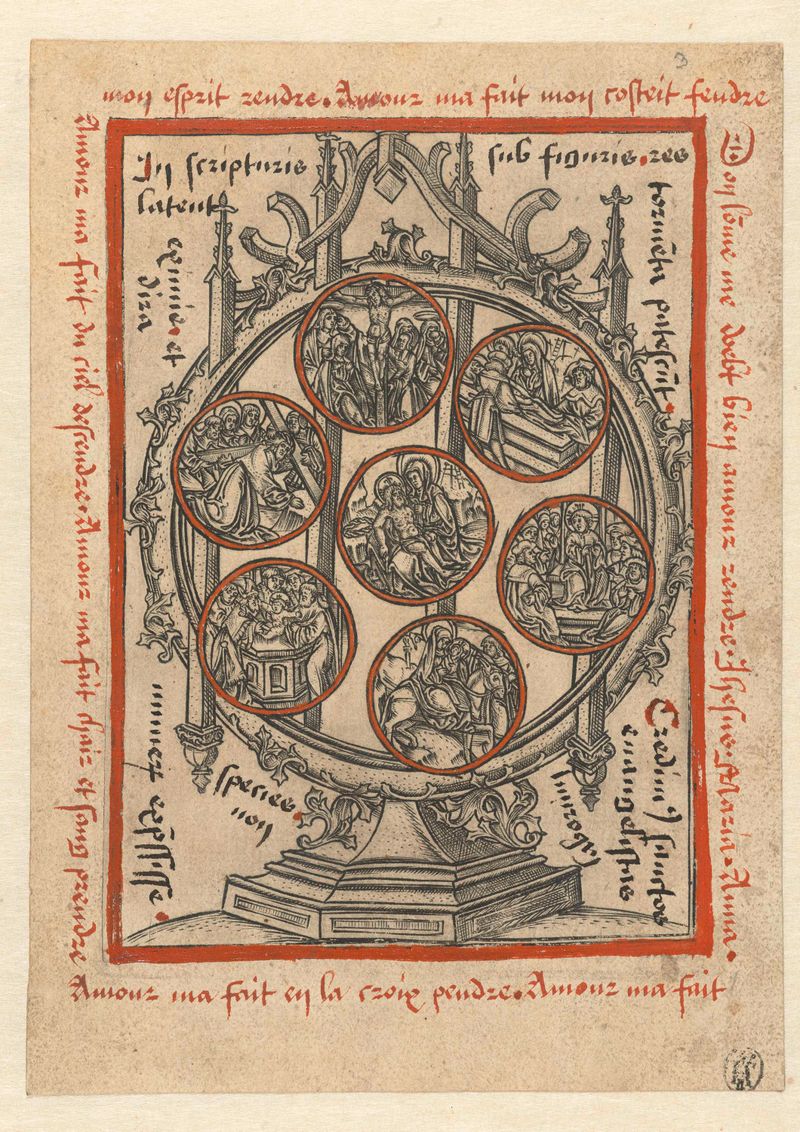
Zeven smarten van Maria
Monogrammist S (16e eeuw)

Maria met kind en vier scènes uit haar leven.
Monogrammist S (16e eeuw)

Heilige Dominicus
Monogrammist S (16e eeuw)

Christus verschijnt aan Maria Magdalena
Monogrammist S (16e eeuw)
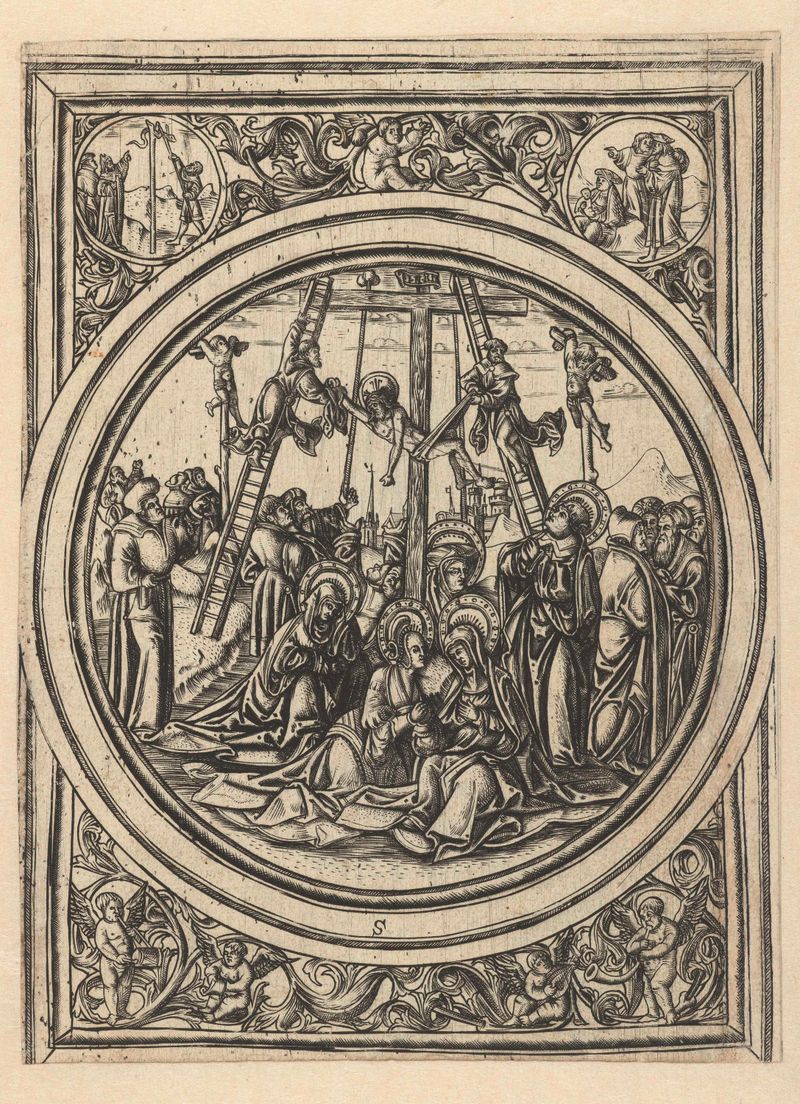
Kruisafname
Monogrammist S (16e eeuw)
More Religious Art
Browse all →
The Return of the Prodigal Son
Rembrandt van Rijn

The Garden of Earthly Delights
El Bosco

Count Orgaz’ funeral
El Greco

The Hundred Guilder Print: the central piece with Christ preaching, the plate arched
Rembrandt van Rijn

The Descent from the Cross
Rogier van der Weyden

The return of the prodigal son
Rembrandt van Rijn